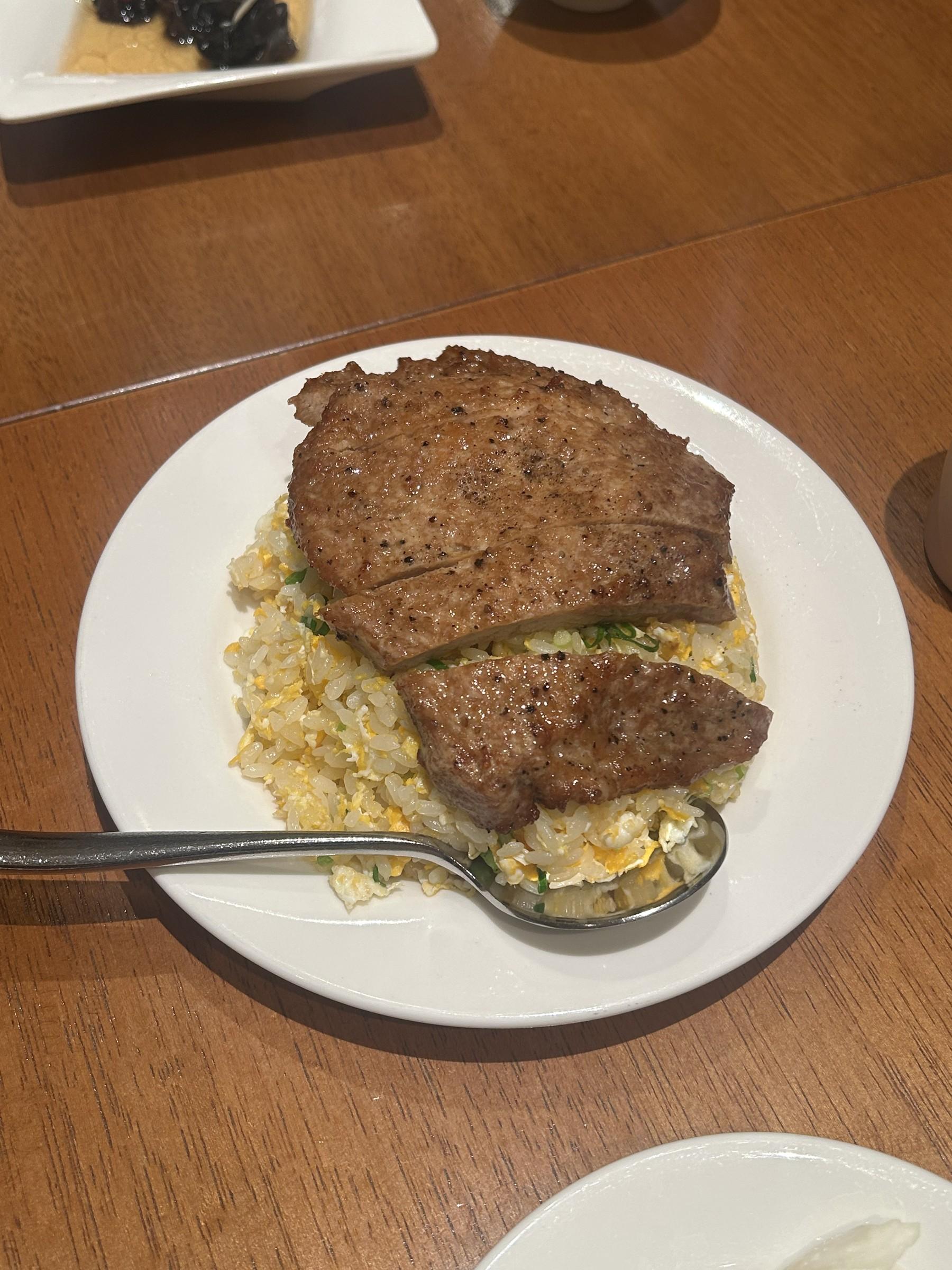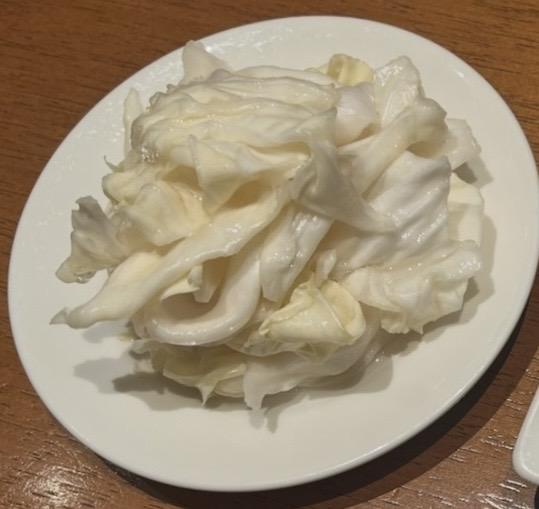
The pork chop fried rice had a similar feel: it was tender, fluffy, and full of flavor, and I kept going back for more.
Finally, I was blown away by the lava buns: they looked round, white, and soft, almost as if they were small clouds. Their name translates directly to “golden flowing sand buns,” and I quickly found out why. When I bit into one, a stream of hot, golden filling oozed out, just like lava! The filling was smooth yet tasted a little grainy, and I found this texture to be an awesome combination.
Each of the cold appetizers is made differently. The cucumbers are salted and tossed in chili oil, garlic, vinegar, and sugar. Typically, they may even be quick-pickled for a day or two to ensure its crunchiness and tanginess. The wood-ear mushrooms are boiled and mixed with vinegar, sesame oil, ginger, and goji berries. The eggplant is dipped in hot oil, preserving its bright purple color, before being stir-fried in a sweet and spicy garlic sauce.
For the Xiaolongbao, I learned that the soup inside the steamed bun isn’t directly poured in: instead, it comes from the broth that is mixed in with the ground pork and vegetables placed into the bun. The broth cools into jelly during preparation, and then it melts back into hot soup once the dumpling is steamed and served.
The Zhajiang noodles are made from wheat flour and water, similar to most noodles and pastas, but what separates it from other dishes is its sauce. It's often prepared with diced pork and two types of bean paste (a sweet paste and a salty, fermented soybean-based paste) and along with dried tofu cubes and edamame.