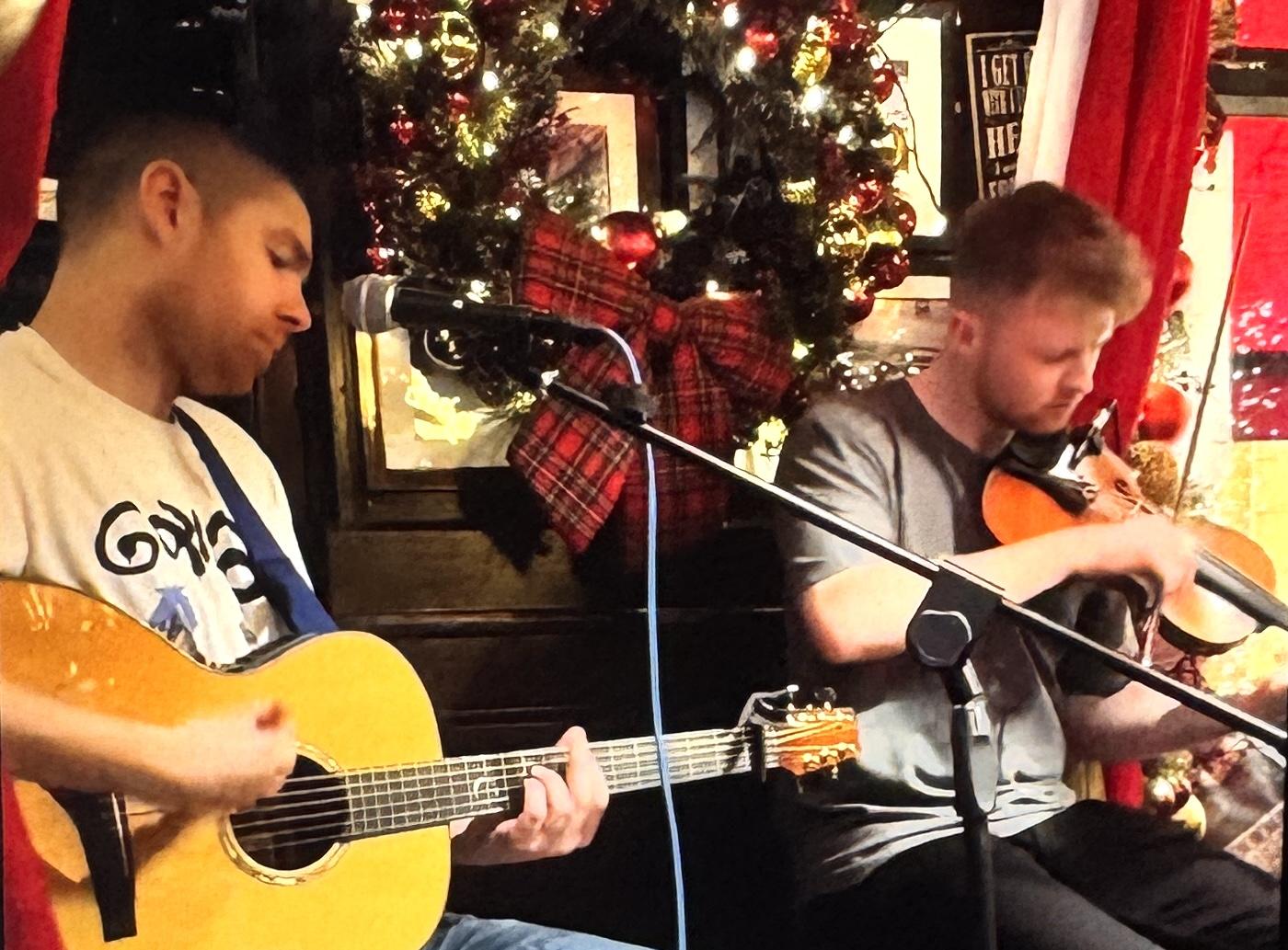
These sessions can happen in homes, community centers or local pubs (places where drinks and sometimes food are sold), and anyone who knows the tunes can join in. What stands out to me is how the music feels communal rather than performative, bringing people together and keeping shared histories alive.
The community has this musical tradition because it has long been a way to celebrate and preserve identity, history and storytelling. For centuries, especially during times when Irish culture and language were suppressed, music became a way to express pride and resilience. Songs often tell stories about love, hardship, emigration and local legends. Music also strengthens social bonds. Particularly in small towns and rural areas, gatherings with music foster connections and shared experiences. Rather than separating performances from the audience, everyone participates. This shared involvement makes music an important part of Irish community life and cultural continuity.
Yes, this tradition is closely connected to Ireland's environment. Wherever I go here, I find that music is all around me, even in the streets. Moreover, many songs and melodies are inspired by the Irish landscape--rolling green hills, rugged coastlines and quickly changing weather. The natural surroundings influence both the mood and themes of the music, which can feel joyful, haunting or reflective. In rural areas, where communities were historically spread out, music-making often took the form of intimate music sessions.