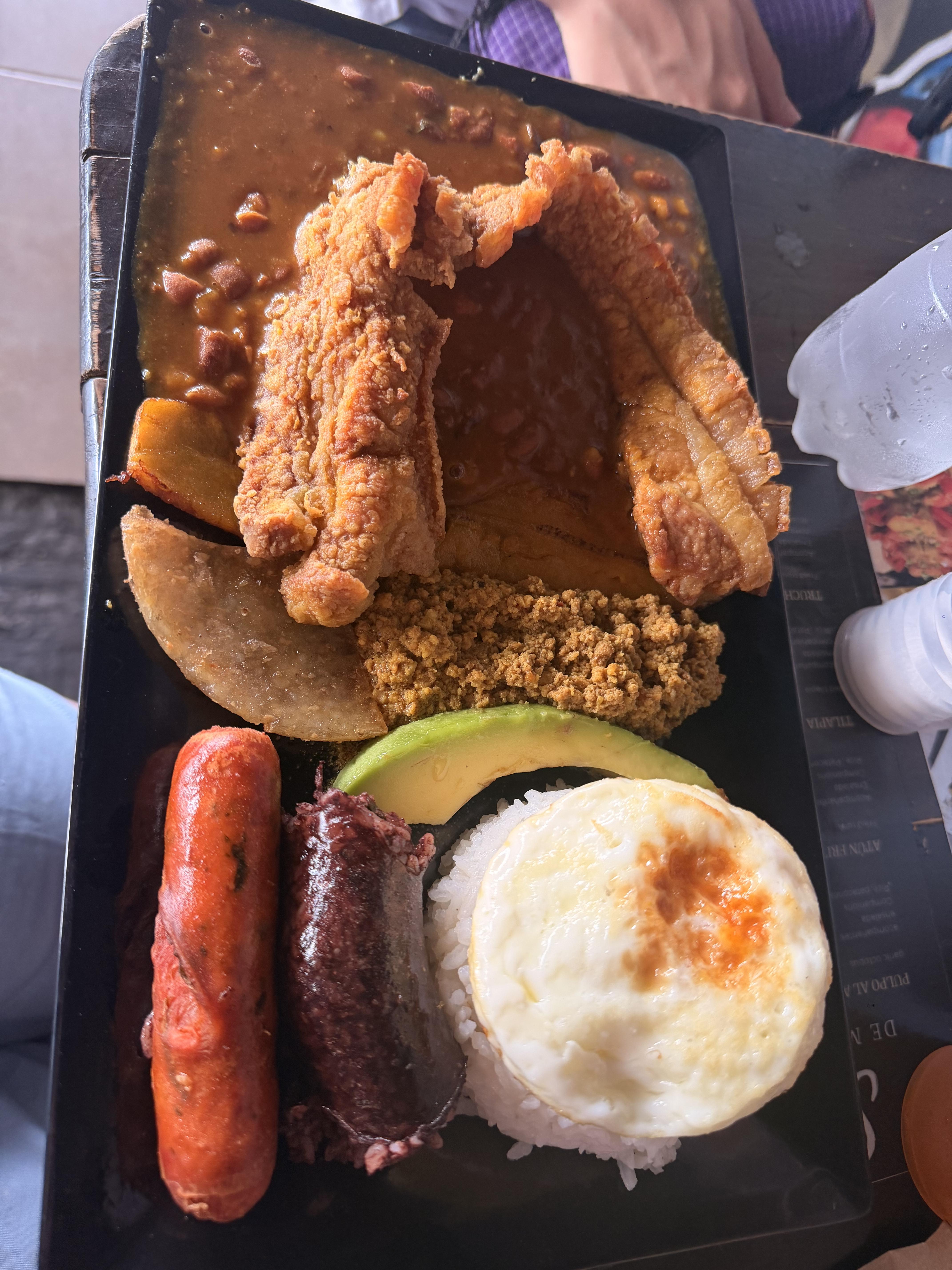
This dish is also commonly referred to as mamona.
Thankfully for me, I am not vegan or vegetarian and I love meat. While I was shocked by the abundance of hamburger stands, I have loved engaging with llanero culture and connecting more with the history of where I am living through the food that I am eating. It has been more of a challenge getting my daily dose of fruits and vegetables here, as this is not as much a part of the local diet. However, the adjustment has been just one of the many lessons I have learned in cultural integration.
The meat is cooked slowly on a grill over low heat and is marinated with seasonings such as garlic, rosemary, thyme, onion, etc. While the delicious beef is the main focus this dish is usually accompanied with sides like boiled yucca, small yellow potatoes, plantains and a spicy sauce.
Carne a la llanera is deeply connected to the local environment because llanero culture is rooted in cattle ranching. Not only is the preparation of the meat unique, but also where it is eaten is considered special. Carne Llanera is traditionally served for lunch in big open air pavilions or asaderos. The environment in these places is one of a kind. Lunch is considered to be the biggest meal of the day. The majority of people in Yopal get a 2 hour break from 12 pm - 2 pm for lunch. An asadero during lunch time is usually full of people, especially those who work in the campo (rural areas).