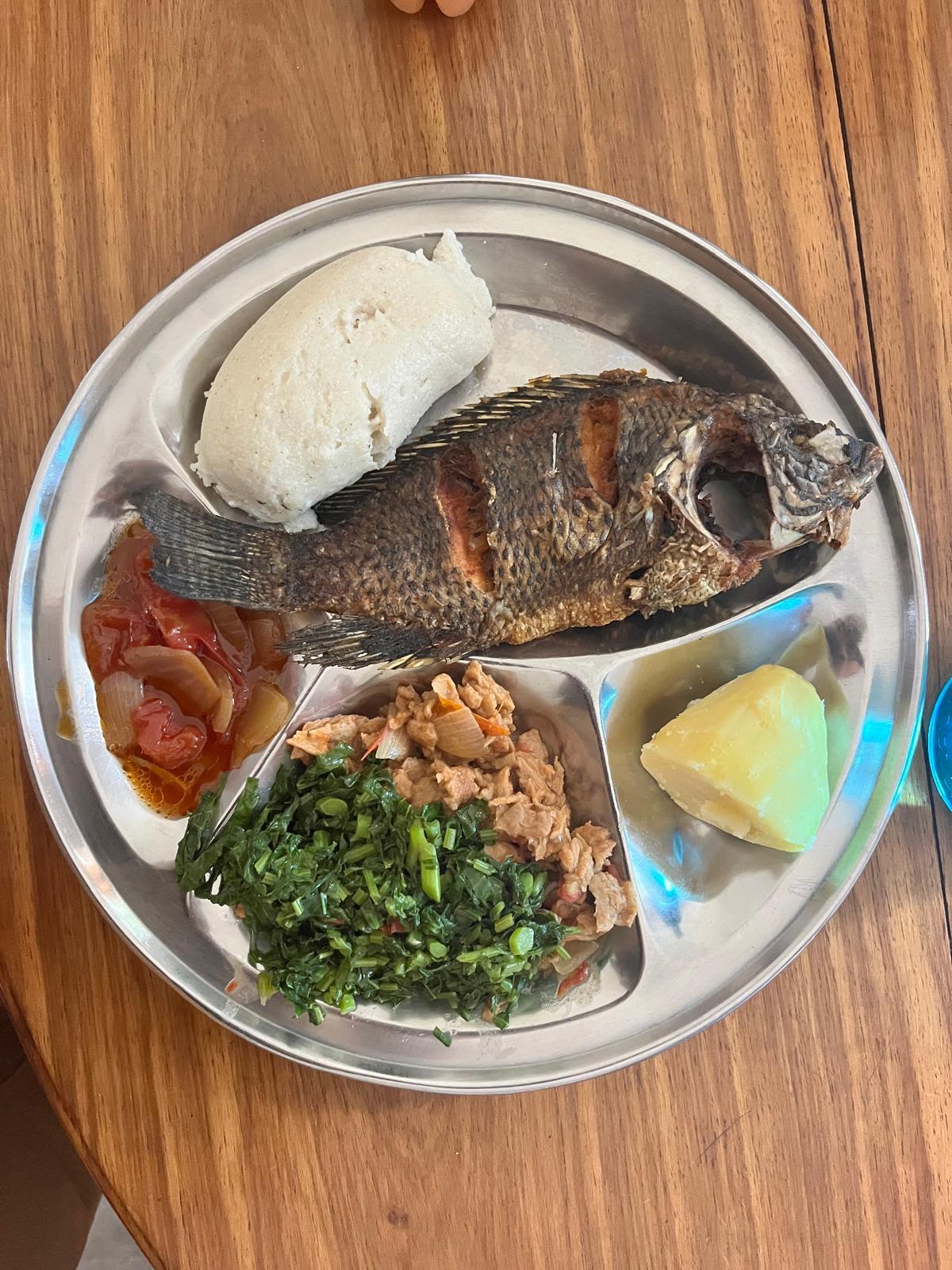
To make nshima, ground maize is added bit by bit to boiling water and stirred thoroughly to make smooth lumps that look like very thick mashed potatoes. It's usually really hot and I've looked silly a few times burning my fingers on it. When it isn't too hot, you pinch off a bit, roll it around to make a ball and dip it into the relish. The relish is cooked seperately from the nshima. Just remember to add lots of salt when cooking it!
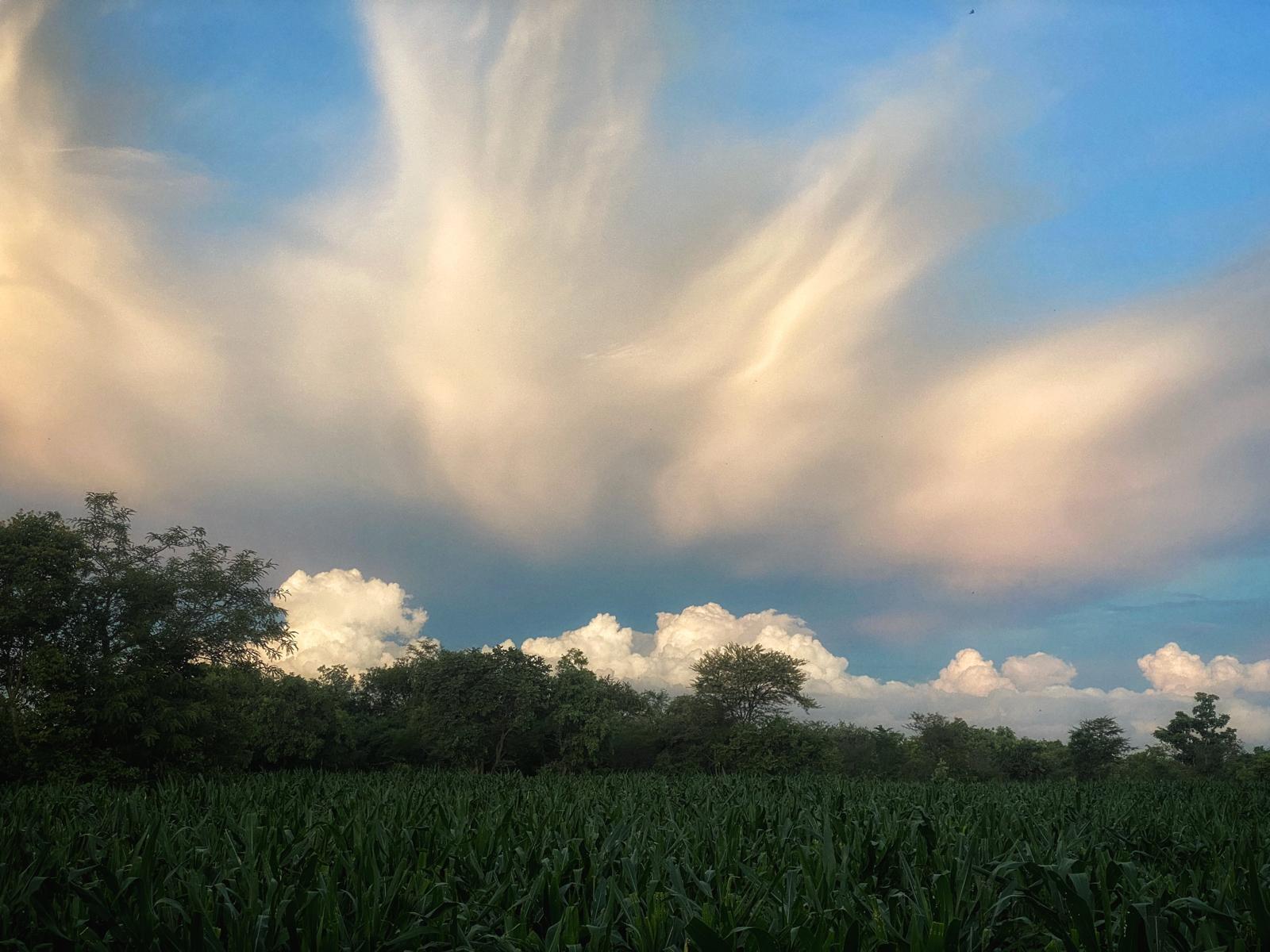
As a field crop, maize depends on rainfall to grow. After harvest, public transport overflows with maize as it's brought to nearby towns to be bought by the government and big companies who sell the maize to customers in urban centers. This means that the population, rural and urban, rely on the maize which relies on the rain. Farmers have noticed that rain has become less reliable. In 2024, more than two thirds of Zambia's maize crop failed due to drought. The government announced a state of disaster and set the Army and the Air Force to planting corn in irrigated fields.
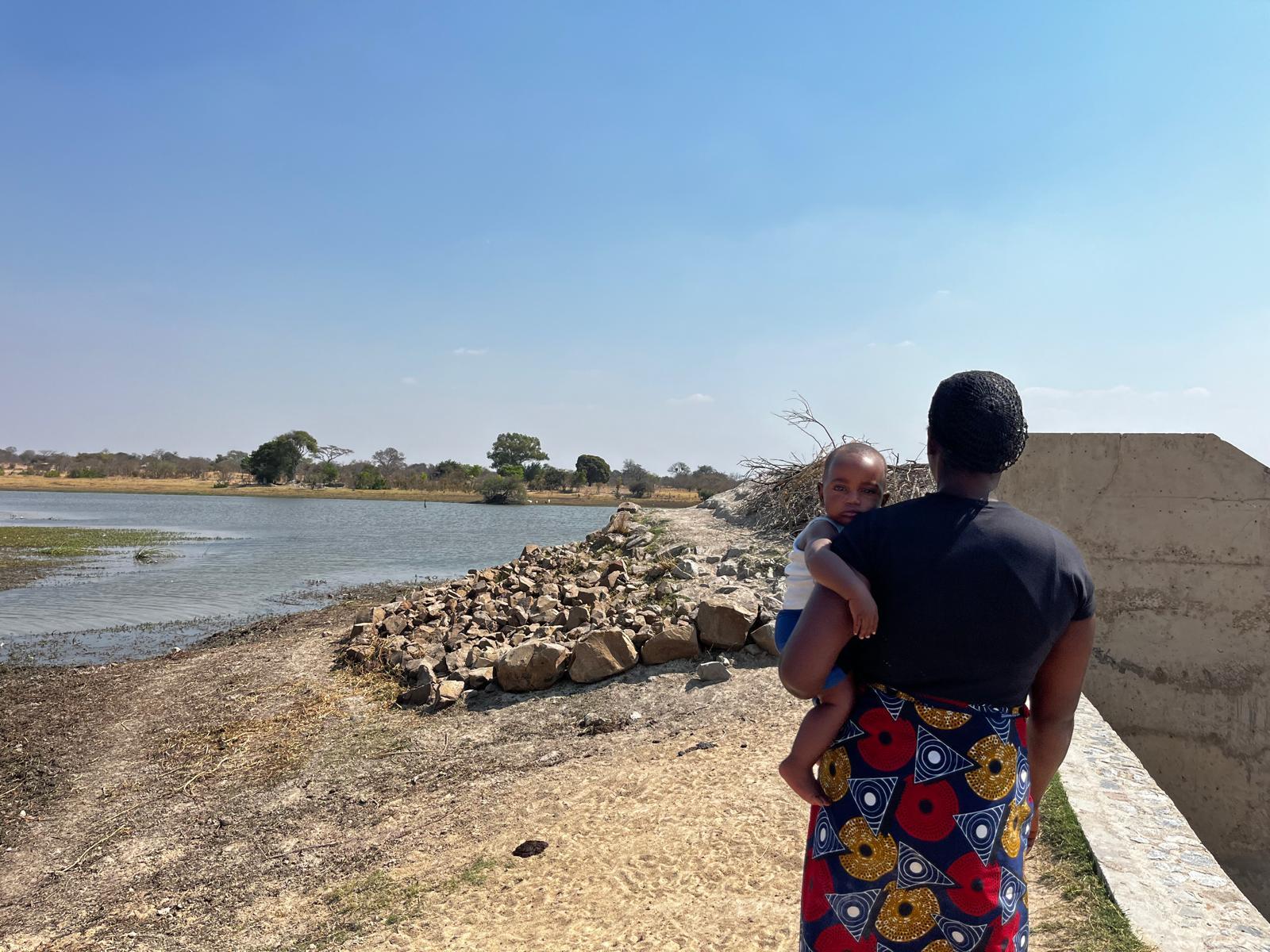
However, the drought didn't only affect Zambia's food system and economy -- the power grid was heavily impacted as well. At the time of the drought, 80% of Zambia's power was hydroelectric. As the drought continued, the turbines in the dams generated less and less energy. This meant that some days, the power grid had energy for only five hours. As a result of the drought, energy production has been diversified, with an increase in more reliable solar and coal energy -- leaving hydropower at only 60% of the total.