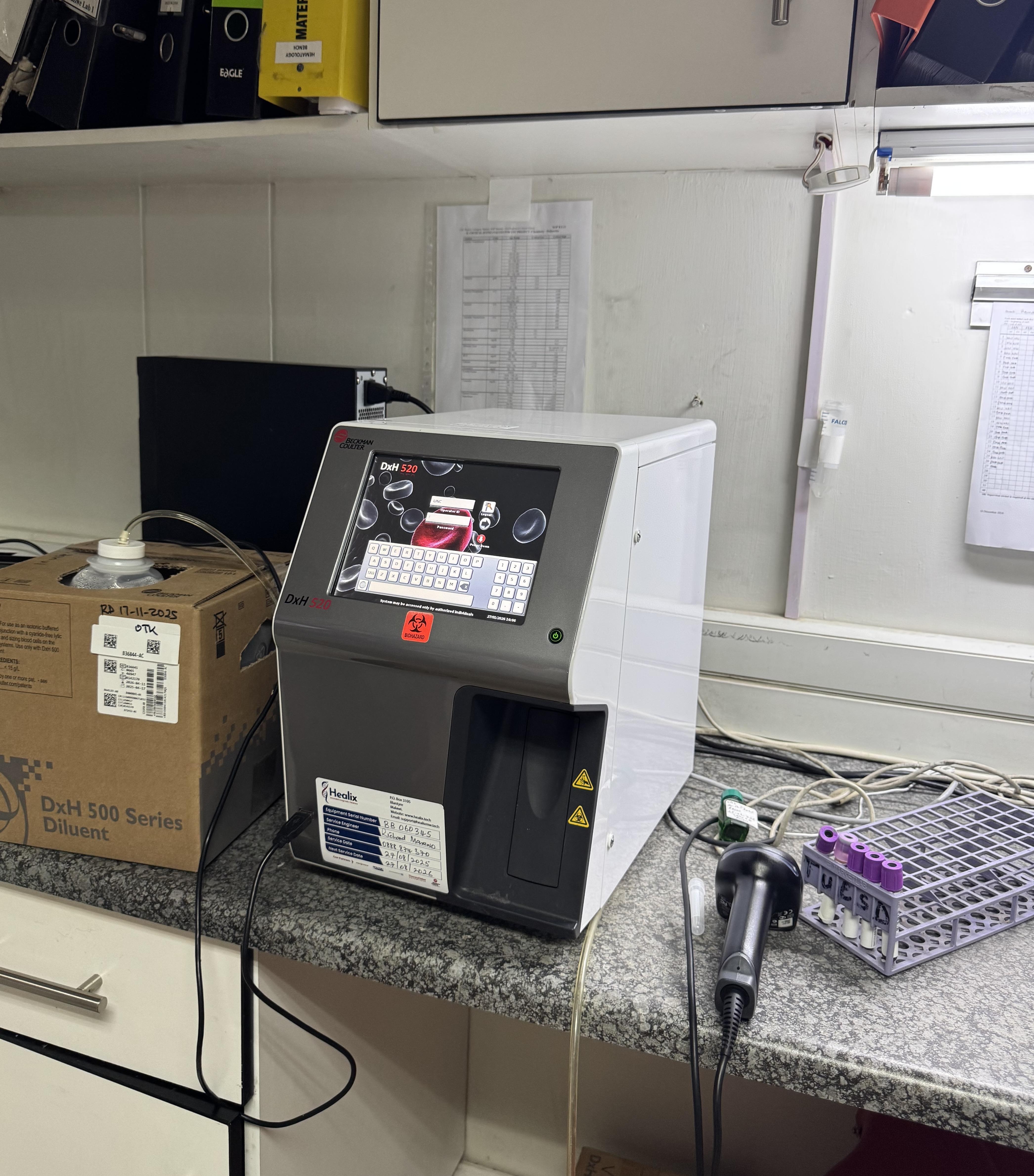
In Malawi, blood is donated generously, but only about reaches about 60-70% of the total donations needed across the country. Some donations cannot be processed due to equipment or supply limitations, while others test positive for transfusion-transmissible infections such as HIV, hepatitis B, hepatitis C, or syphilis. Careful testing is essential to keep patients safe, but it takes time and resources and reduces how much blood is available. At the same time, more children and adults are receiving cancer treatment and contributing to an increased demand for blood products. From a community perspective, this shows why systems matter. When someone donates blood, one donation can be separated into parts and help multiple patients. Strengthening blood systems supports entire communities.
This need is being addressed through strong partnerships with local and international organizations. The Malawi Blood Transfusion Service plays a central role by coordinating blood donation, processing, and distribution nationwide. Hospitals and cancer programs work closely with MBTS to prioritize patients with the greatest need. My research project focuses on studying the “vein-to-vein” pathway: tracking platelets from the donor, through the laboratory, and to the patient. By using data to understand where delays happen, we can identify practical ways to improve efficiency, reduce waste, and make better use of limited resources. Clinicians also adapt care based on availability by using evidence-based guidelines and careful monitoring.