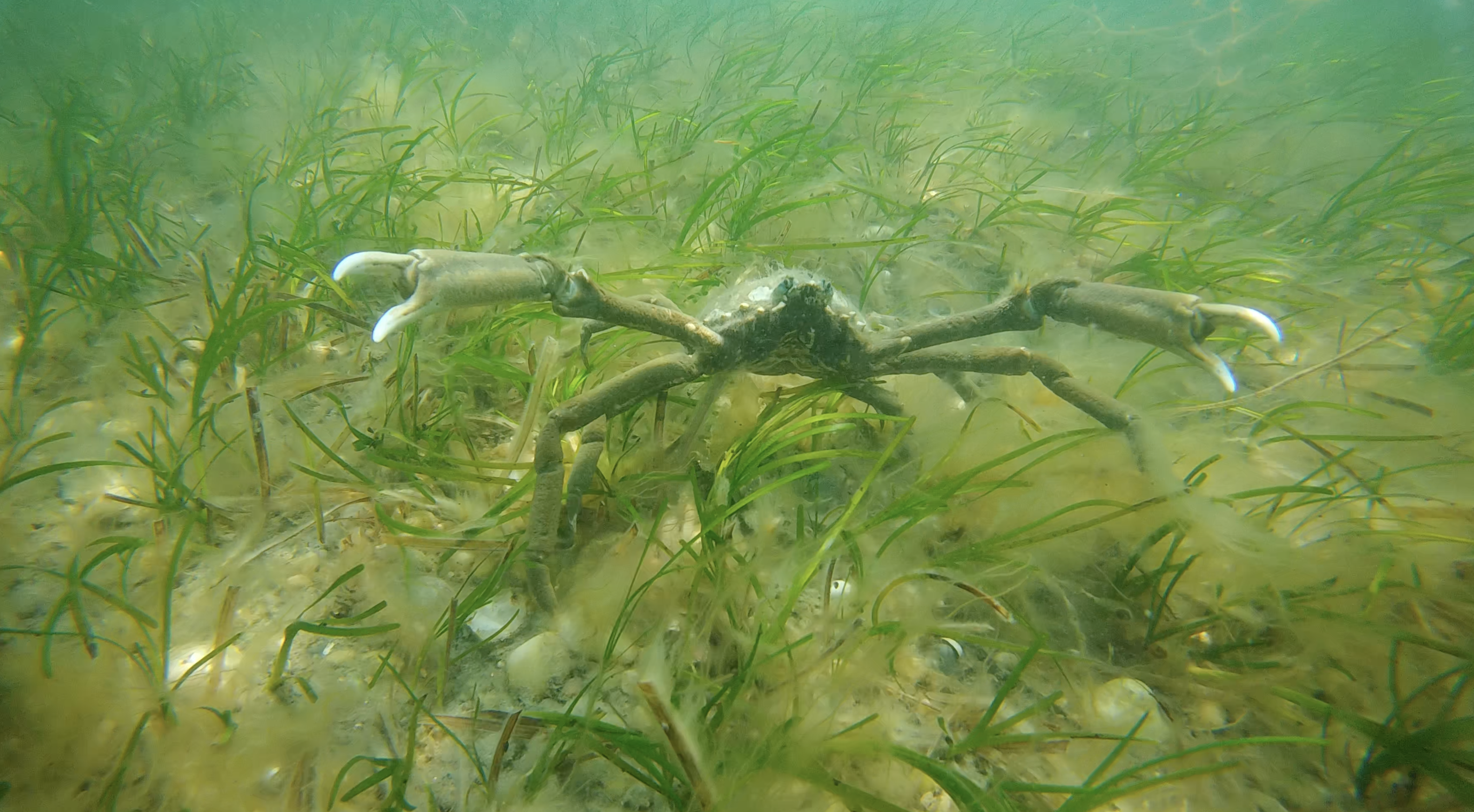
Across the world, seagrass has been dying and disappearing at a frightening rate, and every year more people are devoting their energies to find out why this is happening and how to stop it. I'm helping to figure out the best methods to take care of this important natural resource, so that it can keep taking care of us.
Seagrass looks a lot like, well, grass! And that's because it is. In fact, of all the plants that grow in the sea, it is the only one to have descended from land plants, and it closely resembles land grass in its form and function. There are over three dozen species of seagrass that grow across the Earth, and they all look and act a little bit different. Some are short, thick and stubby. Some are thin and wispy, and some have individual leaves that can grow multiple feet long! What they all have in common is that they make use of a root system that grows beneath the sand and they all pollenate, just like the grass, trees and flowers that grow on land. The species I'm studying in the Canary Islands is called Cymodocea nodosa, and is sometimes referred to as "little neptune grass". It grows in the form of shoots, which commonly contain between 3 and 5 blades of grass sprouting from a single point, known as the meristem. The leaves are quite narrow, and can grow up to 16 inches long. I think it's a quite cute and friendly looking grass, but you can judge that for yourself. Individual shoots are connected beneath the sand by roots that run horizontally, and which sprout tendrils that burrow down into the sand to hold the grass in place.