Victoria Falls is part of the Zambezi River, Africa’s fourth largest river, and forms the border between Zambia and Zimbabwe. It is considered the largest continuous sheet of falling water in the world and stretches over a mile wide. During peak wet season, more than 500 million liters of water can fall over the edge every minute. Standing near the falls, the scale is difficult to process. The roar alone makes conversation impossible, and the sheer volume of mist rising from below soaks you completely.
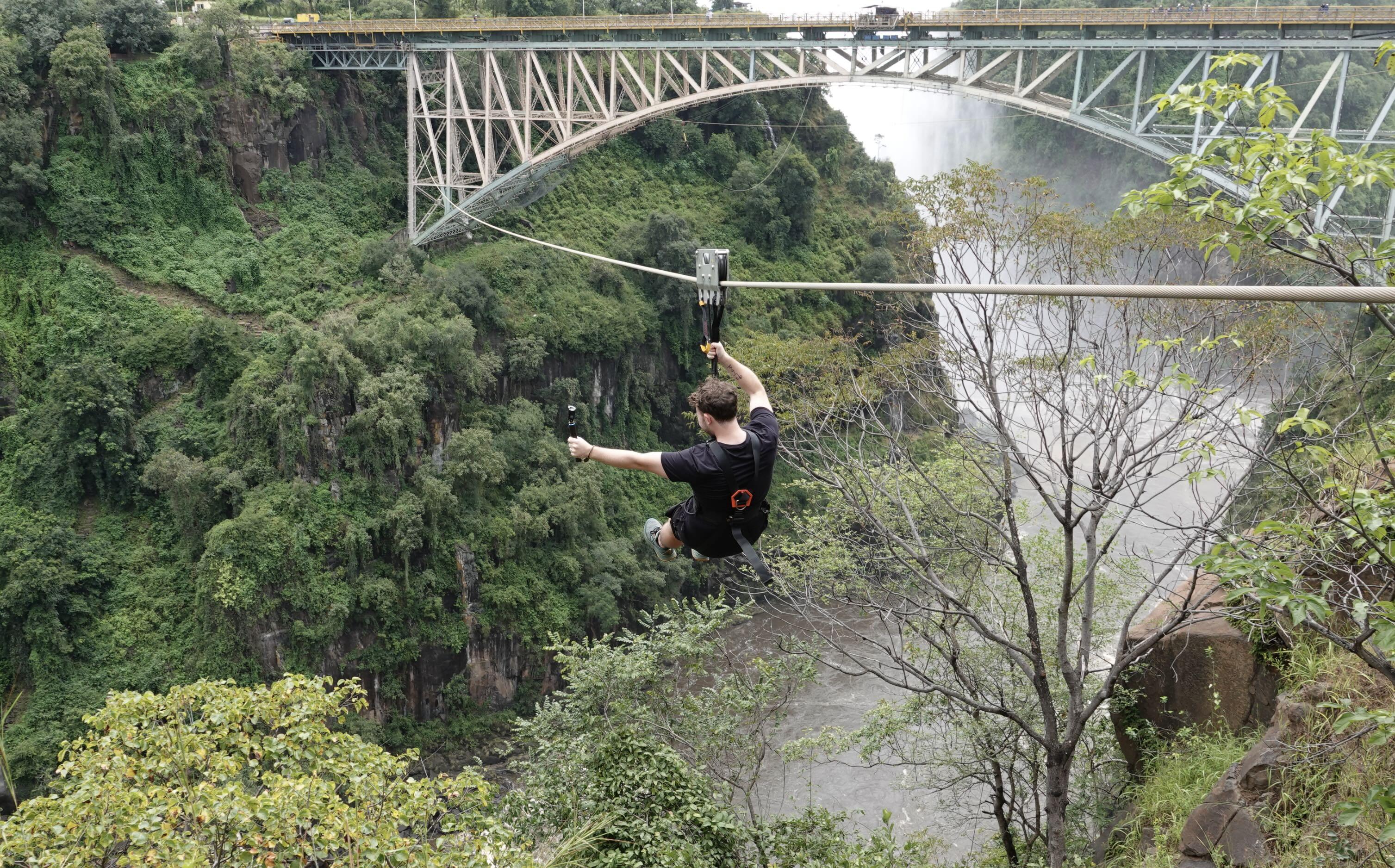
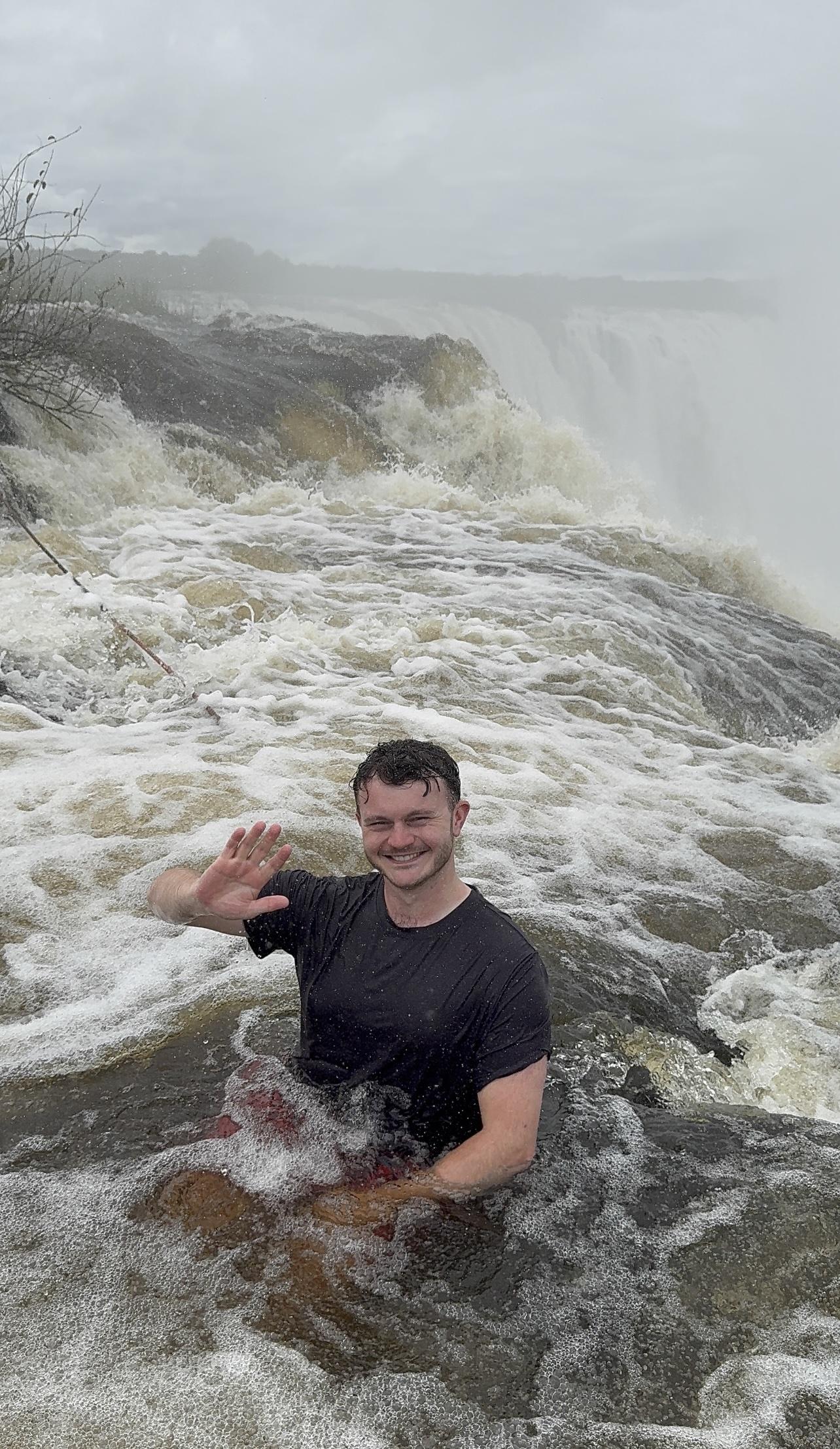
The mist rising from the gorge is what gives the falls their local name. As sunlight hits the spray, it creates full, circular rainbows that shift as you move along the pathways and bridges. We experienced the falls from both the Zambian and Zimbabwean sides where each offered a different perspective on the gorge and the flow of water. There is a historic bridge, completed in 1904 and spanning one of the gorges, that still connects the two countries and remains largely unchanged. It is functionally a one lane bridge for vehicle and has a total of three sections for a train, a vehicle, and a walkway for pedestrians. One of the most unique experiences was visiting Livingstone Island and sitting in Angel’s Pool along the edge of the waterfall, where the current flows toward the drop but is naturally slowed by a rock lip. It was a surreal vantage point that was only possible by having two guides hold your legs to help prevent you from tumbling over.
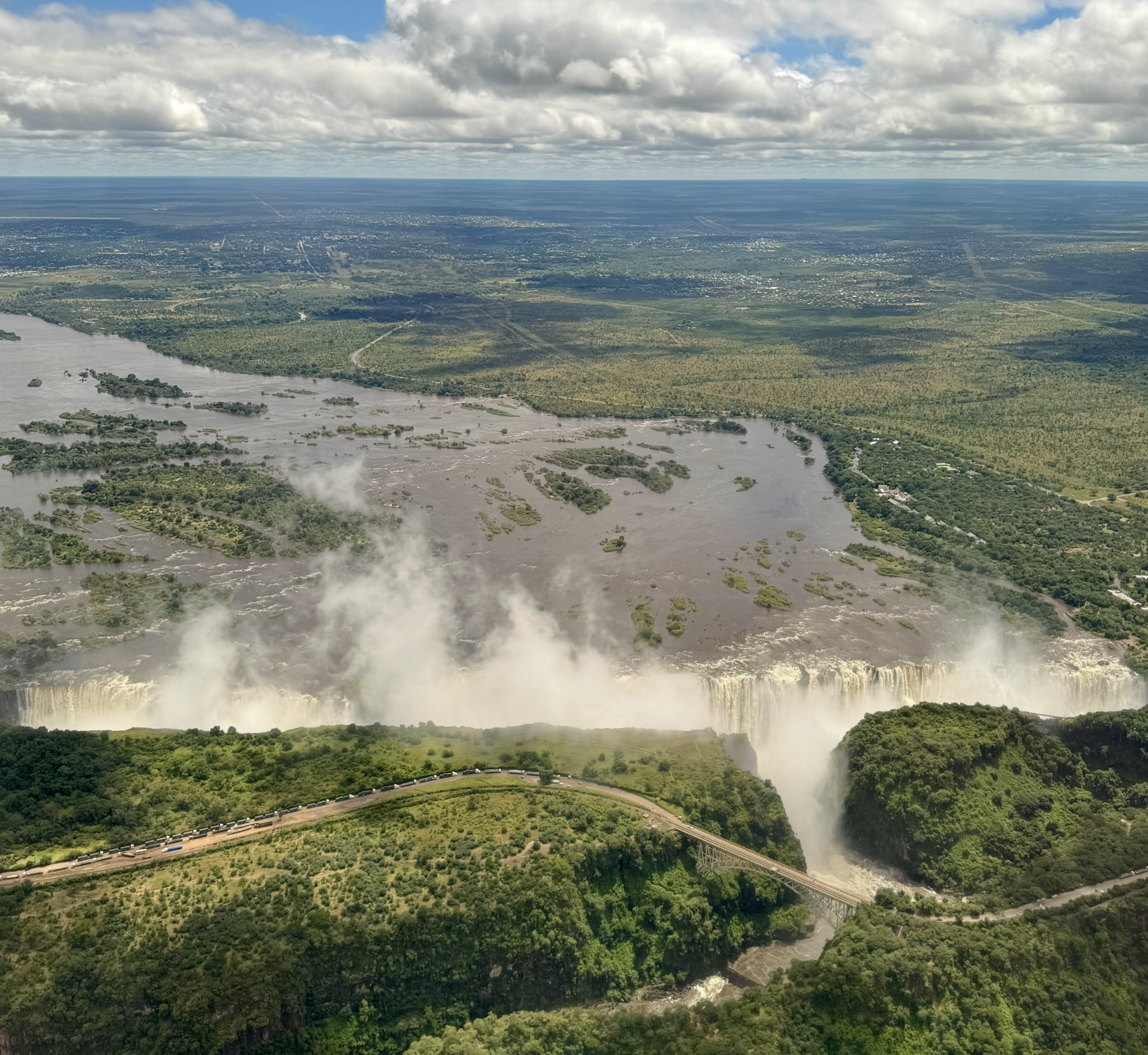
To better appreciate the scale, we also took a helicopter flight over the falls. From above, the shape of the Zambezi River and the zig zagging gorges becomes clear in a way that is not visible from the ground. We ended the trip with a cultural performance featuring dancers representing Zambia’s ten provinces.