The Coloured community, for example, includes people of mixed ancestry-- Indigenous Khoisan peoples, and descendants of enslaved people brought to the Cape from Madagascar, Indonesia and Malaysia. Despite this diversity, apartheid systematically oppressed the Black majority, restricting where people could live and limiting access to education and economic opportunities.
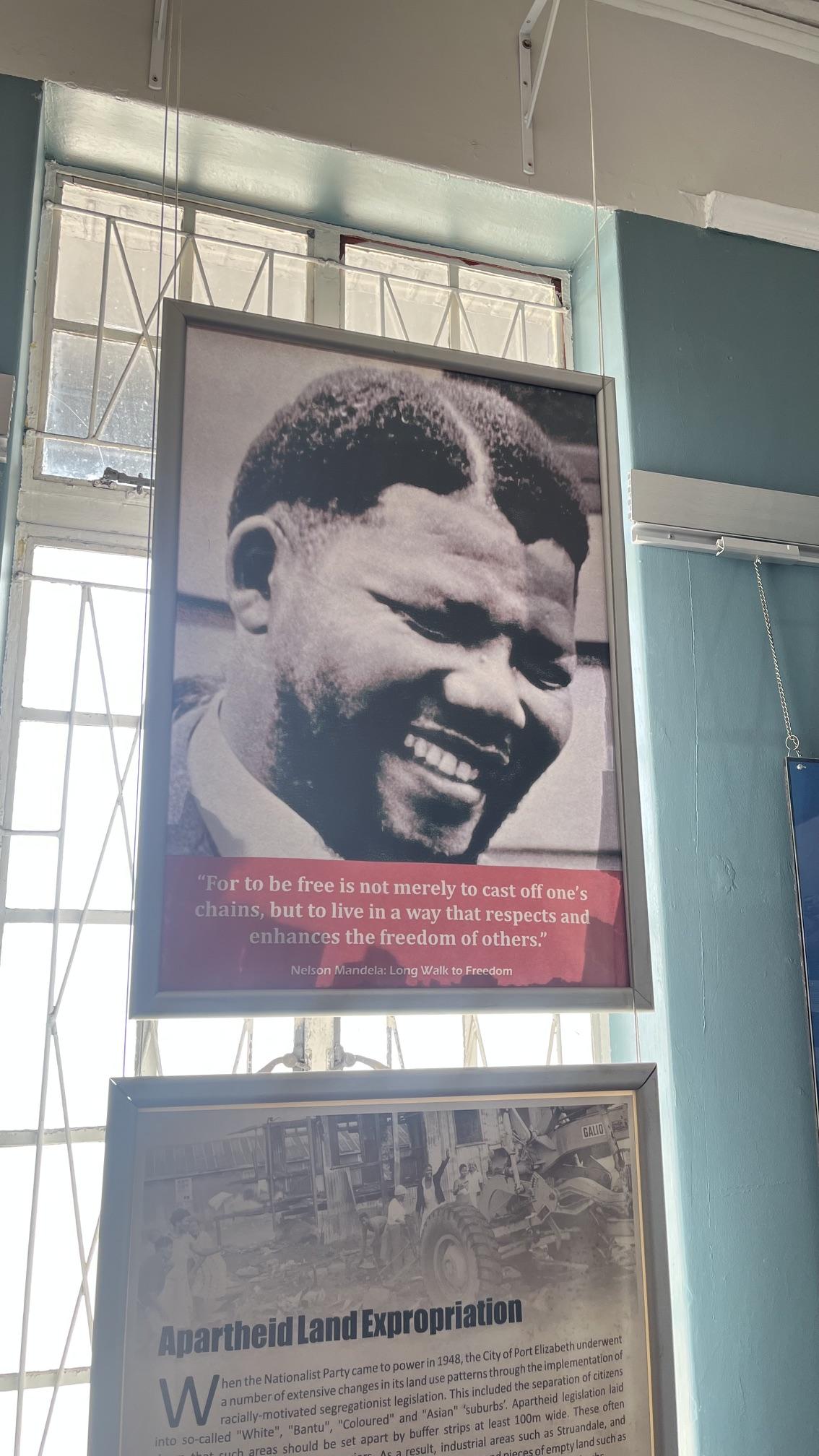
Apartheid in South Africa and segregation in the United States have important similarities. During the Jim Crow era, Black Americans faced segregation, discriminatory housing practices and unequal access to education and employment. Similarly, beginning in 1948, South Africa’s apartheid government enforced segregation through laws such as the Group Areas Act of 1950, which separated communities by race, and restricted where people could live. The Bantu Education Act of 1953 established an inferior education system for Black South Africans. These histories demonstrate how institutionalized discrimination limited opportunities across generations.
Apartheid’s effects remain visible in South Africa’s spatial structure. Just as redlining and discriminatory housing policies segregated Black Americans and limited their access to resources, apartheid-era forced removals displaced many Black and Coloured South Africans to townships far from economic centers. Areas such as Khayelitsha and Langa illustrate how segregation shaped access to employment, education and public services. Although apartheid ended with South Africa’s transition to democracy in 1994, many townships still face poverty, unemployment, overcrowded housing and limited resources.