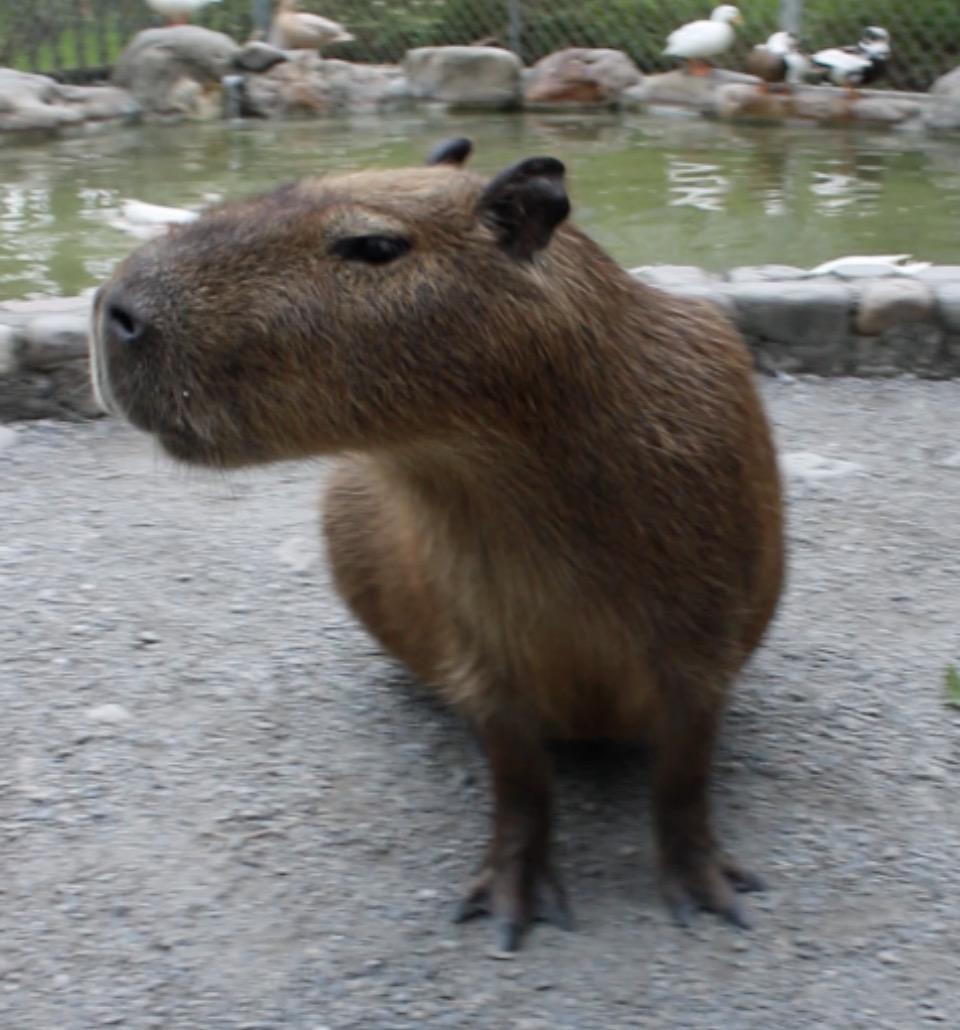
They often inhabit areas near water, and so you can likely spot them around rivers, lakes, ponds, marshes and flooded grasslands, where the land is green and wet. In the wild, they often live in groups of about 10 to 20 capybaras, although these can be much larger during dry seasons as many groups will band together around the same water sources.
Not surprisingly, the water is often a capybara’s best defense. Predators such as jaguars, caimans (similar to alligators) and anacondas in the forest hunt capybaras. A capybara that senses danger can dive into a river, swim away and hide with only its eyes and nose above the surface. It can even stay fully submerged for several minutes, and many capybaras also sleep in the water for these reasons.
Water helps capybaras overcome other physiological and natural challenges. Because capybaras possess relatively few sweat glands, being able to cool off in a pond or mud pit helps keep them comfortable in hot climates. The wetlands also supply their food. They graze on grasses and water plants, which are plentiful near rivers and marshes. Lastly, because they typically live in groups of approximately a dozen capybaras, they can rely on each other and work together to spot predators.
Capybaras face both natural and human threats in the wild. As I mentioned before, they have many predators. Young capybaras are especially vulnerable. Additionally, capybaras are heavily hunted in some areas for their meat and hides. Due to deforestation for farming and industrial development, many of their wetland habitats are shrinking.