Workers didn't just come to work, though; they also brought their culture and traditions with them, including food. Kebabs, a type of roasted meat, were popular in Turkey, usually served with vegetables and/or rice. In 1972, the Turkish guest worker Kadir Nurman, however, decided to transform the dish into a sandwich so it could easily be served to go. He added vegetables, salads, and sauces to make the dish hearty and flavorful. The German döner was born and spread from Berlin all over the country. Today, they are the most popular fast food in Germany, with more than 16,000 döner shops across the country.
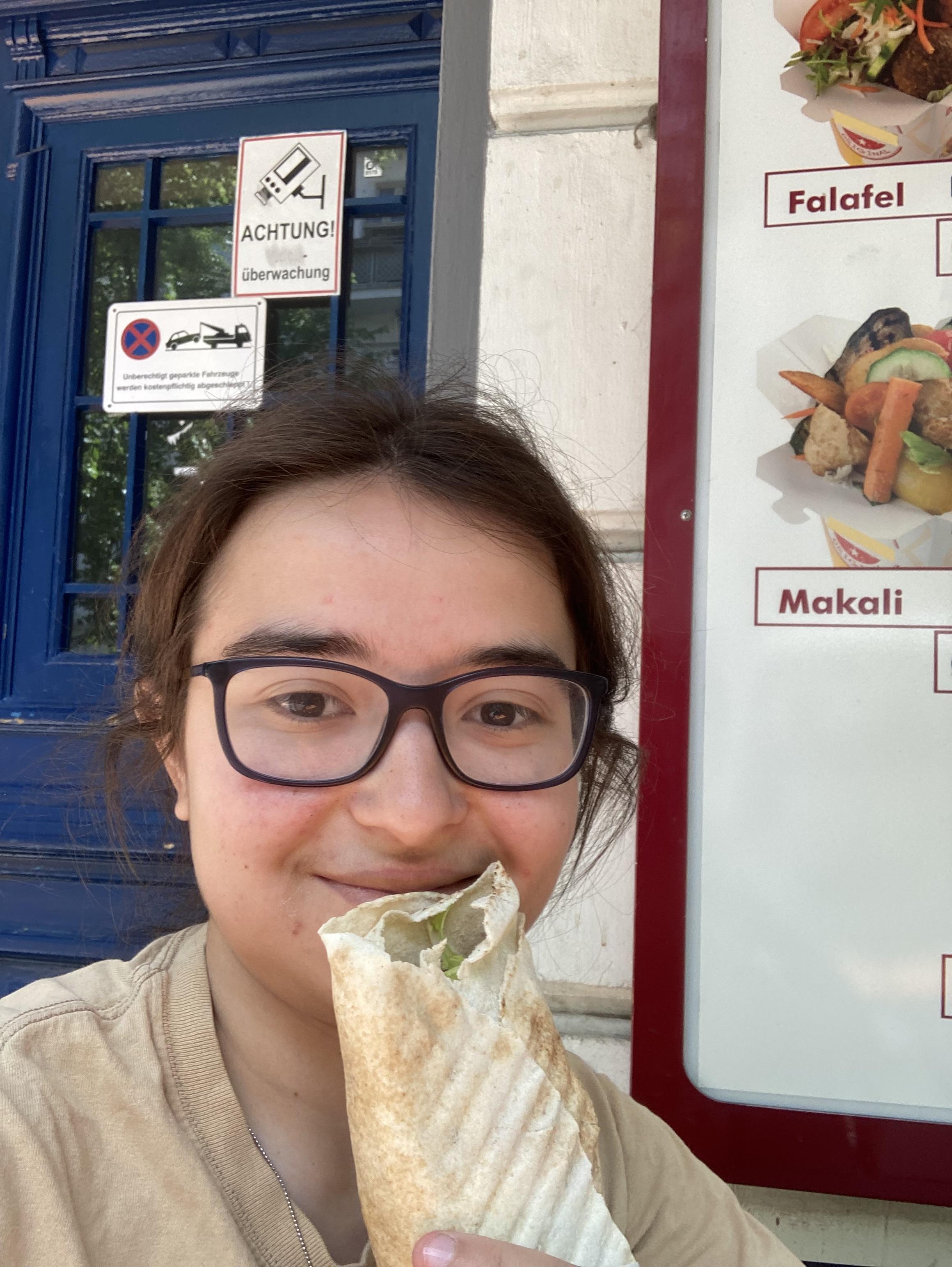
I first tried the döner when I studied in Germany during the summer of 2023. I remember struggling to find the German words to ask for a “Seitan Döner” (pronounced "zuytan" like the "uy" in the word buy). The owner of the imbiss replied in his just as broken German (his Turkish accent was very thick). I remember there was a bit of confusion when I ordered because I mispronounced “seiten” and I was trying to confirm that I'd ordered the vegan one, since most döners are made with real meat. Eventually, the owner figured out what I meant, and I enjoyed my first döner at a table by the window, watching the people on the Berlin afternoon streets slip by. I enjoyed the rich, salty, and juicy seitan (a type of vegan meat made from wheat), complemented by tomato, red cabbage, onion and hummus.
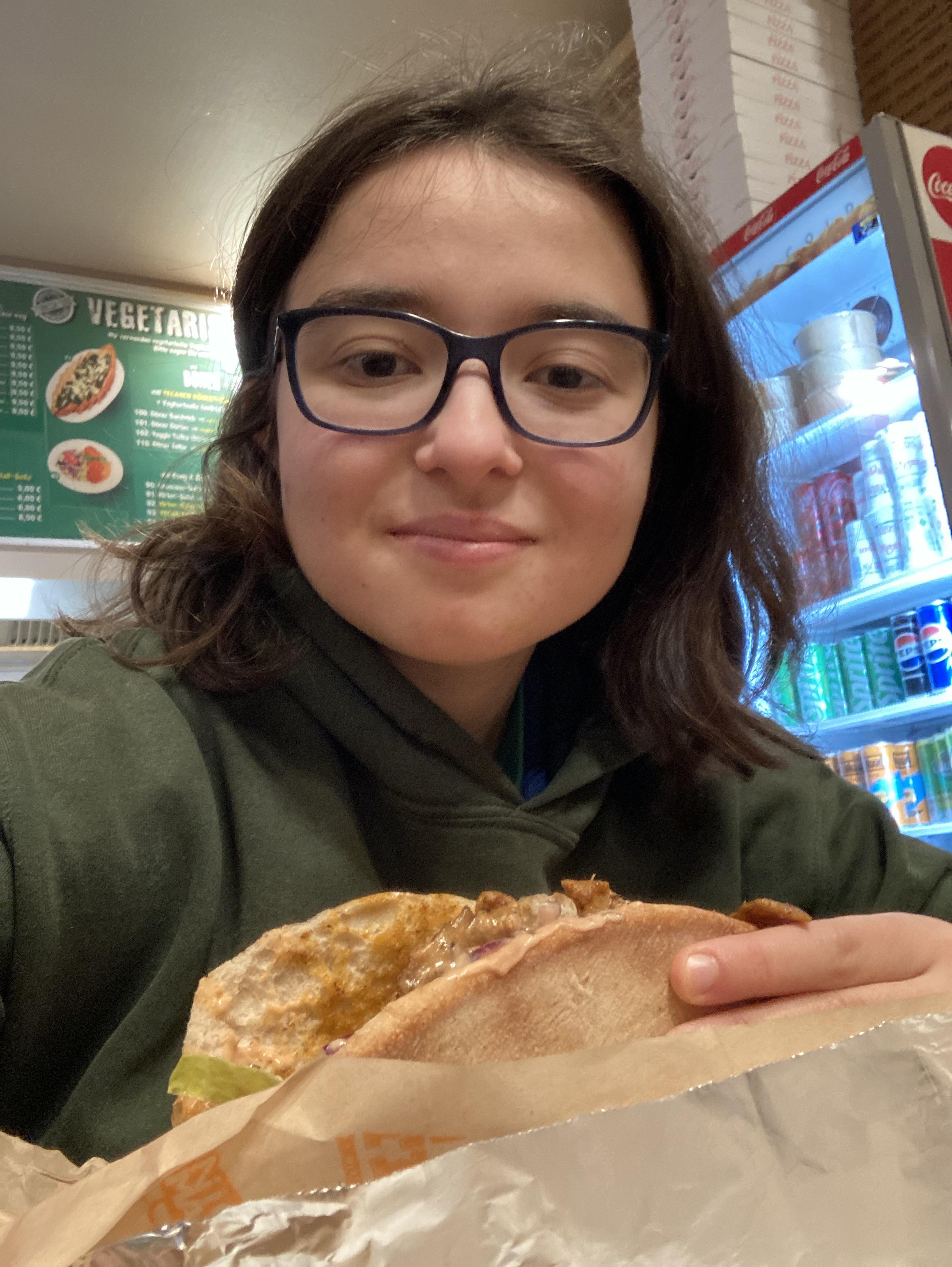
This week, I went to a döner place in Mainz, famous for its vegetarian and vegan döners. I sat at a table near the counter and enjoyed a leisurely dinner before heading on the trolley to the university's language cafe.