As I pause to appreciate this small moment, I am transported to a completely different world, far away from the one I know.
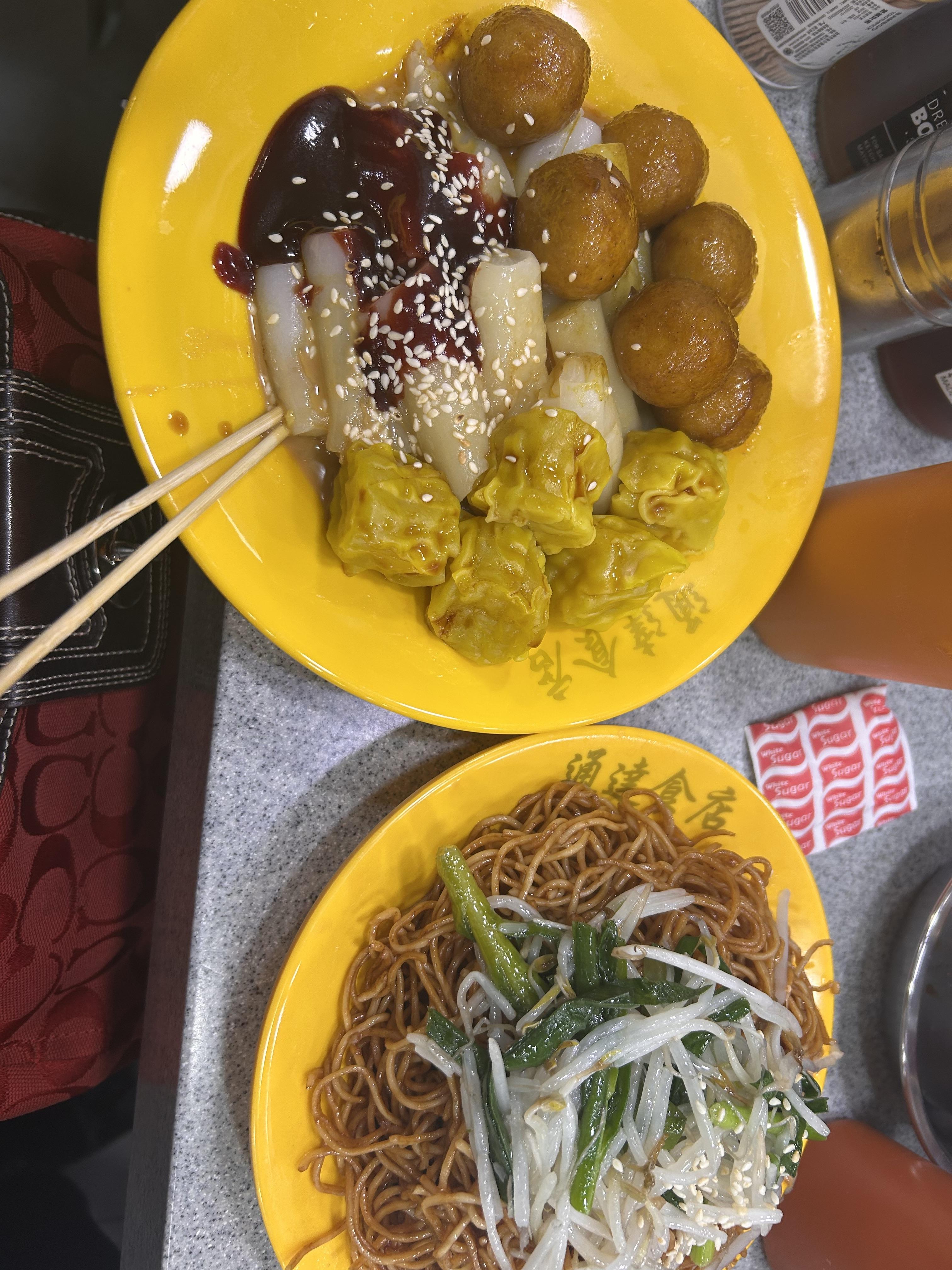
In the photo, you can see two plates. The first one has steamed rice rolls (cheung fun). These are the white, rolled items topped with a dark sauce. I think it is a mixture of a sweet sauce with soy sauce, sesame sauce and sesame seeds. Then, it has curry fish balls.These are the round, orange-brown balls simmered in a thick curry sauce, which is also a very popular local snack. Lastly, siu mai, or shao mai, are the yellow dumplings, typically made with fish paste and pork. On the other plate, there are pan-fried noodles with bean sprouts and other veggies. For my drink, I ordered my favorite, Hong Kong-style milk tea.
Hong Kong was under British rule for 156 years (1841-1997) until it was transferred to China’s rule. Hong Kong became a British colony as a result of the Opium Wars. This colonial past directly influenced a lot of Hong Kong’s famous dishes. For example, Hong Kong-style milk tea was inspired by British afternoon tea, where it was served with black tea, milk and sugar. However, since it was only served to rich people in high-end restaurants, the people of Hong Kong created a local variant with inexpensive ingredients such as evaporated milk and Ceylon black tea.
Similarly, egg tarts in Hong Kong derive from the British custard tart. It was brought to southern China in 1920, and local Chinese chefs adapted the recipe by using the flaky dough commonly found in dim sum dishes.