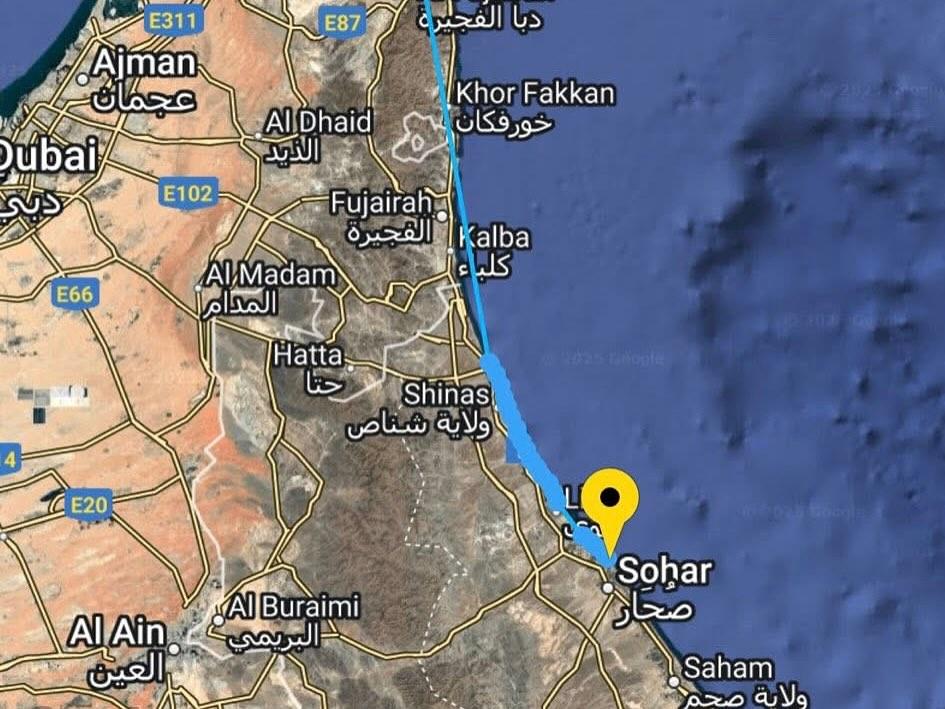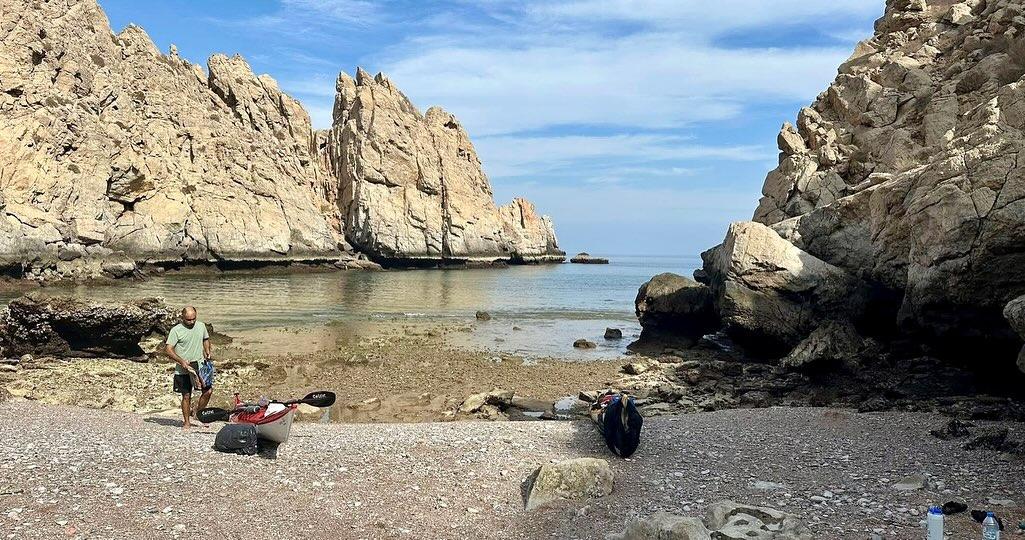
Today’s journey carried us around the easternmost point of the Arabic-speaking world, a remarkable geographic threshold where seas converge, and marine life has long flourished. This stretch of Omani coast is a vital nesting ground for thousands of sea turtles, a reminder of the region’s ecological significance.
The waters here feel vibrant and alive, teeming with flashes of movement beneath the surface. Yet, as with oceans everywhere, they no longer hold the abundance they once did. Even in this seemingly untouched corner of the world, the impacts of environmental change and human activity are visible. Paddling through these waters is both inspiring and sobering — a powerful lens into the beauty that remains and the urgency of protecting it.
For centuries, the sea has been a lifeline for the Omani people. It has not only provided food but also enabled a flourishing maritime culture built on skillful navigation and deep knowledge of seasonal winds. By harnessing the power of the monsoon, Omani sailors carried dried fish, frankincense, and other goods across vast distances — westward to Zanzibar and the Swahili Coast, and eastward to the ports of the broader Indian Ocean world. These seaborne routes connected Oman to thriving global networks of trade, ideas, and culture, leaving a maritime legacy that still shapes the nation’s identity today.