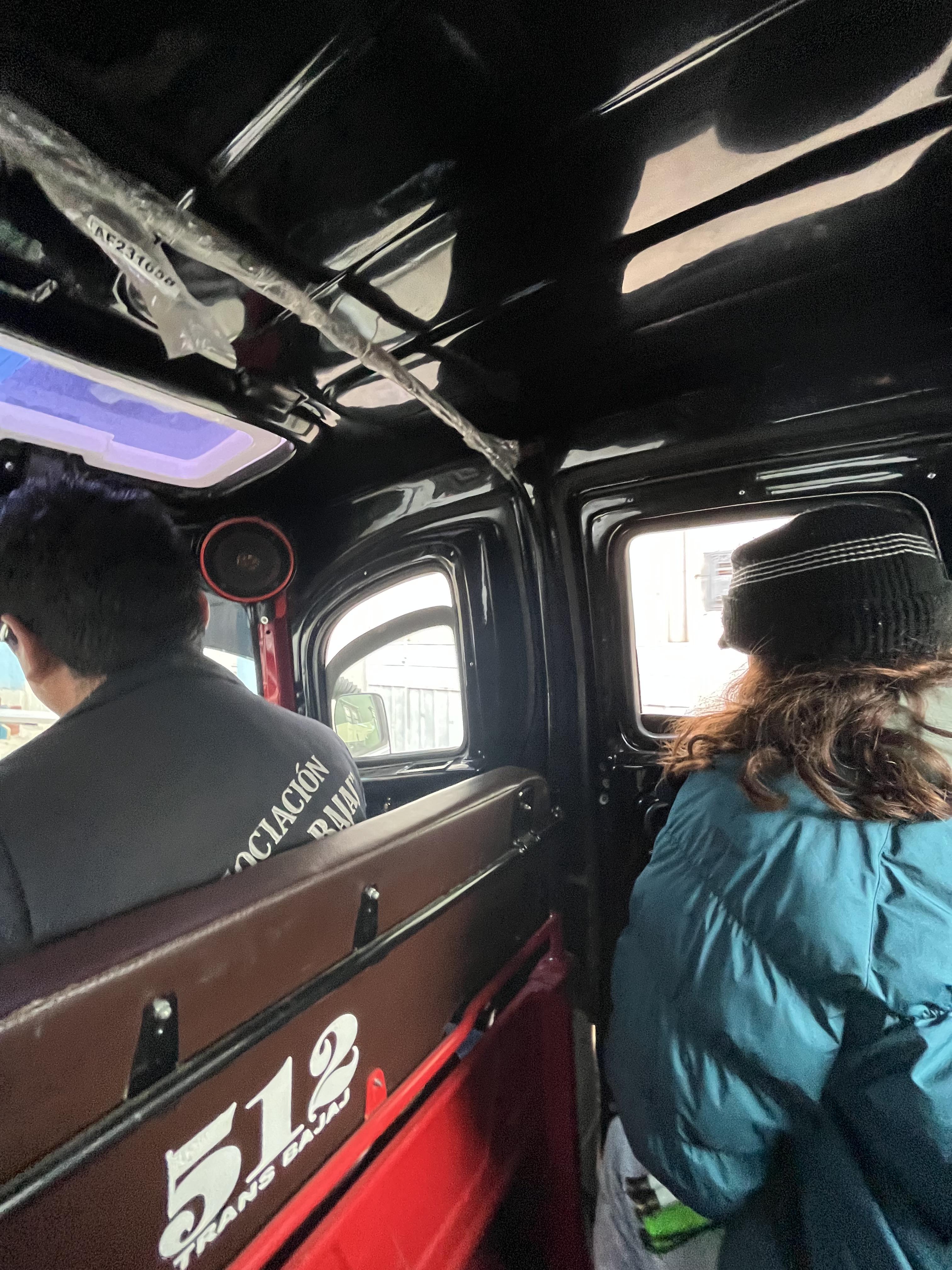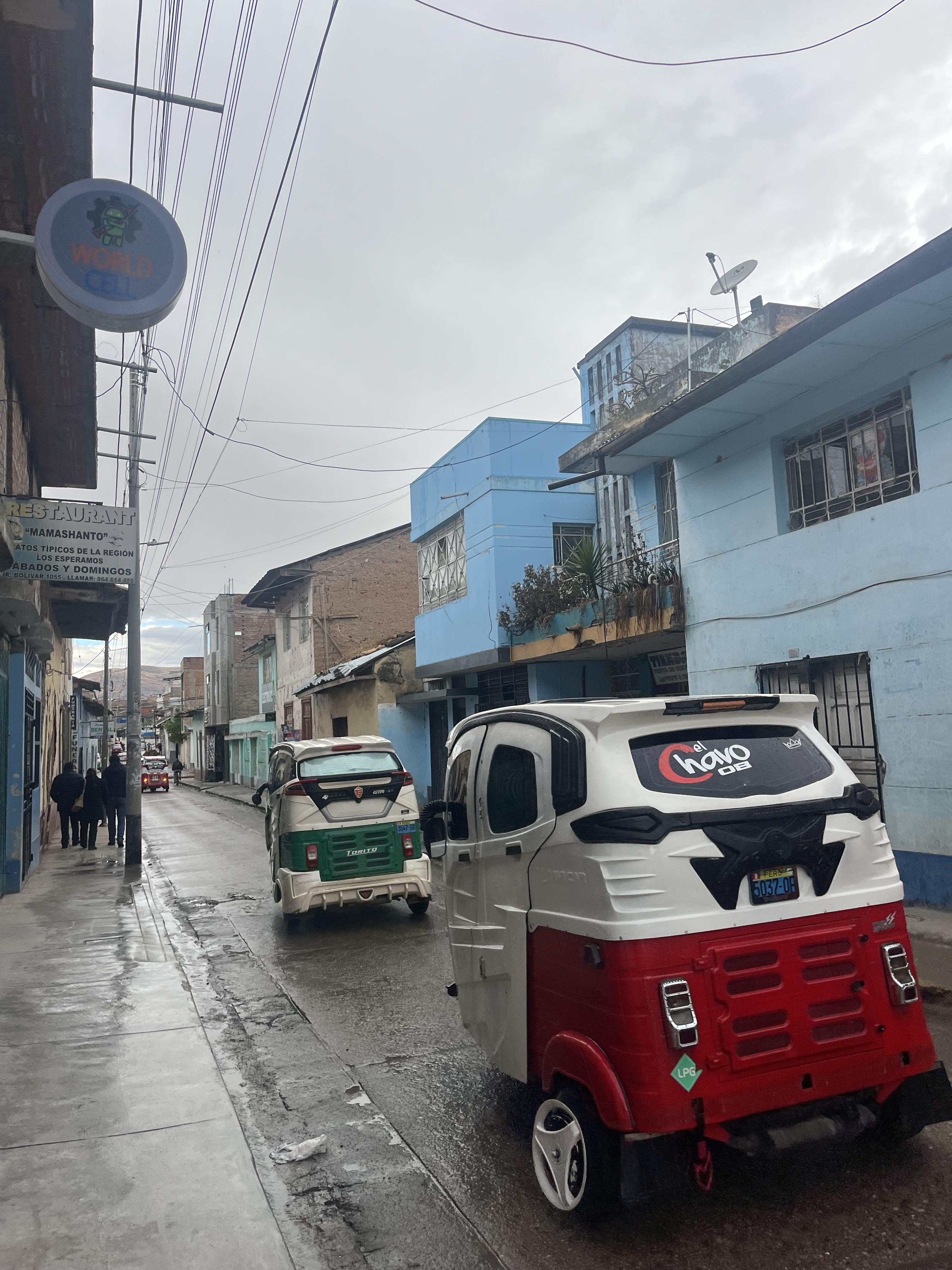
Another popular—and fun—option is the mototaxi, a small three-wheeled vehicle that’s part motorcycle, part taxi. These are especially common in smaller towns and are perfect for short distances. Every morning around 6:30, I wake up to the sound of mototaxis honking outside. Since there aren’t many stop signs here, drivers honk at intersections to alert others that they’re coming.
To get almost anywhere in my town, I usually walk, but I take a “moto” if I’m carrying something heavy or if it’s raining hard. A short ride typically costs about 1.50 soles (around 44 cents). The first time riding in one is always a little exhilarating, which is why all of my visitors love trying it out.
People also walk a lot, especially in rural areas. Because towns are smaller and more spread out, walking is often the easiest and most affordable option.
At first, using transportation in Peru felt overwhelming. There aren’t always clear schedules or signs, and everything moves quickly. When I first rode in a combi, I wasn’t sure when to get off or how to pay. I’ve since gotten very used to yelling “¡bajo!” when I need to get out, and without fail, every time someone enters or exits, the cobrador yells “¡sube, sube, sube!” or “¡baja, baja, baja!”
But after a few tries, I started to feel more comfortable. It became almost fun—like learning a new system or code. I also liked how social it felt.