We went out to a town nearby Berlin called Lubbenau, which is famous, among other things, for its pickles. When I saw pickle bread, I knew I had to show you all! It’s just another example of how many different kinds of bread there are in Germany. In this town, I learned more about the geography of Germany. I told you before that Germany gets consistent rainfall, and in this town, they have hundreds of little canals crisscrossing the area. All the locals have boats, and the canals even have street signs! Germany’s wet climate allows for these canals to be used reliably, and of course makes it a great place to grow cucumbers for pickles. After all, cucumbers require very wet conditions to grow big and juicy the way we like them.
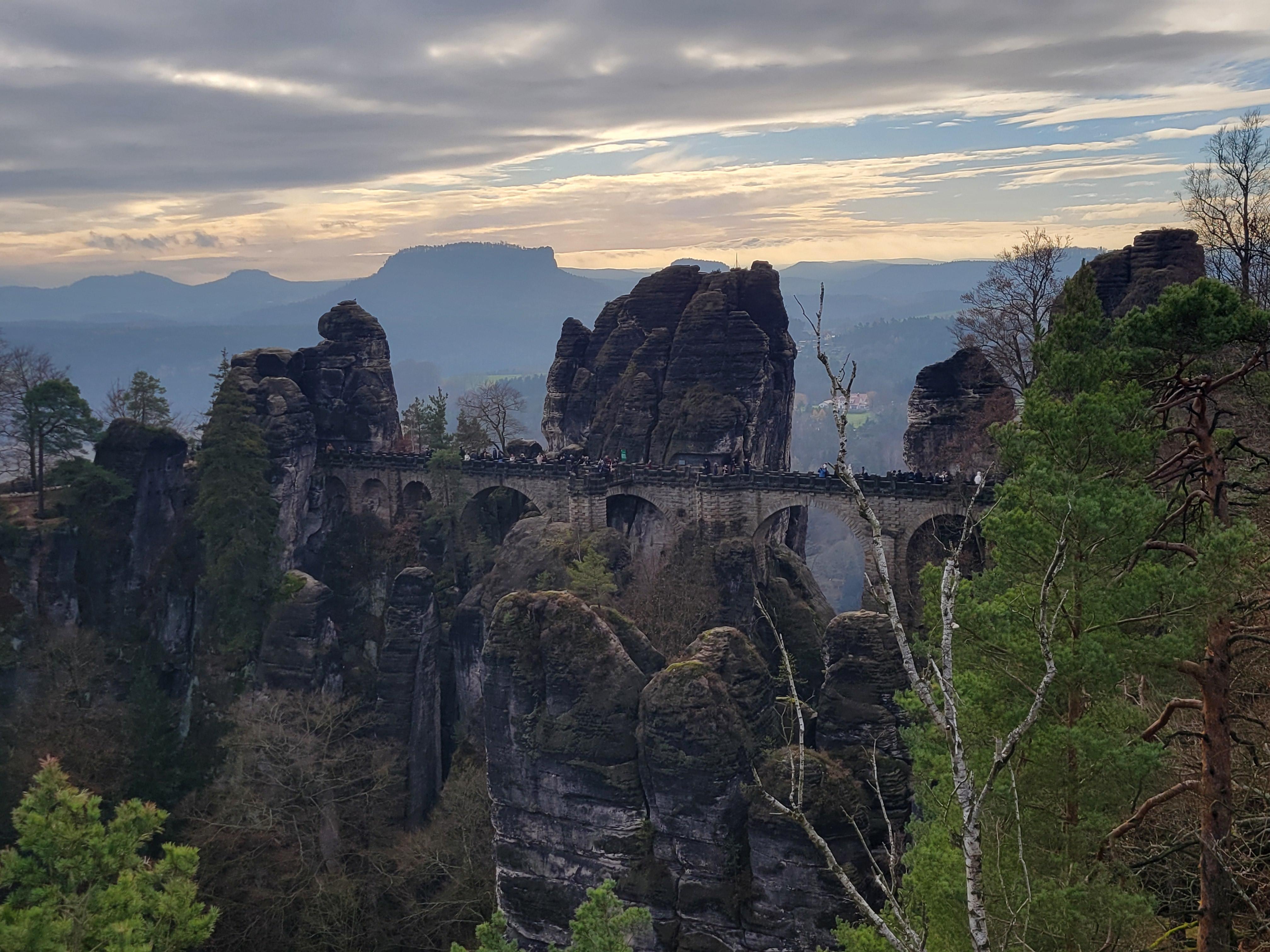
Speaking of geography, do you remember when I said that the majority of Germany is quite flat, except for the Alps? I visited Dresden with my family, and right outside Dresden is a National Park (yes, Germany has national parks too, isn’t that cool?) with amazing rock formations. These intricate rock formations were originally sandstone cliffs towering above the Elbe river, but because sandstone is a soft rock, the river and rain has eroded them into breath-taking shapes. It was an absolutely gorgeous hike, but I want to share with you what I learned about the forest.
As you know from my Christmas market article, there are lots of spruce trees in Germany. However, when we visited the park, there were signs warning us about the danger of dead trees falling on us. Curious about why so many spruce trees were dying, I learned that spruce trees don’t normally grow in these regions. Beech and oak trees are more commonly found, but these trees were cut down to assist life and reconstruction after World War II.