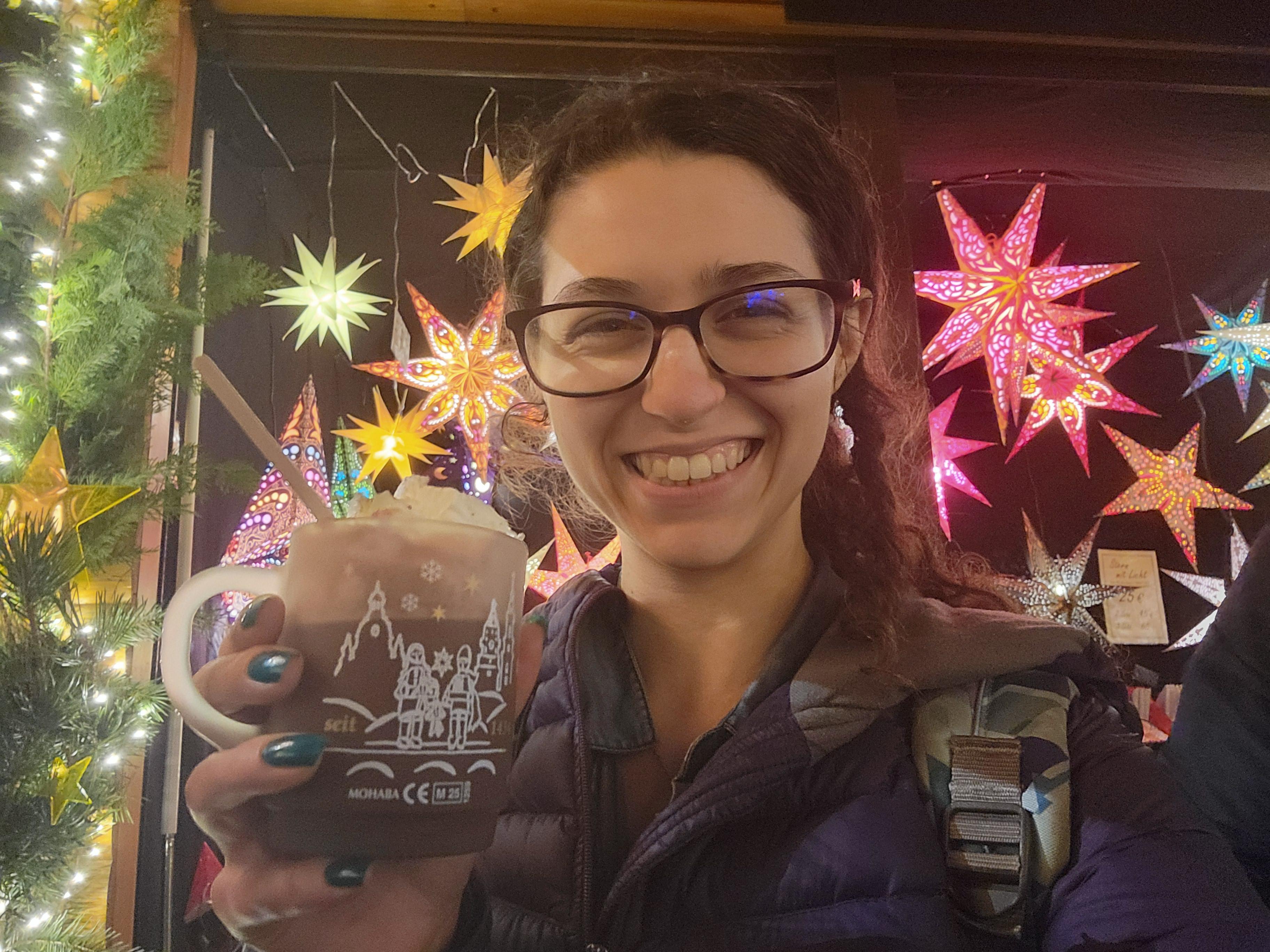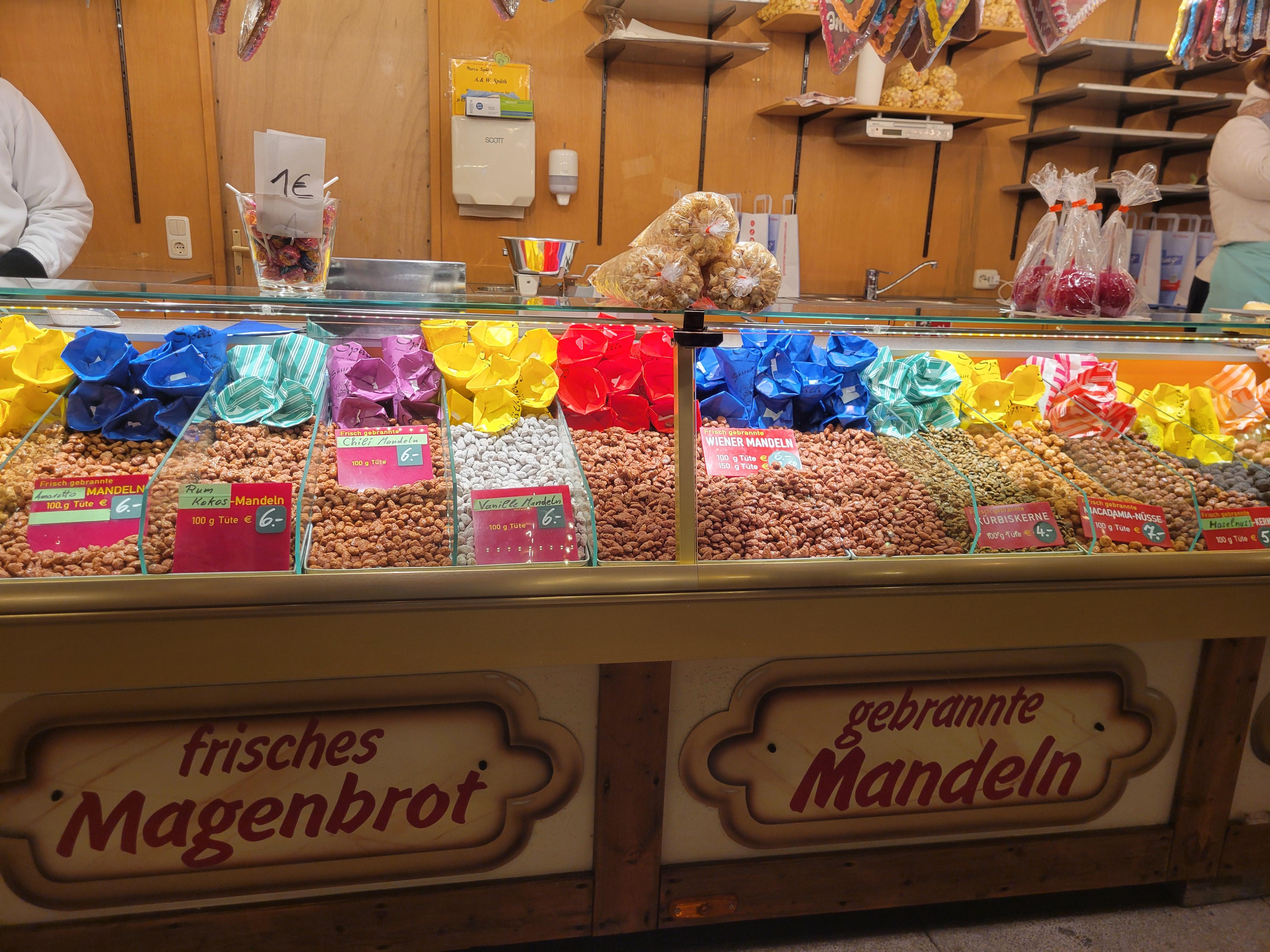
I saw many longstanding traditions. The most important is good food! Christmas markets have spiced nuts, Lebkuchen (anise cookies), and many other delicacies. They also have lots of warm drinks: Gluhwein (mulled wine), hot chocolate, and tea. I love hot chocolate, and was surprised to see that the Christmas markets have reuseable cups to drink out of! Not only does this minimize trash, it’s really cool to see the designs at different Christmas markets, because each market has it’s own design. Many people even pay to bring them home as a souvenir.
You may remember that I have a little German heritage in my family tree. Every year, we make Lebkuchen from scratch, and one of the foods I was most excited to try was authenticLebkuchen. Lebkuchen tastes like Gingerbread, except it’s more spicy. I was surprised to find that real Lebkuchen is a very soft and bread-like cookie, instead of the thin crunchy cookies we always make in my house.
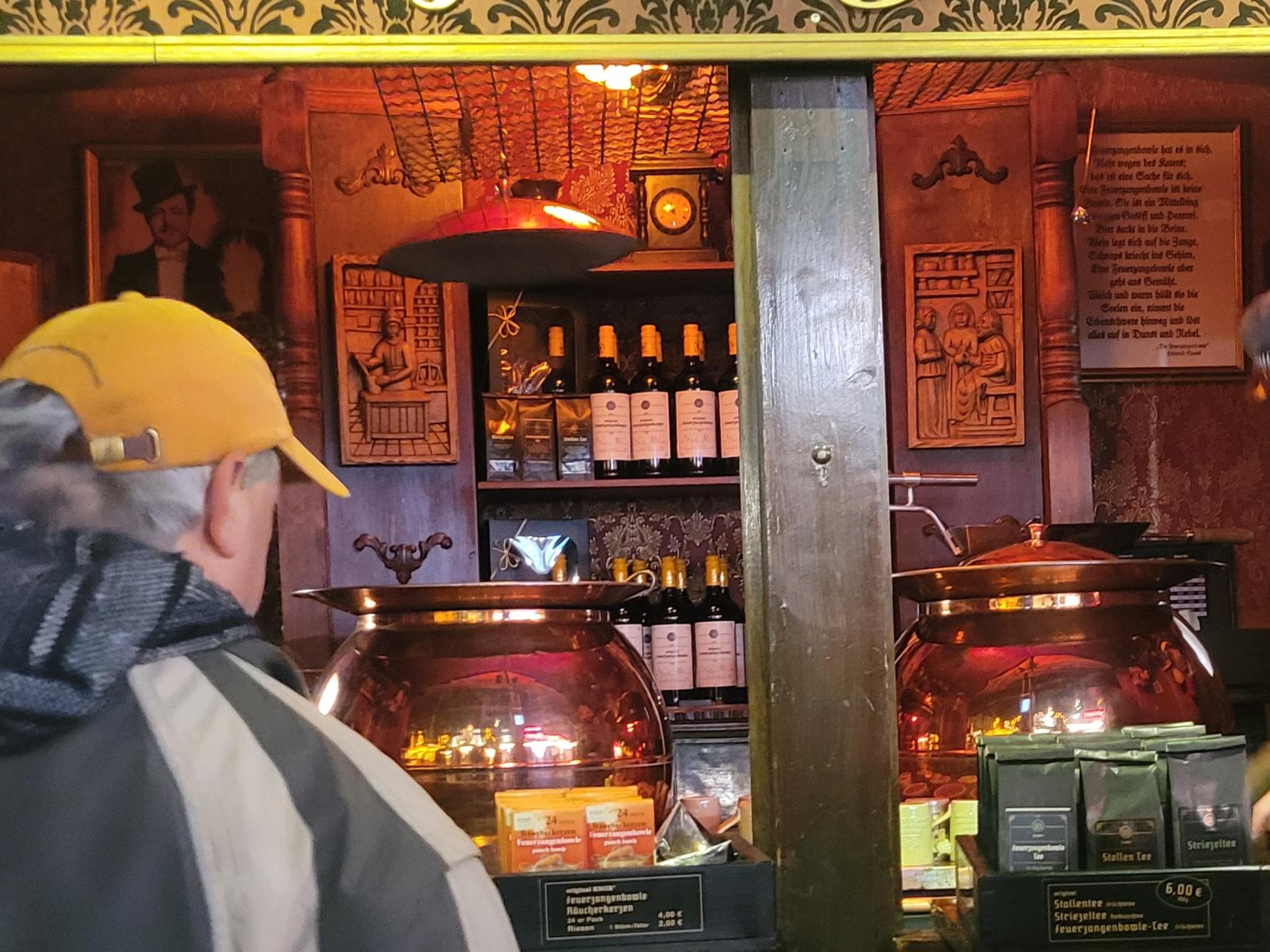
Back in the middle ages, the markets were a way to buy meat and goods for the holidays. Germany is traditionally a very Christian country, so Christmas has long been a part of their culture. When I visited Dresden, I got to see the way old market stalls may have looked: big cauldrons of mulled wine and legs of meat! Now, though, Christmas markets are a way for the community to celebrate warmth in the cold, dark winter. They’ve become a giant cultural event that totally consumes Germany through the month of November. There are easily ten Christmas Markets in Berlin alone!
Although they feature Christmas scenes and cliches, they open earlier than you might think.