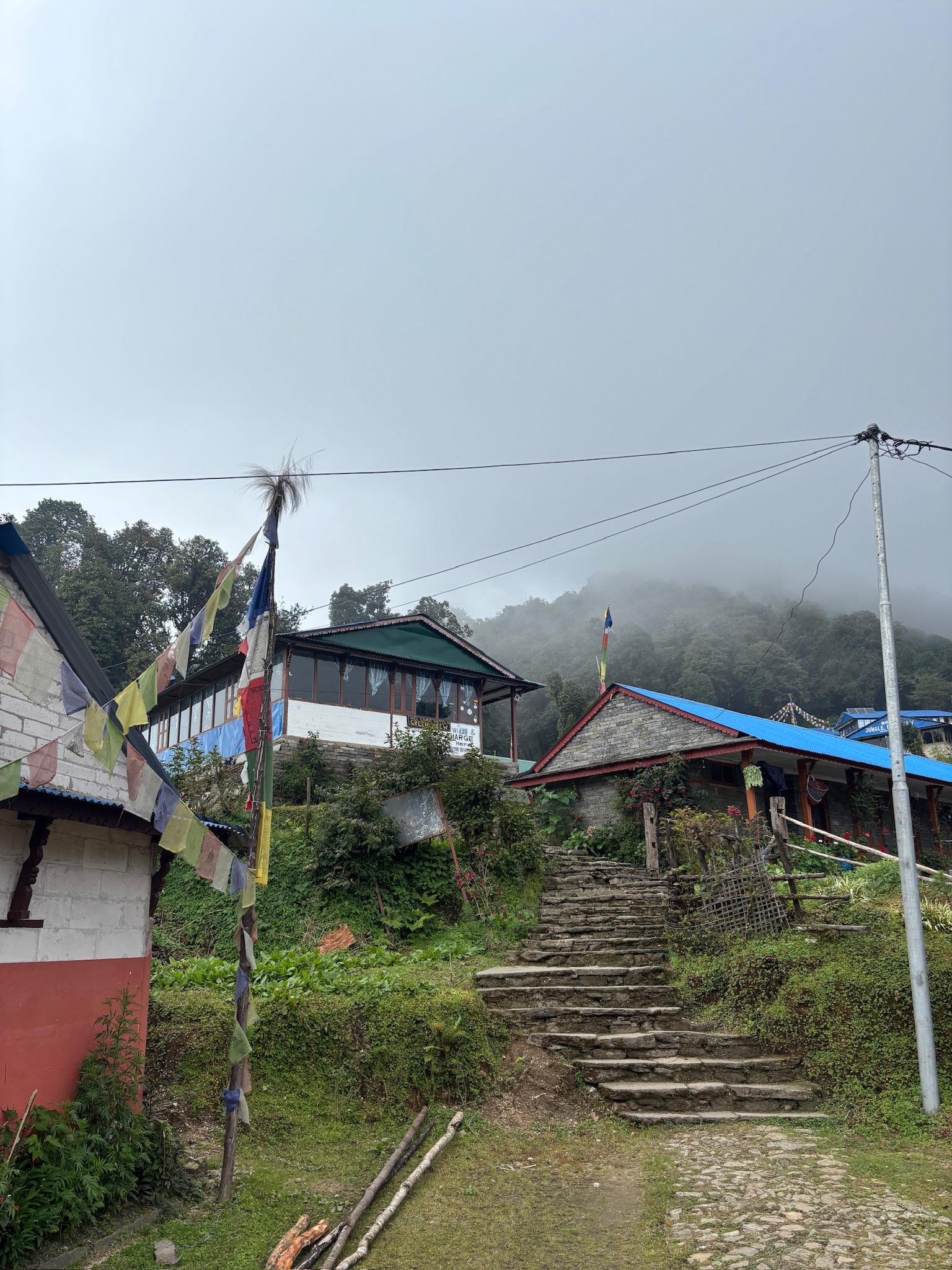
Every year, over one million visitors come to Nepal, in large part to trek in the country's high mountain environments. As a result, there is a significant amount of infrastructure associated with tourism, particularly along popular trekking routes.
But this wasn't always the case. Nepal only opened its borders to foreign visitors around 1950, following the collapse of a family dynasty. Since then, Nepal has developed a whole industry and culture around exploration of the Himalayas and climbing some of the world's tallest peaks. This of course is based upon the cultures of indigenous communities who are widely dispersed throughout these landscapes, and have experience navigating the difficulties that come with living at high altitude or in remote locations. In this way, classical traditions are combining with new ones to create a modern industry that goes beyond the natural beauty of the mountains.
Over the course of a week, my best friend from high school (whom I took APES with!) and I trekked the popular Mardi Himal Base Camp trek, starting at about 6,000 feet in elevation and eventually reaching the basecamp at 14,763 feet above sea level.