All plants, animals, and humans use these to survive. This grass lives in a complicated but harmonious relationship with the rare insects and plants that also live in the grasslands. Endangered life, like the Orurishijimi butterfly and the spiky, blue-colored Echinops flower all use the grass to survive; because of this, the caldera is known as a cradle of life. This attracts many farmers to the area due to its being a perfect place to grow rice and other crops.
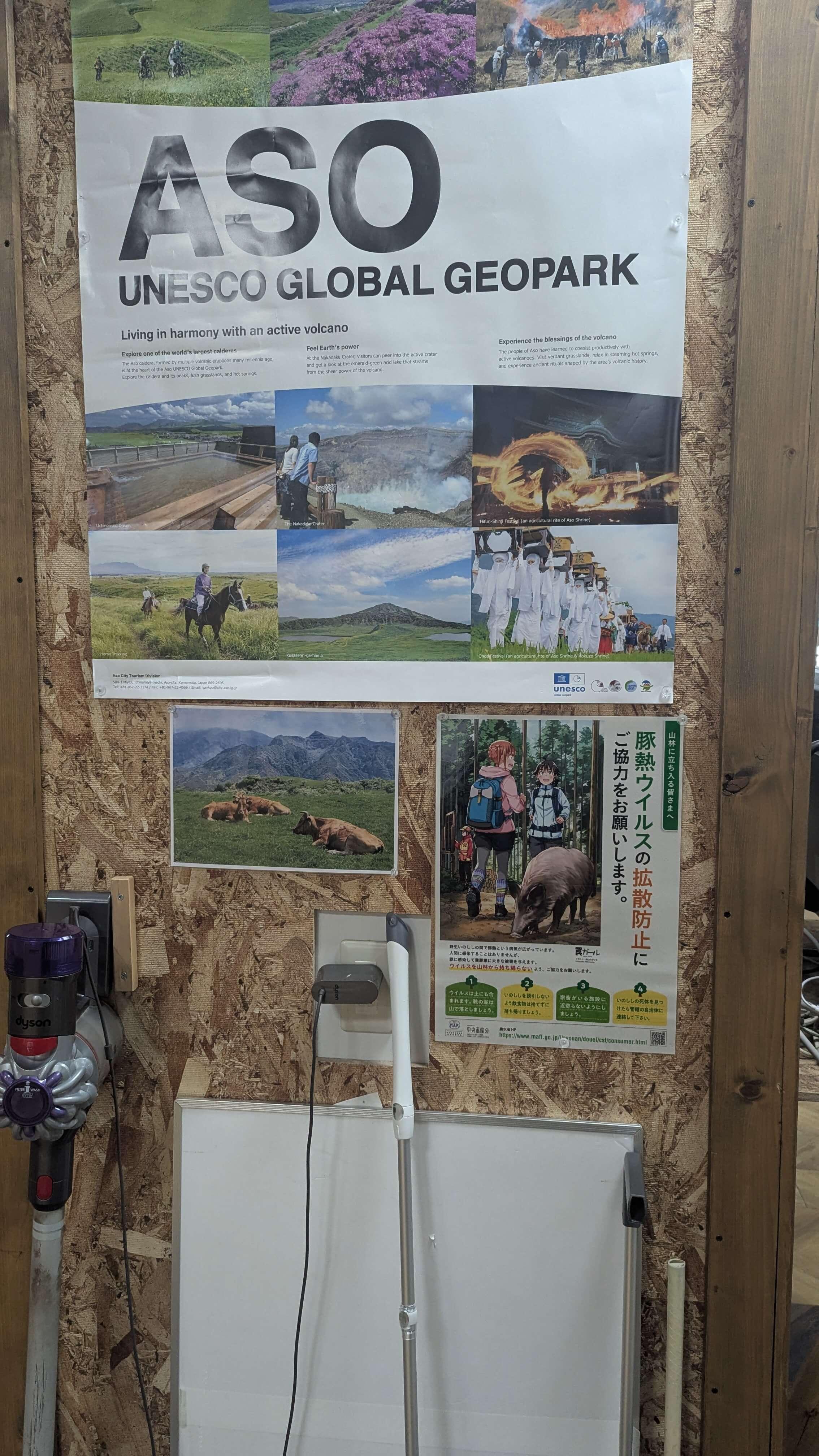
During the last ice age, Japan had many vast grasslands, which have since been replaced by our modern-day bamboo, cedar, and oak forests as the world's temperature became warmer. Mt Aso's location creates ideal soil and colder conditions for grasslands to survive. Chinese silver grass and other grasses are in danger of being taken over by invading trees and shrubs, and are at risk of modern pests and diseases. So for nearly a thousand years, the people of the land have worked to protect this area. Famously, a yearly burning of the land is carried out by nearly 2000 participants called Noyaki, to cleanse the land of pests, prevent invasive growth, and promote healthy grass. They also use horses and livestock grazing to encourage a healthy grassland. I find it fascinating how the people who decide to live so close to a volcano must have a close relationship with nature and maintain a delicate balance between the potential for life that the rich landscape offers, and the chance of destruction created by eruptions.