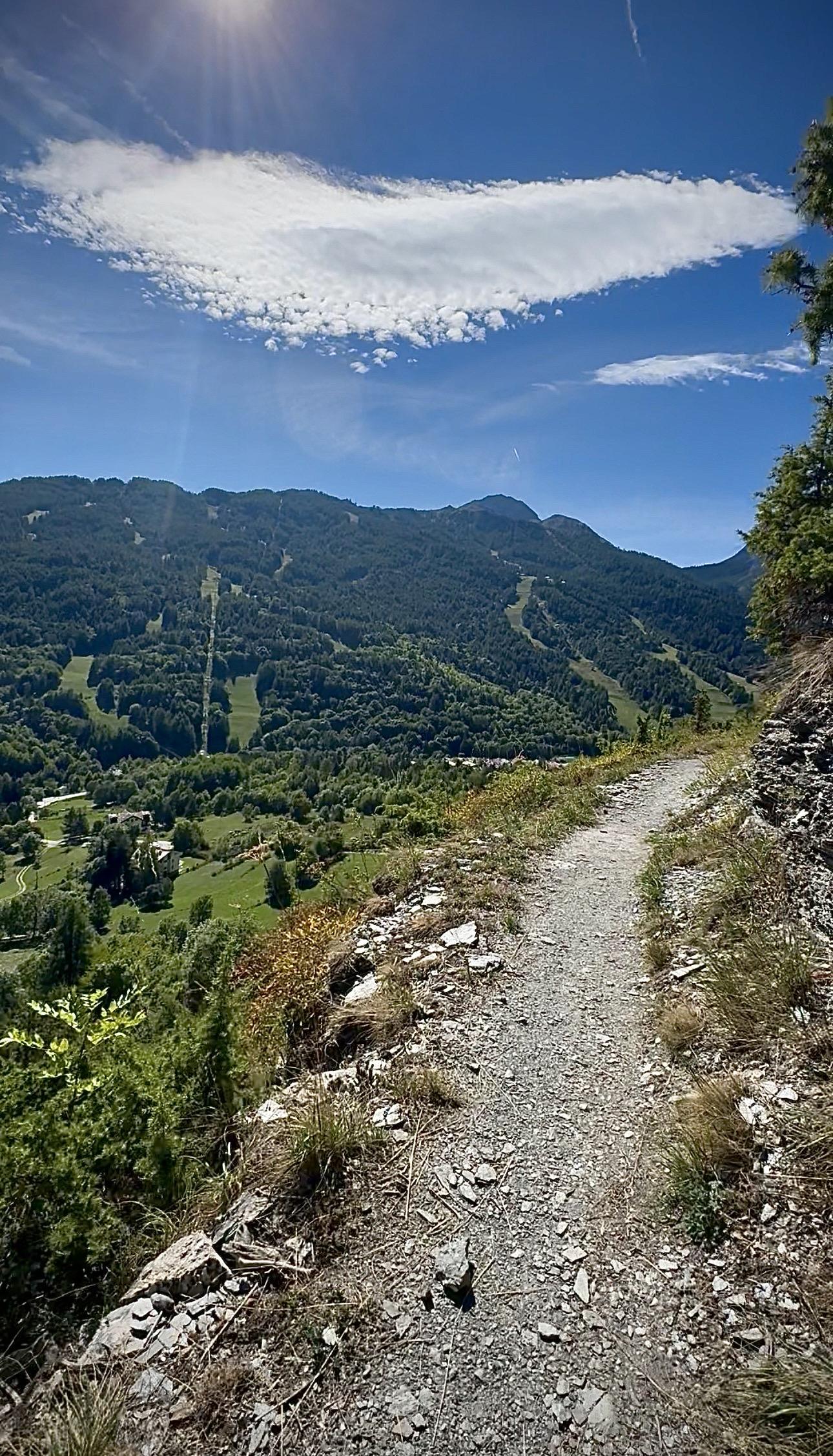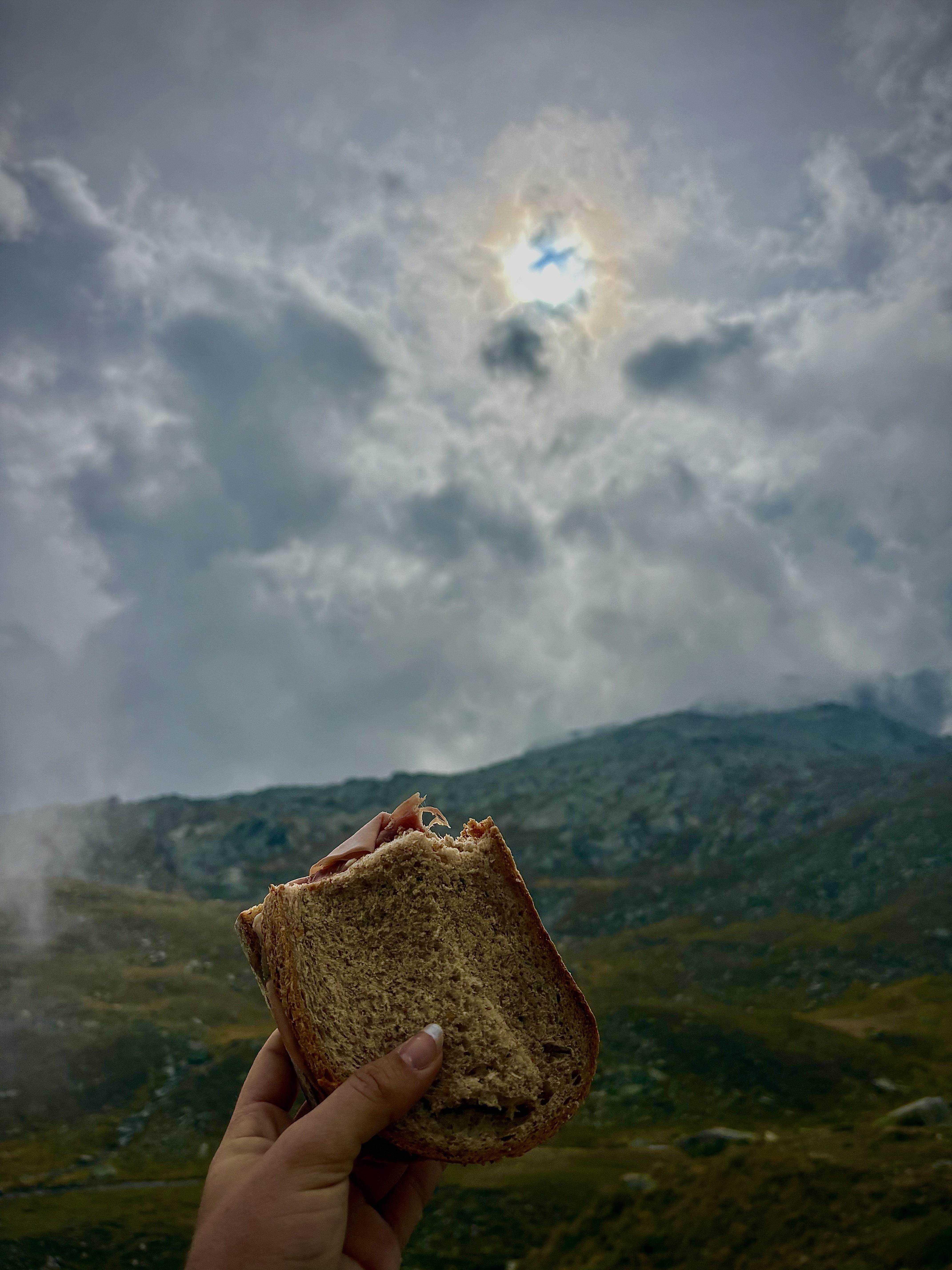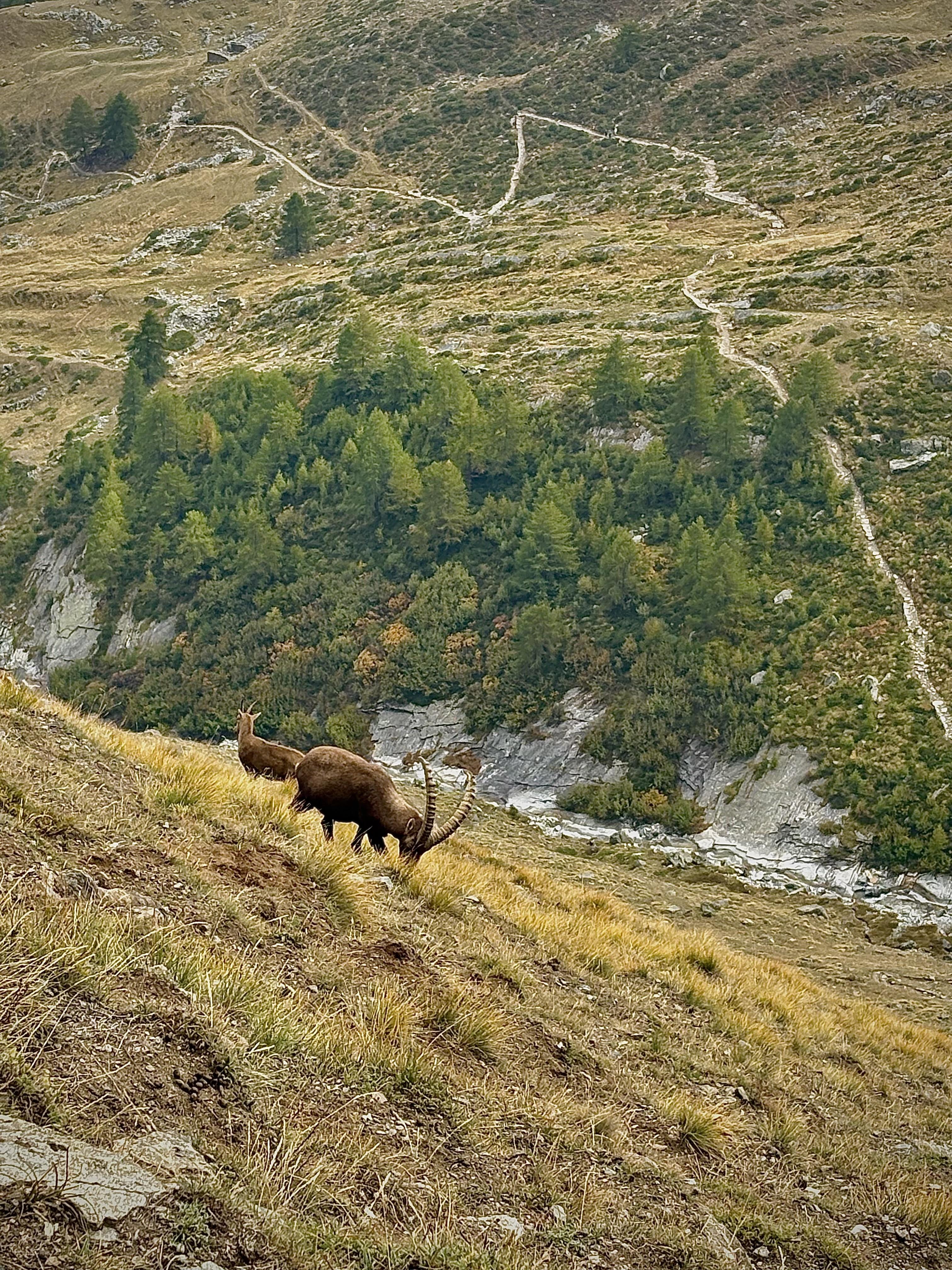
As we climbed higher, we could see glaciers in the distance, and eventually we reached clouds, mist, colder temperatures and exposed rock. On the way down, we also saw wild ibex very close to the trail.
Bardonecchia felt different but was just as beautiful. I hiked through a steep valley surrounded by mountains, passed cows grazing with bells around their necks, walked through thick forests and eventually reached Lago Verde. I spent some time there taking pictures, journaling and watching the sun begin to set.
The villages also look very different from Torino. Many buildings have heavy roofs made from flat gray stone, and several of the houses looked very old. In Cogne, we even explored an abandoned mountain cabin with one of these stone roofs. The towns were compact here, with houses built close together which made towns feel especially tucked into the mountains.
One of the clearest connections between the environment and daily life is livestock. I saw cows grazing in both areas, usually wearing large bells, and in Cogne we saw people working with and moving animals. Mountain pastures provide space for livestock, and those animals become part of the local food system.
At our Airbnb in Cogne, our host prepared a breakfast that included local cheese, yogurt, dried sausage and honey.