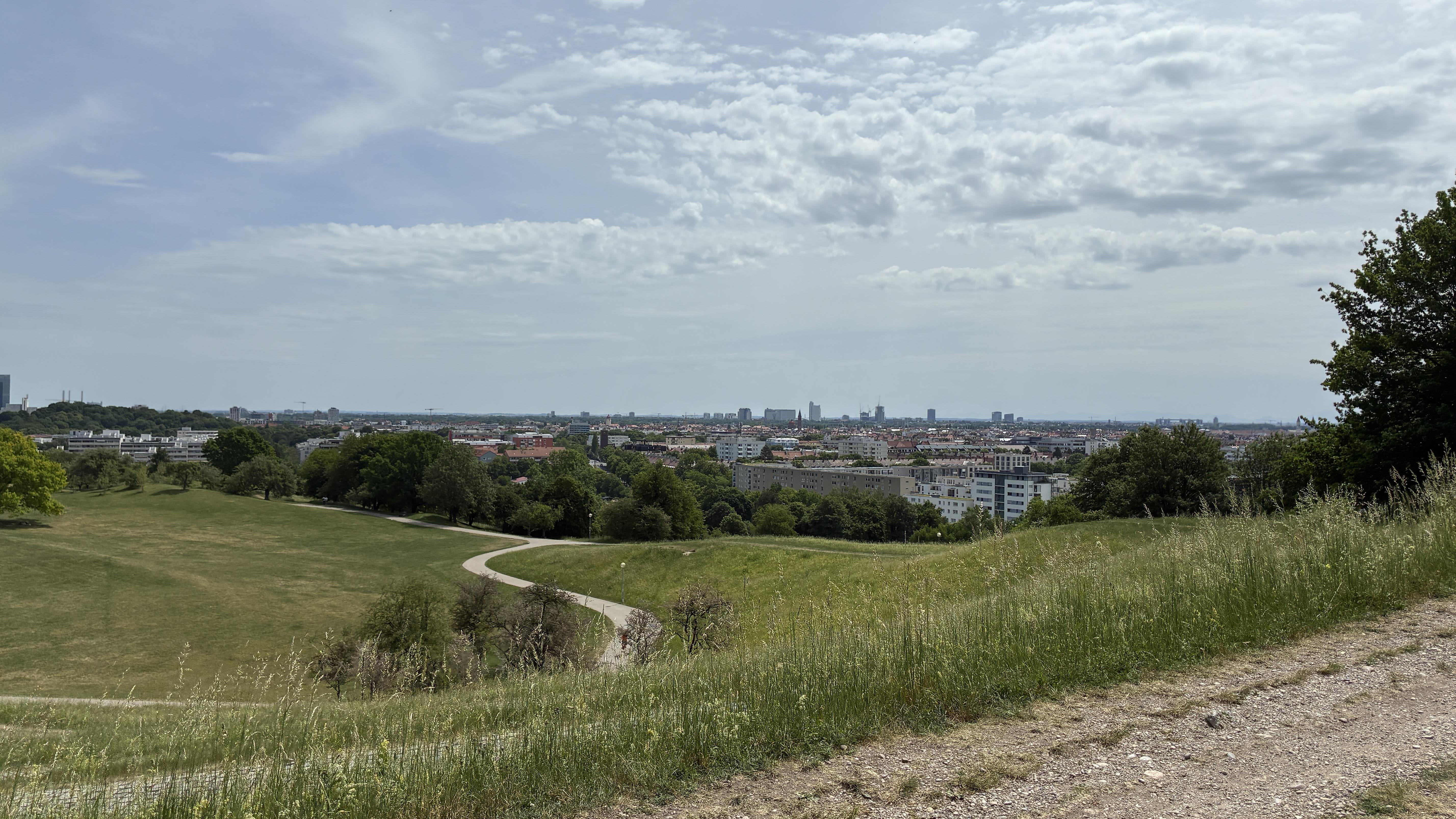
On another day, I first started back at Olympiapark (the place where I live) and walked to the Olympic mountain, then took a photo looking out at the entire city of München. What is striking is how flat the city is, which is also noticeable when one arrives on an airplane in Munich and is also a trait that many German cities share outside of Frankfurt. Apparently, some taller buildings exist in Berlin, but they were banned shortly after, as the residents did not like them.
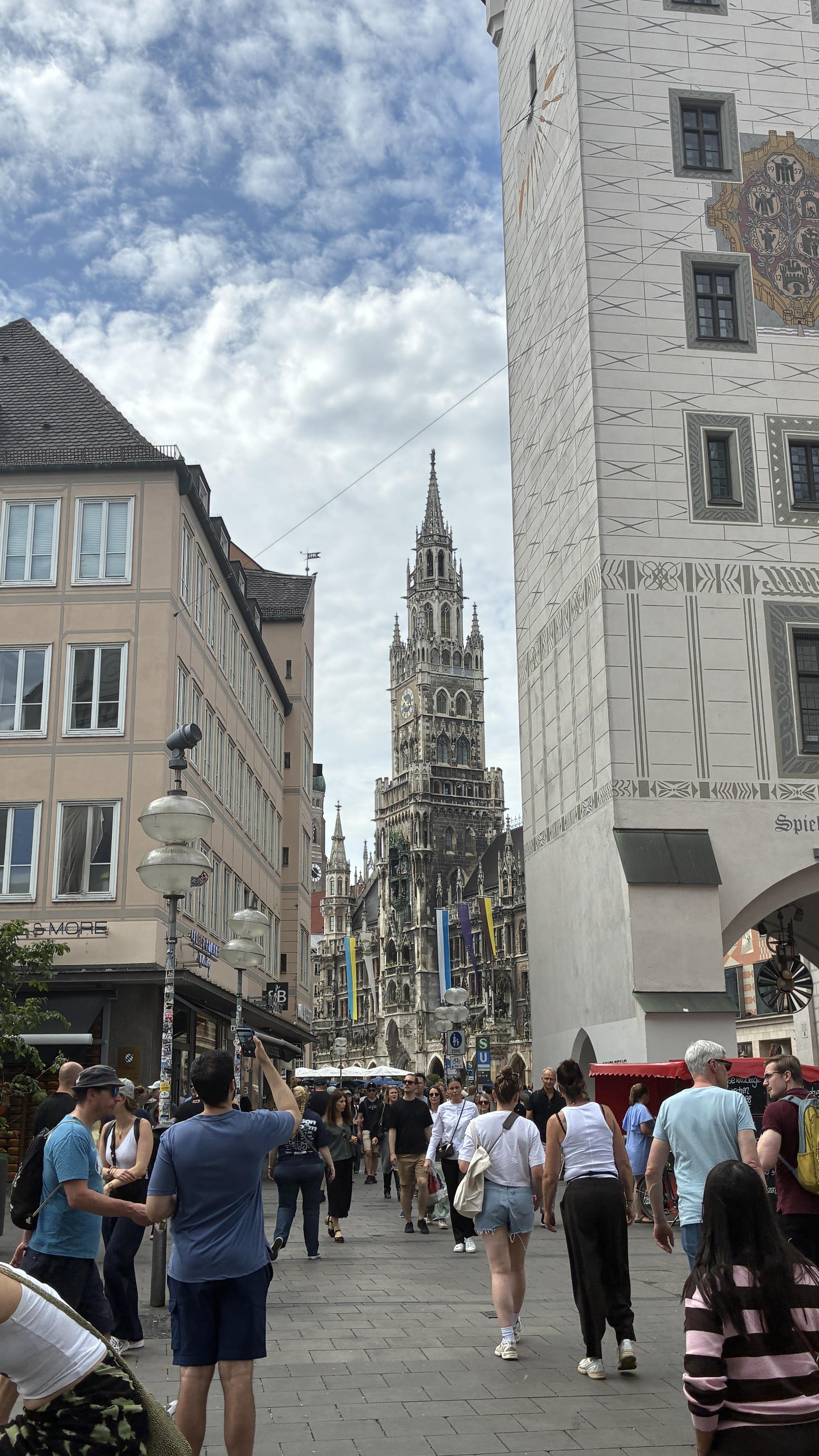
On the same day, I went back to the center of München and first visited the new town hall. Although the building looks old, it is comparatively new; it was built in the late 1800s. As the building was one of the tallest around, it was spared destruction during World War II for an interesting reason: it was a bombing landmark, and all the bombers circled around it, pummeling the surrounding area instead of targeting the town hall itself with bombs. Today, the town hall is one of the most important tourist attractions in München. It also has several pathways leading to courtyards in the middle and one that goes directly through the building.
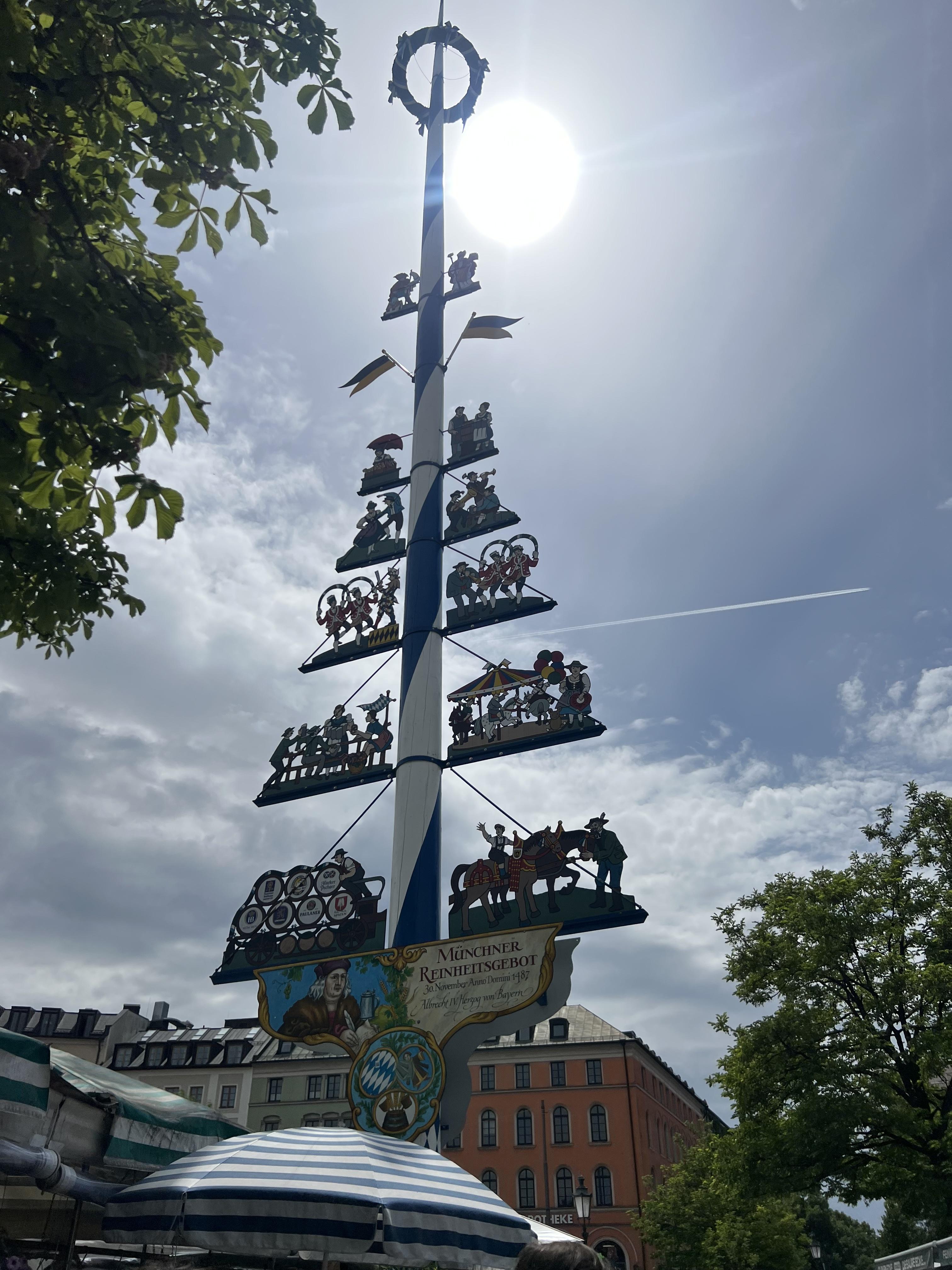
After that, I traveled to the nearby Viktualienmarkt, which is an area that has a lot of small shops that are set up in a market style. I ate at a nearby restaurant and then traversed the surrounding area. The Theatinerkirche (a church) is also in this region, but it is in Odeonsplatz (a grand, historic square). It contains massive sculptures and depictions carved into the walls that are extremely detailed and intricate. Odeonsplatz itself was also the location of many historical events, including Hitler's Putsch (Hitler's initial attempt to overthrow the German government) in München.