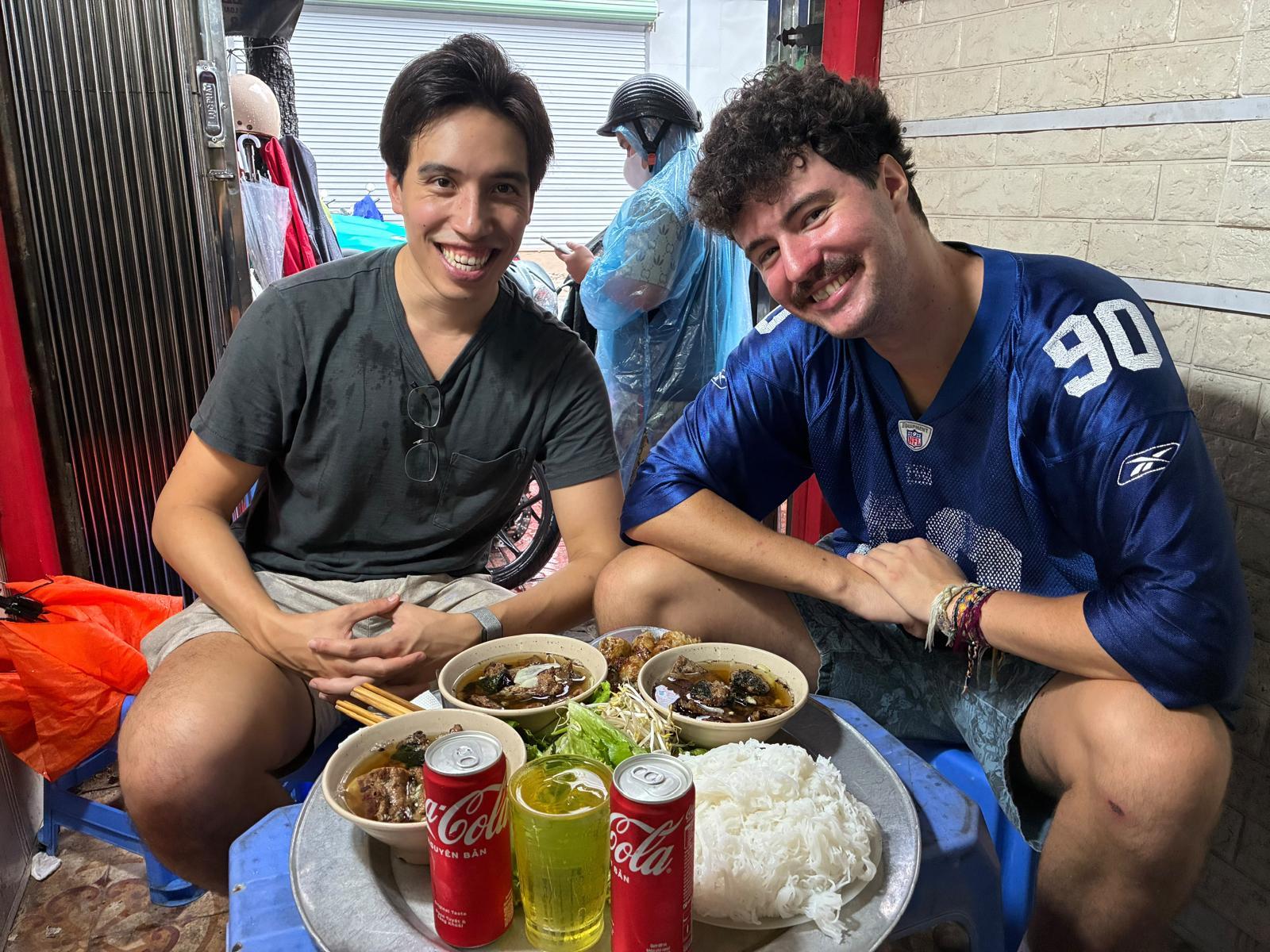
You can either add the flavor through a demure dip, or go for it all with a big dunk, which will probably result in you having to locate noodles lost in the sauce later in the meal. I will let you guess which one I am.
This shared responsibility between the chef and the consumer to prepare and eat the dish the proper way to create the best experience is a common theme across many Vietnamese dishes. It has shown me how the communal, traditional society of Vietnam extends to each and every action that Vietnamese people take on a daily basis. It is certainly an “if you know, you know” culture that values understanding the authentic through the wisdom of others, often the elders. Also, a very easy culture for foreigners such as myself to embarrass ourselves by adding all of our noodles to the “soup” immediately. I have since learned that asking questions, talking to those around me and trying new things is not a bonus, but a requirement if you want to thrive here. It is such a privilege!
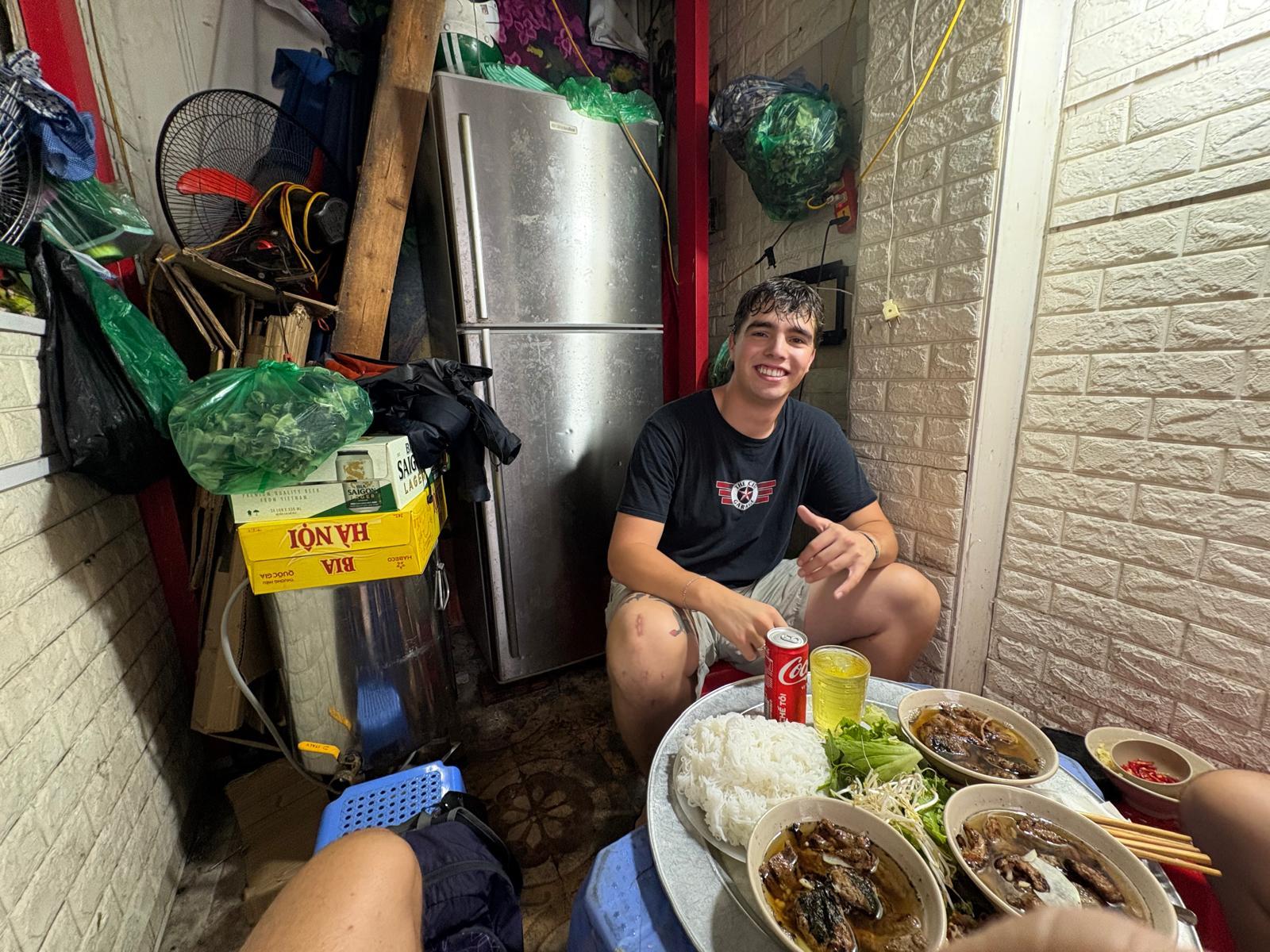
One of my favorite memories of eating bún chả was when my friends and I went to a Michelin-rated bún chả restaurant. We arrived expecting to sit down indoors, but when we asked for a table, the lady grabbed me by the arm and led me and my two friends to a separate metal door directly off the street. She used a key to lift open the garage-style door and revealed a literal closet fit with old packages, brooms and a refrigerator. She ushered us into the closet and brought in two stools on which she placed a large serving tray.