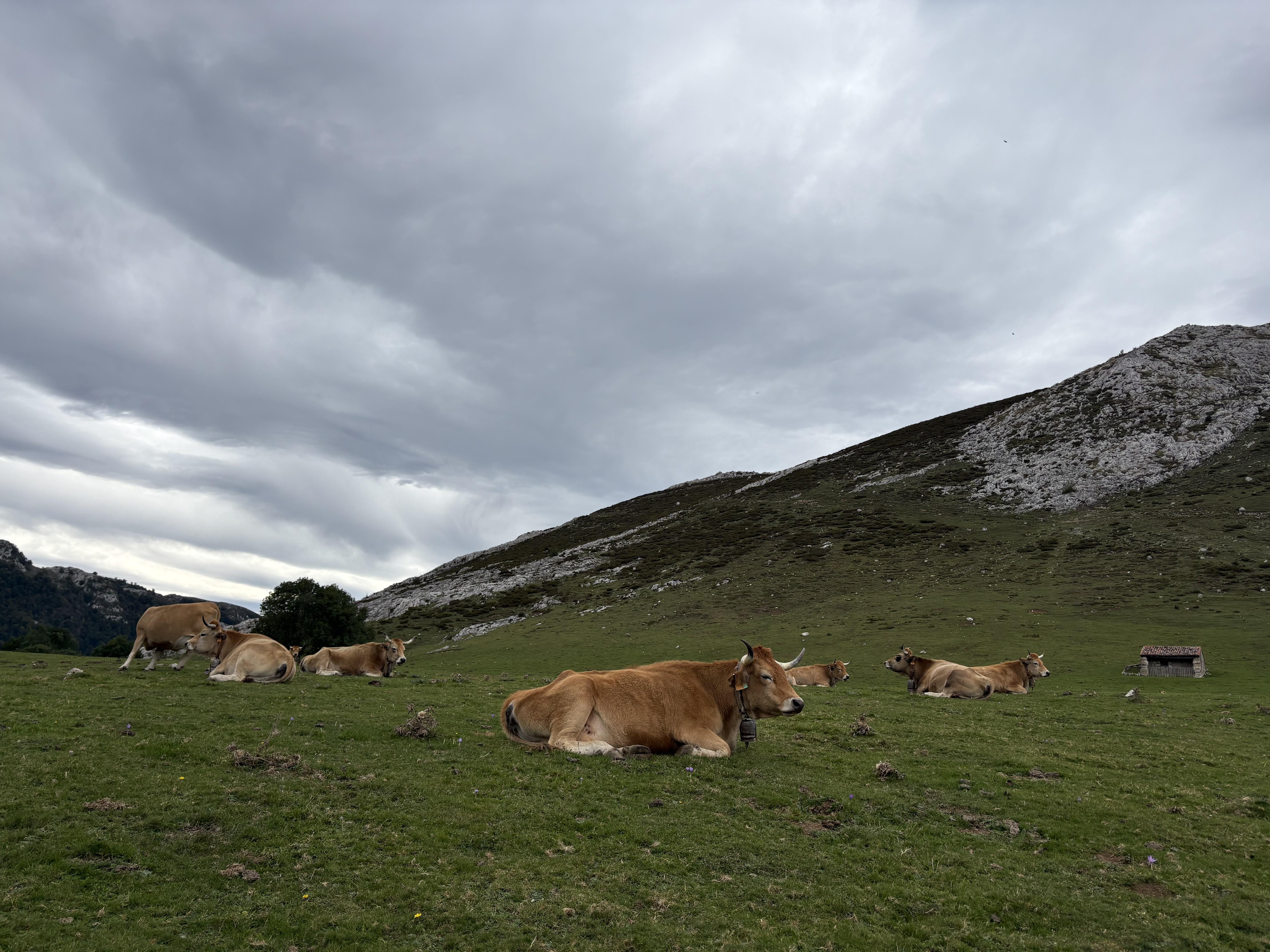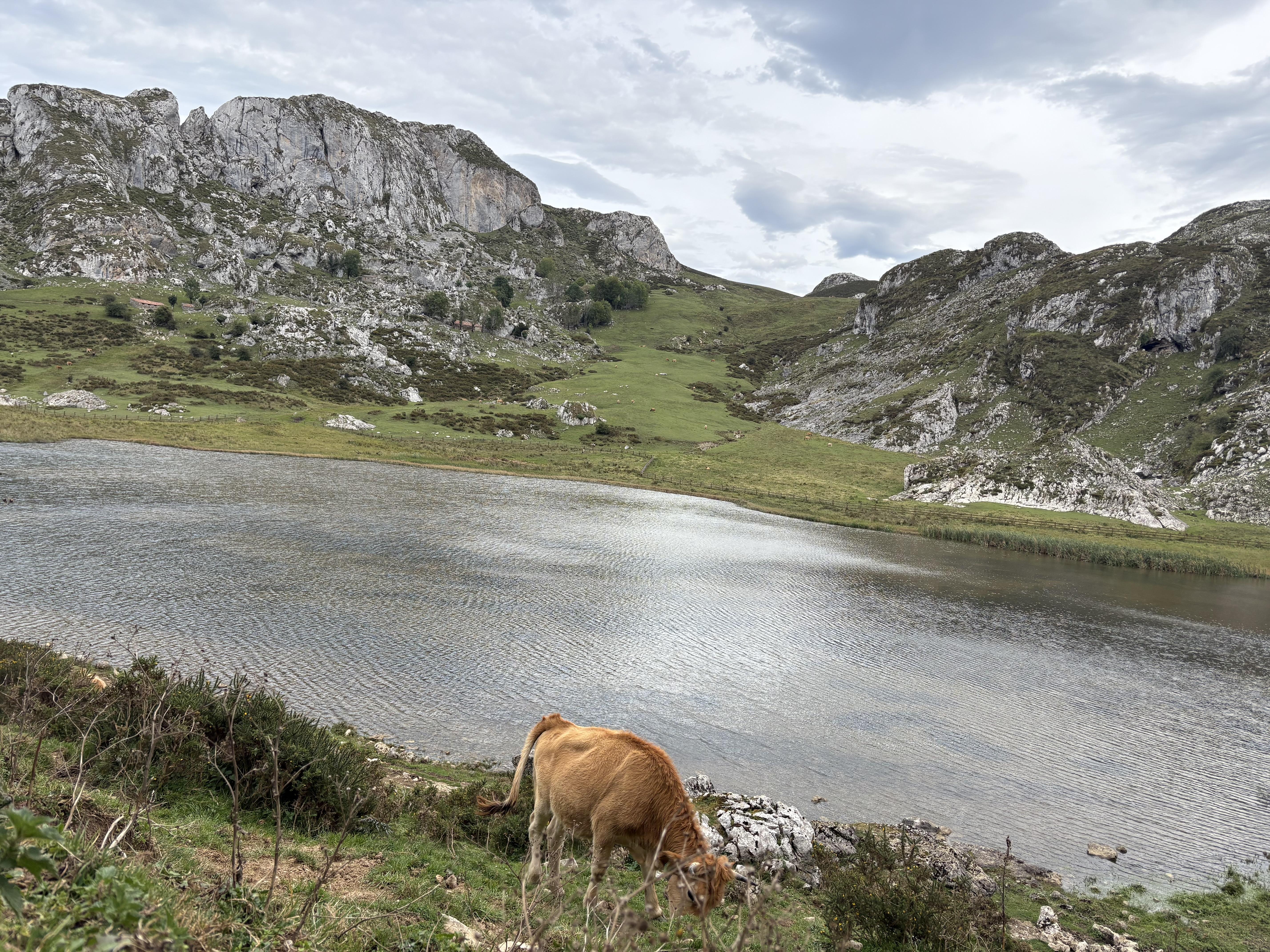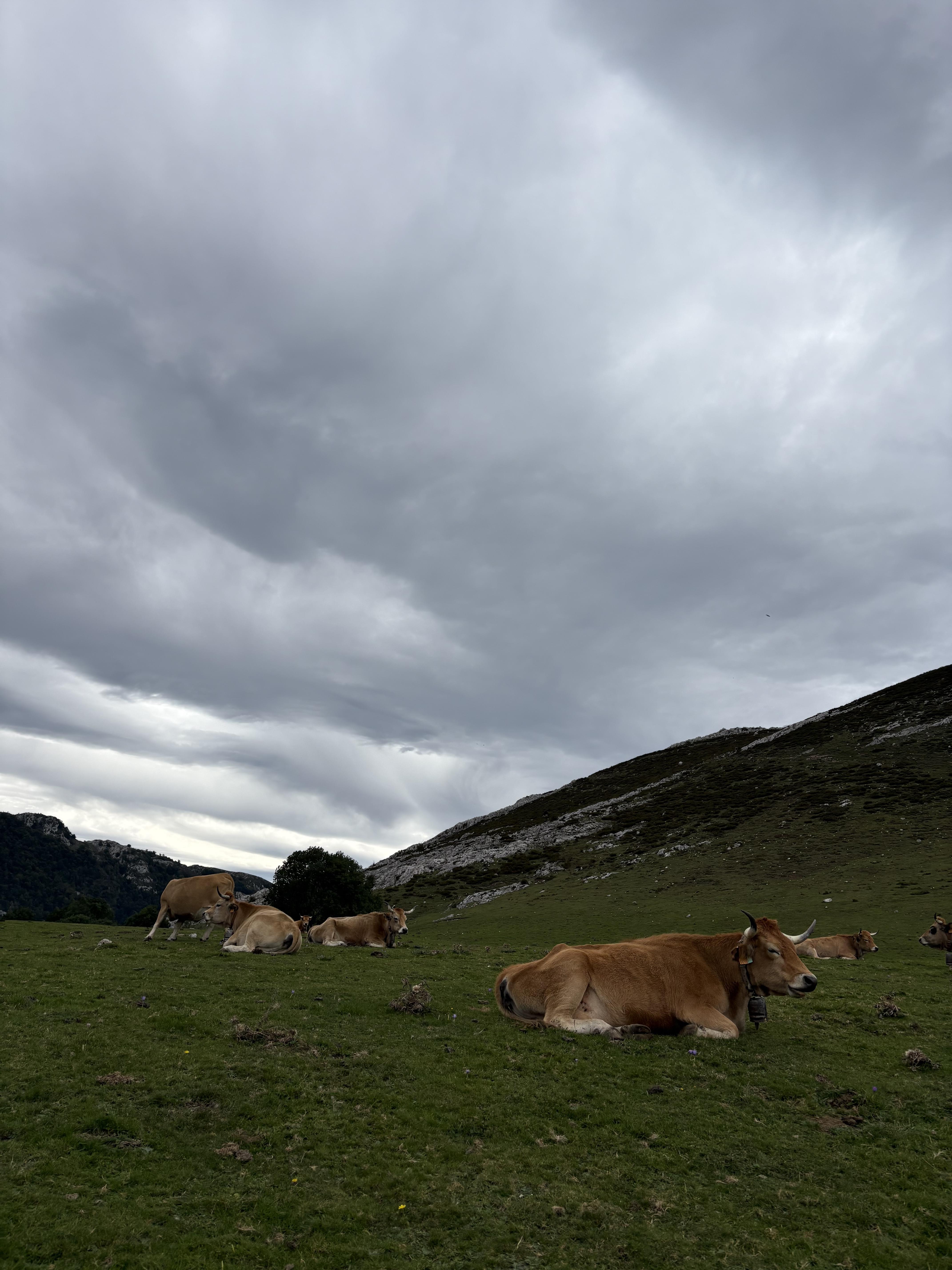
I first saw these cows on my hike to Lagos de Cavadonga. My first feeling was shock and surprise. We were on the bus to the trail, and suddenly the bus stopped. I looked out the window to see six cows crossing the street in front of us. I looked around at the rest of the passengers, and no one else seemed shocked. This, to them, was a normal occurrence. I think this reflects how closely the Asturian nature is interwoven into everyday life. I now live in a place where people won't blink twice if a cow is part of their daily routine or commute. I was also shocked to see how calm these cows were in the presence of humans. During the length of this hike, I saw over a hundred cows grazing in their home. None of them stopped when I passed. After all, I was a visitor in their home; they were merely trying to eat their lunch. I think this reflects how nature takes priority in the Asturian landscape and identity.
These cows can be found all over rural Asturias. They can live in small pastures and meadows and are cared for by farmers. For example, some of my students own a cow in their own pasture. During the summer, they will be able to graze further from the farms in the more mountainous landscapes, but during the winter, they will stick to closer pastures by the farms.
This cow relies on the unique nature of the Asturian landscape to survive. As you know by now, it rains a LOT in Asturias. This means that thick green grass grows year-round. This is the main food source for these animals.