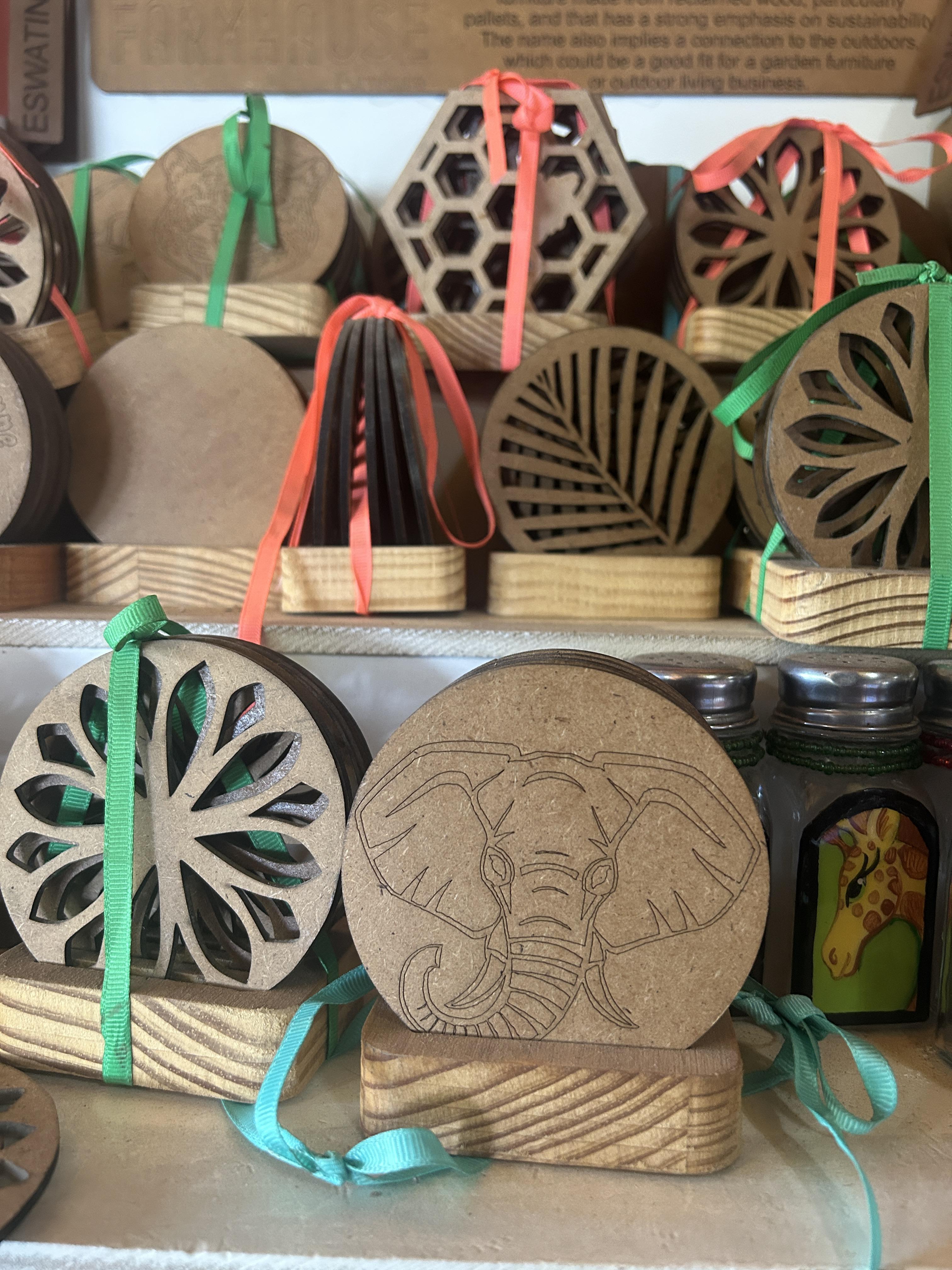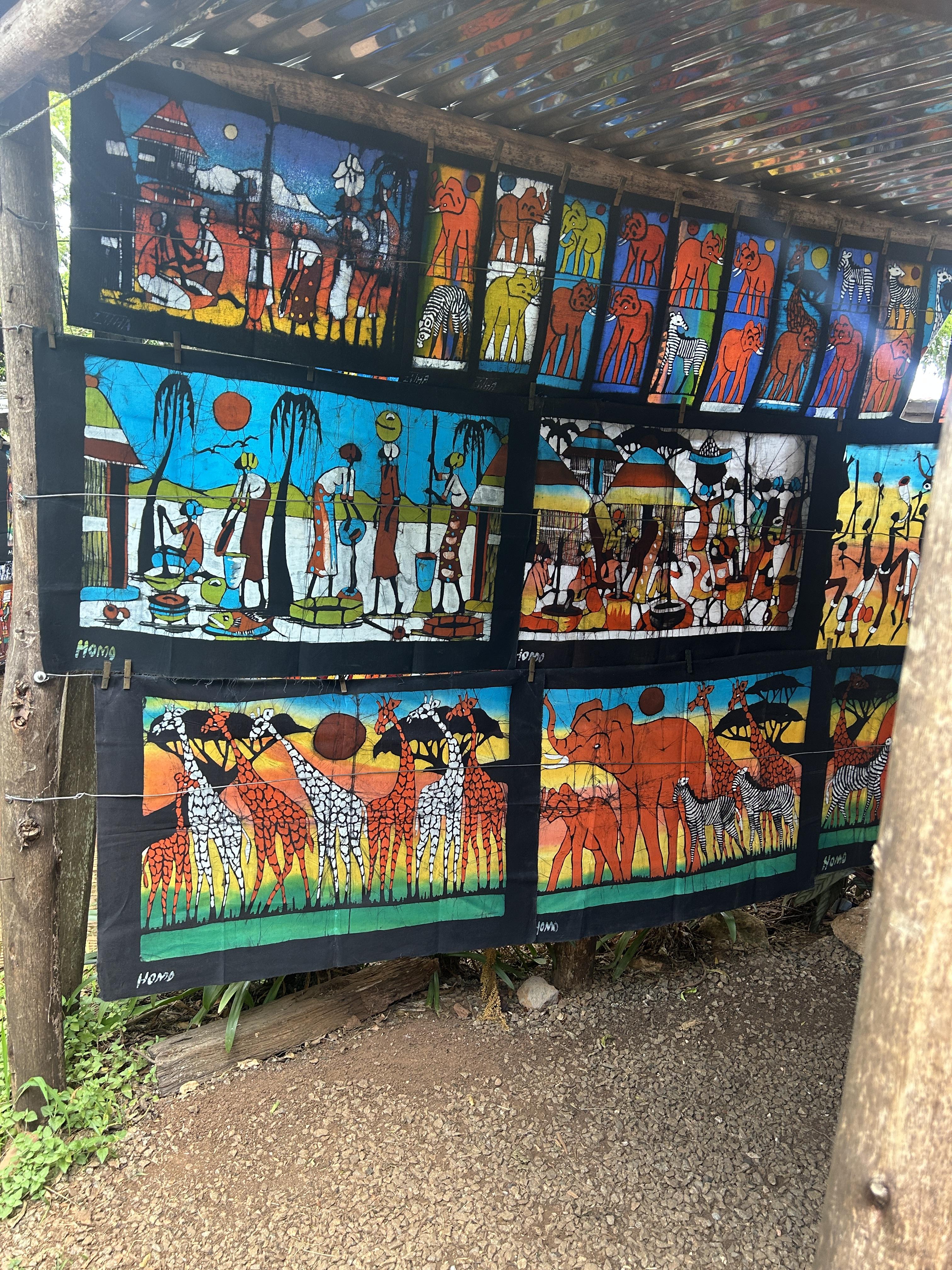
Swazis are resourceful when making art.
Additionally, animals are very culturally important in Eswatini and show up in much of the artwork. In the government symbols, an elephant and a lion represent the close tie with natural life that the culture here is built around. Even the traditional clothing that Swazis wear to weddings, funerals or festivals will often include the skin of a monkey or cheetah displayed around the waist. That skin is called a matjobo, and it is usually worn by men, although women wear other animal products as part of their attire as well.
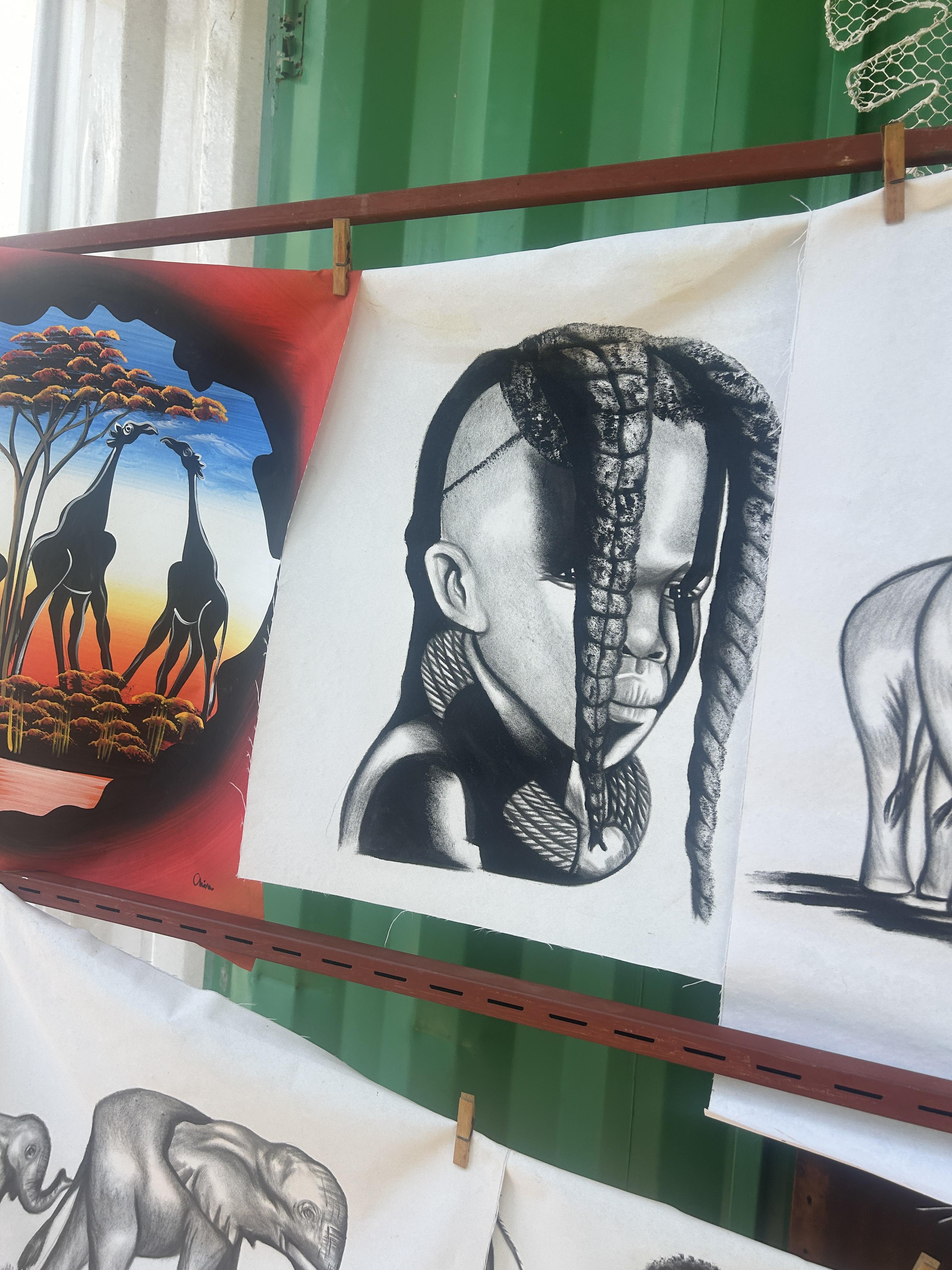
One thing that I haven't seen much of in Eswatini is paintings or sketches. As someone who enjoys black and white 2D art, I was over the moon to find a painter at Swazi Candles who uses black paint on a canvas to create the same high contrast effect as a well-exposed black and white photograph.
Today, you can find almost anything you need at Swazi Candles: nicknacks, paintings, tapestries, hoodies and even handmade, recycled tote bags. It's a great place to showcase the wide variety of creative art that Eswatini has to offer.
One of the challenges of being a photographer is that I sometimes have to be bold about where I point and shoot. I felt a tad guilty for taking photos of so many small crafts as opposed to buying them. In this case, many of these photos were taken in secret, holding my phone near my chest while walking. I didn't want to offend the makers of these crafts, especially the painters or fabric designers, but I also wanted to showcase their wonderful art with a community (students in the United States) that might not otherwise have a chance to see it.