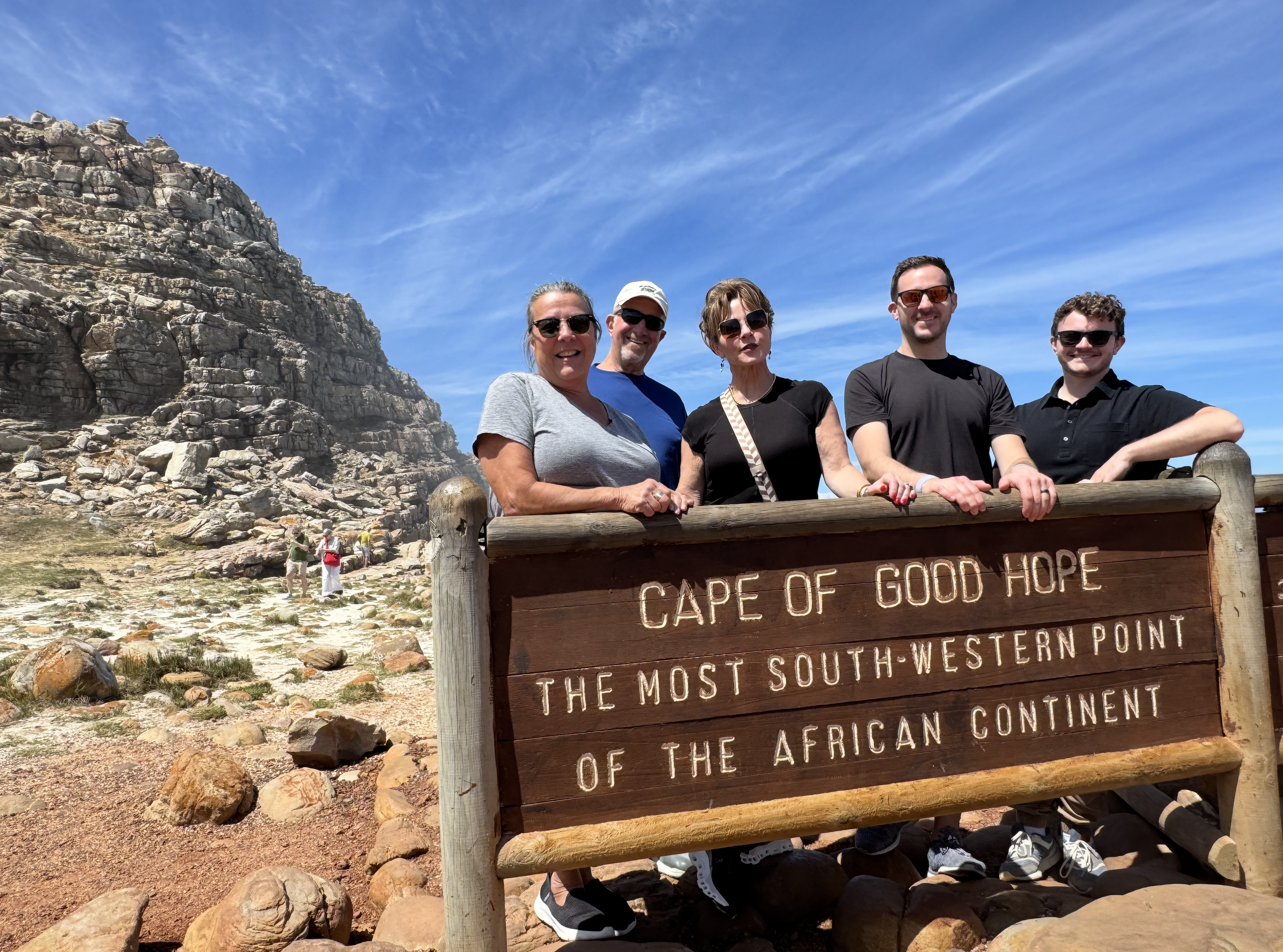
We drove south to the Cape of Good Hope, which is the southwesternmost point of the African continent. The landscape here was rugged but had sweeping ocean views and strong winds. While there are hiking trails and a historic lighthouse, we opted to take the cable car up for a broader vantage point. Along the drive, we passed several ostriches roaming freely and learned to distinguish males from females by their darker feathers and larger size. On the drive back, we stopped at Boulders Beach that is home to a colony of African penguins. These penguins (sometimes called “jackass penguins” for their braying calls) are one of several species that live outside of Antarctica. You can also find populations in South America, Australia, New Zealand, and the Galápagos Islands. The colony is protected by a boardwalk system that keeps visitors at a distance. Some of the penguins we saw were molting, a process during which they shed old feathers and remain on land, relying entirely on stored fat. Up close, you can also see a pink gland above their eyes that helps excrete excess salt from their diet.
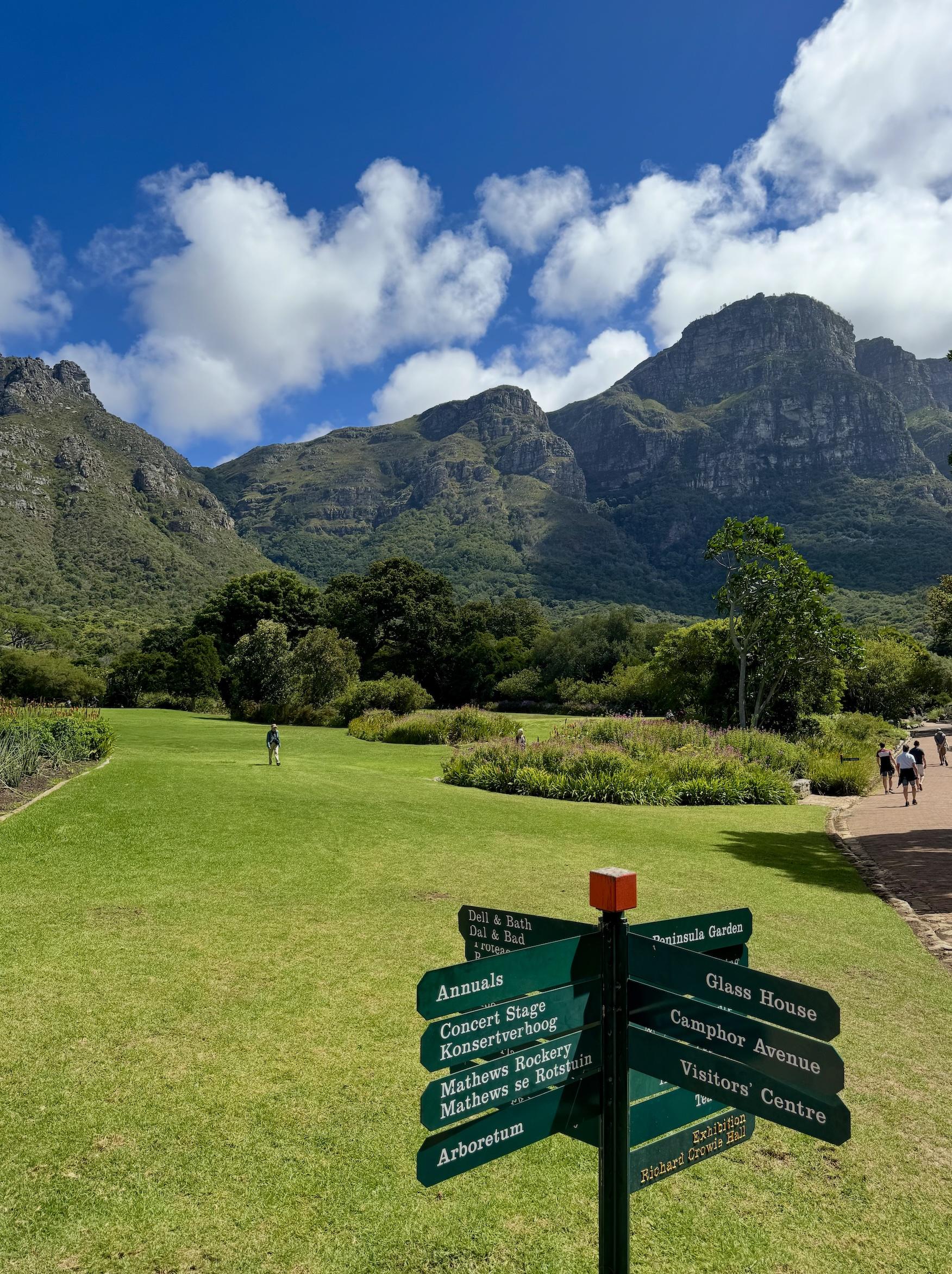
We ended our time in Cape Town with a trip up Table Mountain (one of the city’s most recognizable landmarks). The cable car to the summit rotates 360 degrees, offering panoramic views during the ascent. At the top, the terrain is surprisingly flat and has wide walking paths with sweeping views of the city on one side and the ocean on the other. The mountain is frequently covered by a layer of cloud known as the “tablecloth,” formed by moist air condensing as it rises along the slopes. Even though it now stands at about 3,500 feet, the formation is the result of millions of years of erosion shaping what was 5 times as tall.