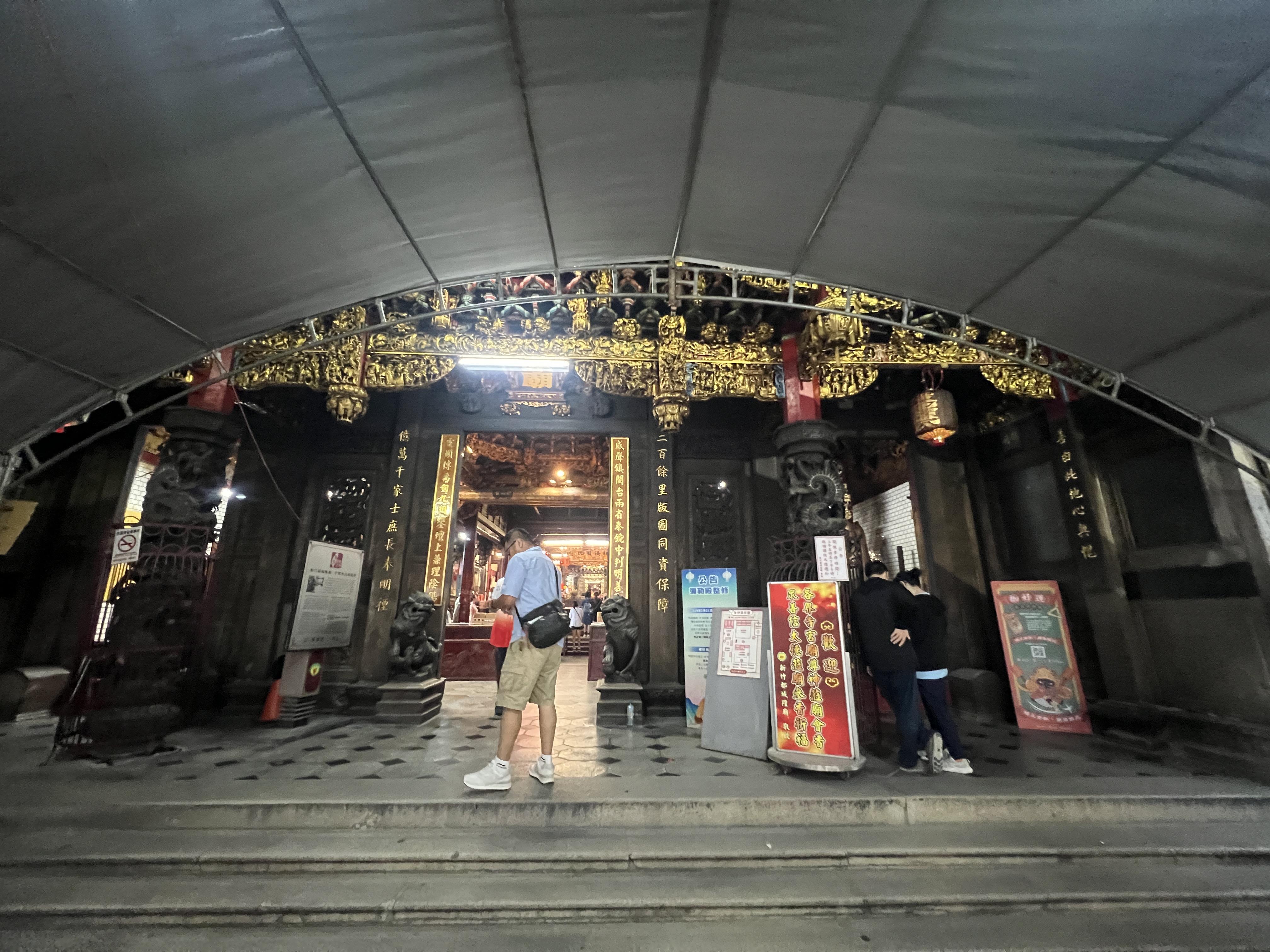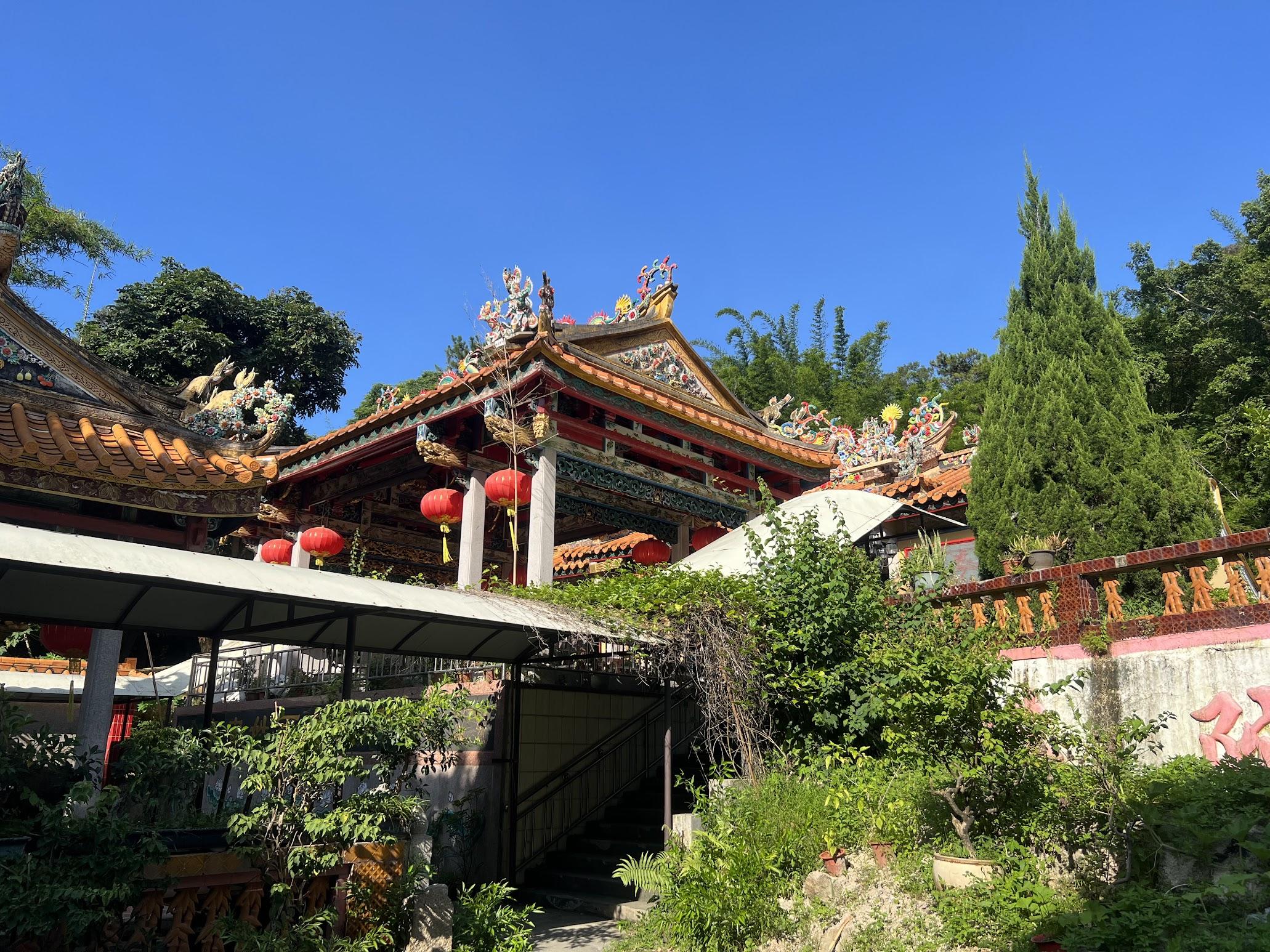
There are columns and intricate woodwork, all traditionally painted in auspicious red and noble jade green. The roofs of the buildings slope and arch in the distinctly East Asian architectural style.
Temples are normally dedicated to a main deity who “specializes” in protecting and guiding people in one aspect. For example, Hsinchu’s City God Temple worships a local guardian god and a deity of love and matchmaking. Besides this, the temple will normally hold statues for many gods from a blend of Chinese folk religion, Buddhism, Confucianism and Taoism. It is typical to worship multiple, if not all, deities in a temple when you visit.
Worship can be completed in multiple ways. It is common to burn incense in traditional incense holders and give offerings of fresh food at the altars of the gods. Prayer happens directly in front of the statues of the gods in the temple by kneeling and bowing. The specific movements for prayers are different between Buddhist gods and other deities.
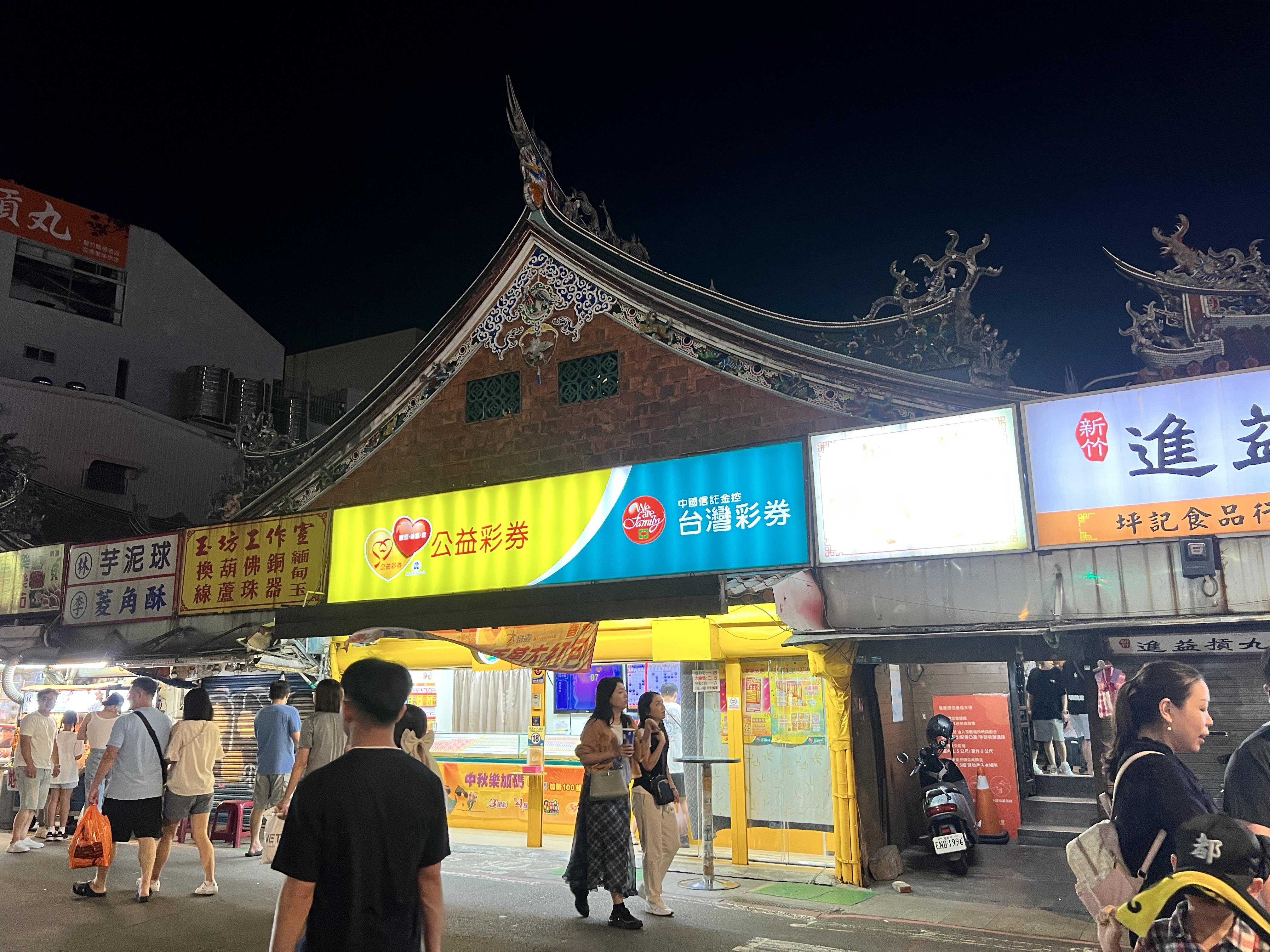
Temples are often surrounded by marketplaces outside, usually selling street food. It’s common for locals to worship and then grab something good to eat on the same trip.
The temples around Taiwan have mostly been built within the last few hundred years, alongside the influx of Han Chinese migrants to the island. As settlers came, they brought their religious practices and traditions with them. Temples were central parts of communities across Taiwan in the past as they are today. They are often centrally located in neighborhoods, towns and cities.