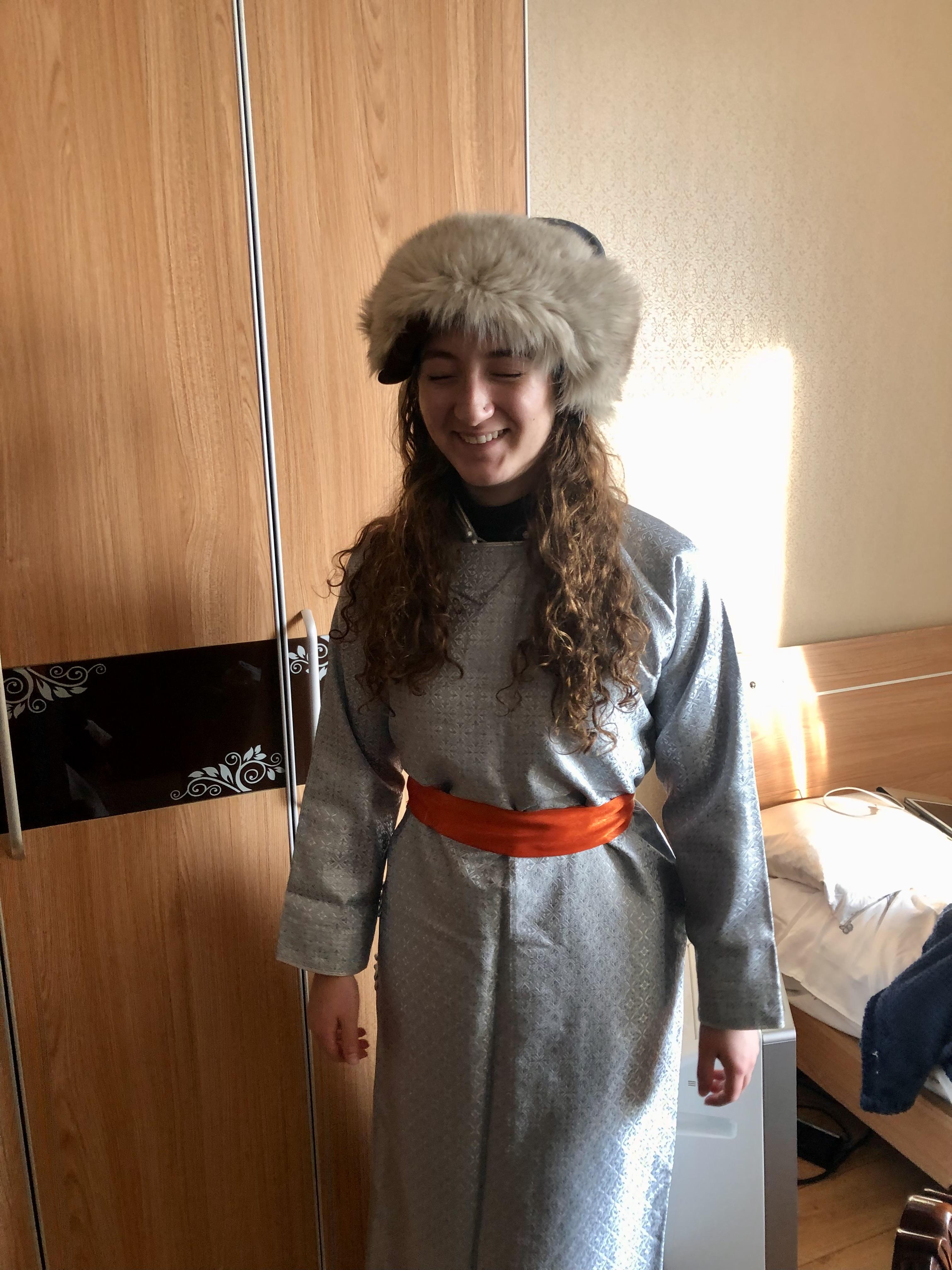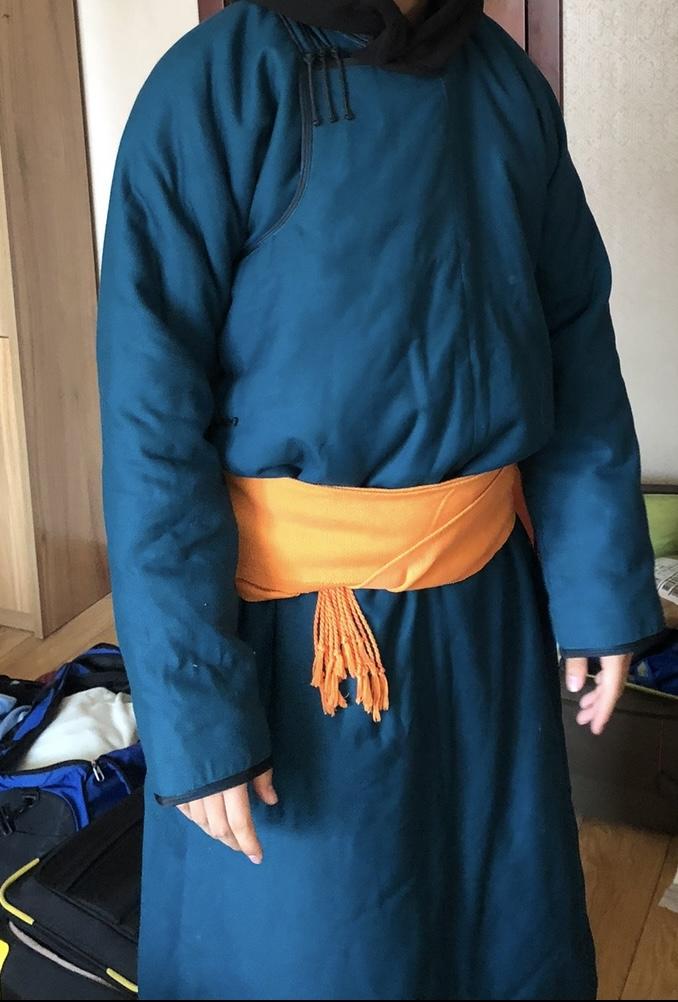
This holiday usually lasts about a week, and the entire family gathers together to eat buuz, salad, and give gifts. It is very important during this time to visit everyone that you possibly can, as Tsagaan Sar is very similar to Thanksgiving in that is centered around family time and food.
Naadam is a summer festival that happens every year in July. This tradition is a celebration of summer, which is fleeting (very short) in Mongolia. Throughout Naadam, people gather together in big centers to watch various Mongolian traditional sports, like archery, horse racing, and wrestling. Naadam is typically celebrated for three days and originated as a way to train the military in the Chinggis Khan era. (This is another way to spell Genghis Khan. Have you heard of him?) During this holiday, you can see lots of bright colors and patterns, which is a way to show national pride.
Tsagaan Sar means white moon in English, symbolizing the beginning of the New Year on the lunar calendar. A lunar calendar is unique because it counts days based on the moon instead of the sun. This tradition is also very important to signal the beginning of spring and to celebrate family.
Naadam means "games" in English, showing the origin and purpose of this very special holiday. As I shared before, Naadam was originally created hundreds of years ago as a way to train the military. This is not too different from how the ancient Romans also used games in places like the Colosseum to train their soldiers for battle as well.