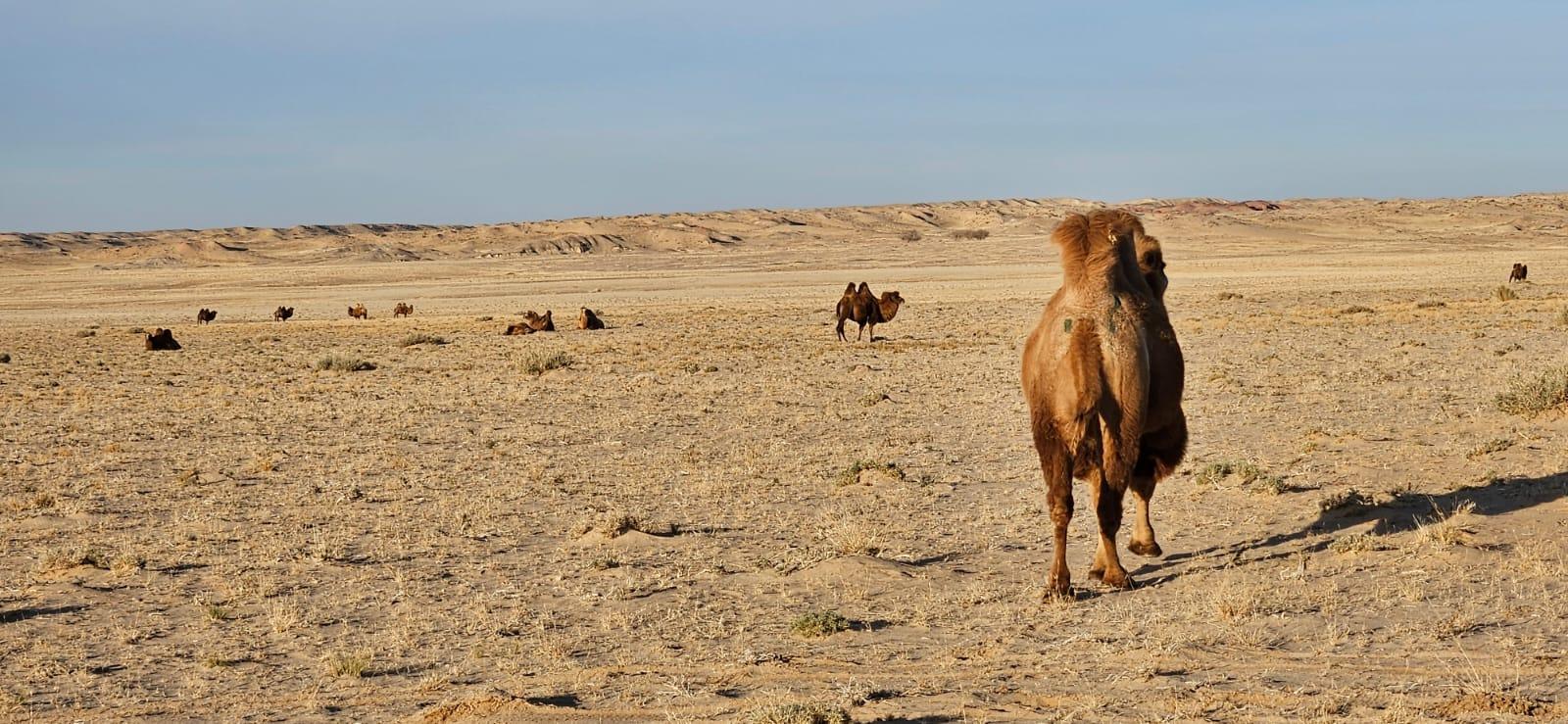
Herders rely on livestock, and livestock rely on grass. For millenia, a vast area of grasslands stretching from the far east of Mongolia to west of the Khangai Mountains have supported the nomads as their herds grazed. While nomadism is certainly the dominant mode of life for Mongolians, agriculture isn’t foreign to them. Many rivers run across the landscape here, and throughout history, some Mongolians have grown crops like millet and barley nearby sources of water. Along the banks of the Orkhon River, which is Mongolia’s longest river, you can still find the remains of Karakorum — the medieval capital of the Mongol Empire.
Mongolians (and other Central Asian countries) face a unique type of natural disaster: the зуд (zud). Unlike more well-known natural disasters like earthquakes or tsunamis, which directly threaten human lives, a зуд upends human livelihoods by killing large numbers of the animals that Mongolian herders depend upon. There are multiple kinds of зуд, but all of them can cause a great deal of harm by preventing animals from grazing.
During a white зуд, extremely heavy snowfall makes it impossible for livestock to reach grass.
A black зуд happens when there is too little snowfall, resulting in too little water.
In an iron зуд, the ground briefly melts but then rapidly freezes into ice, preventing livestock from grazing.
Throughout the history of modern Mongolia and the Mongol Empire, severe зуд have killed countless animals and carried immense political, social, and economic consequences.