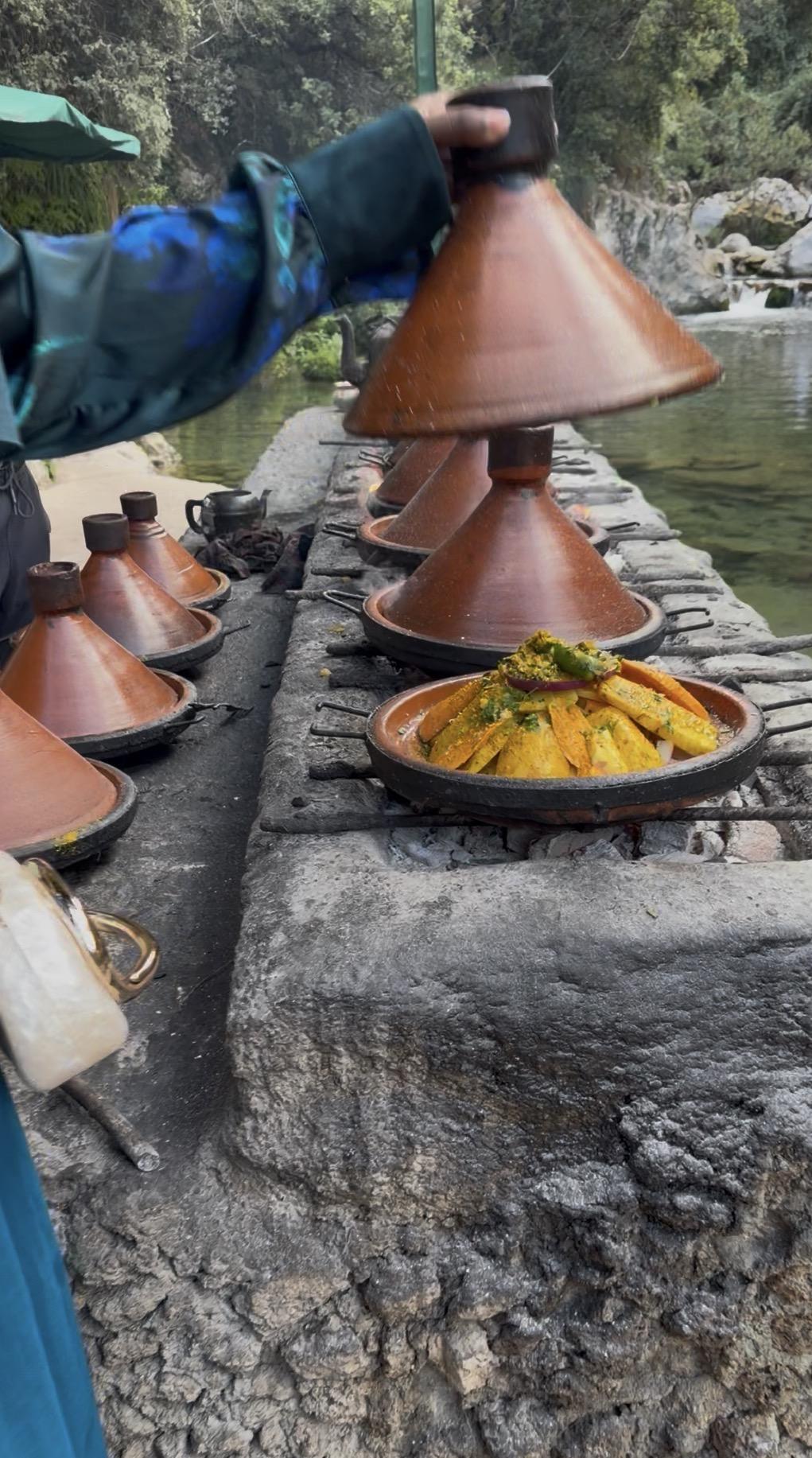
Tajine can combine meat, such as chicken, lamb or beef, with vegetables, dried fruits like apricots or prunes, olives and preserved lemons. Some of the spices commonly used in tajine include ras el hanout (a Moroccan spice blend), ginger, cinnamon and paprika.
Yes! Both tajine and couscous are connected to Morocco’s local environment. Moroccan dishes are influenced by the climate, agriculture and natural resources found in different parts of the country. For example, Morocco’s climate allows farmers to grow vegetables such as carrots, zucchini, tomatoes and onions, which are commonly used in both tajine and couscous.
Another important connection between food and the environment is how tajine is prepared. In some parts of Morocco, water is limited. The traditional tajine pot is made from clay, a natural material found in Morocco. Its cone-shaped lid helps trap steam and return moisture to the food, allowing the ingredients to cook slowly with relatively little added water. This cooking method helps conserve water, showing how Moroccan food traditions can be connected to the local environment.