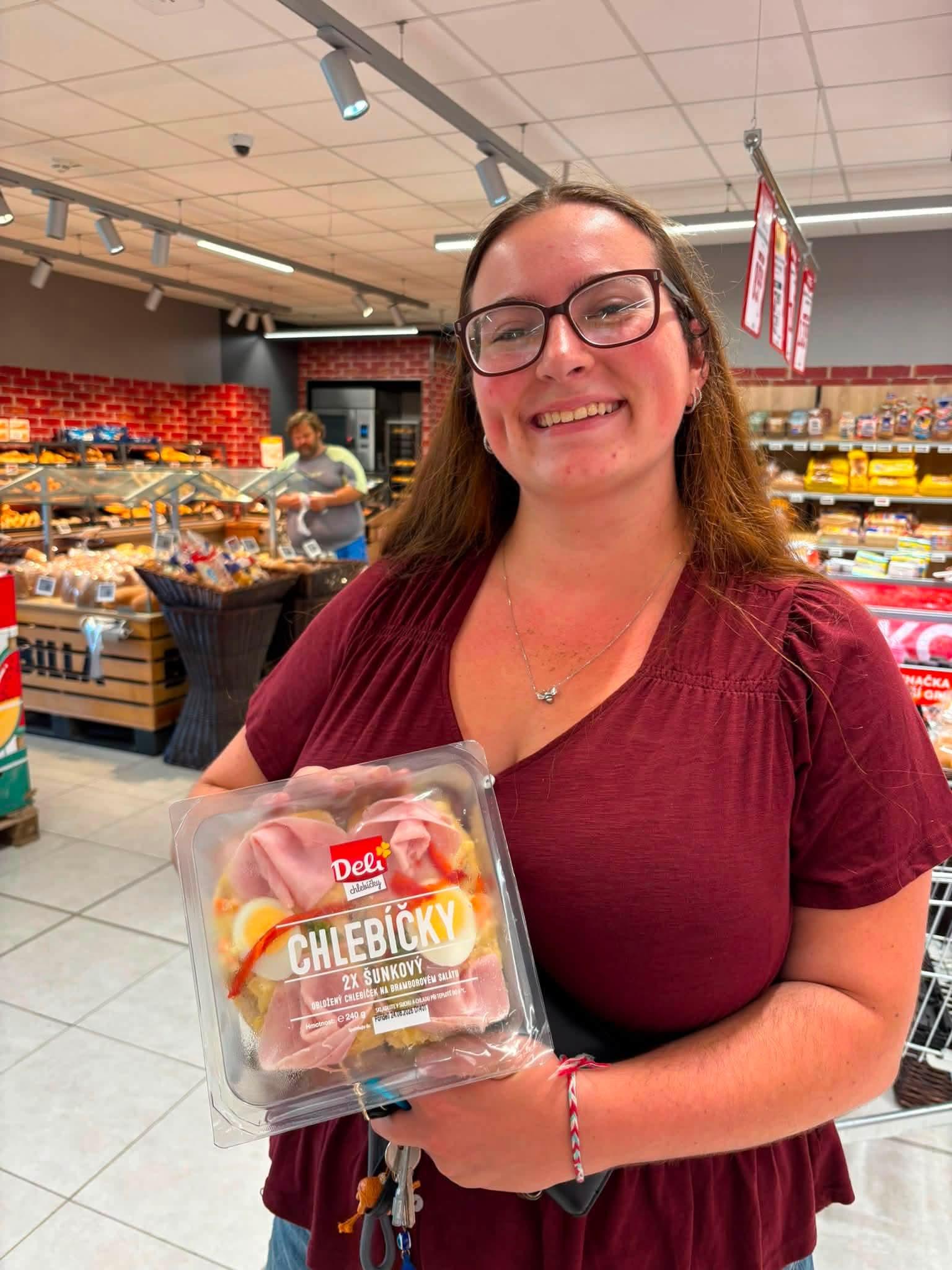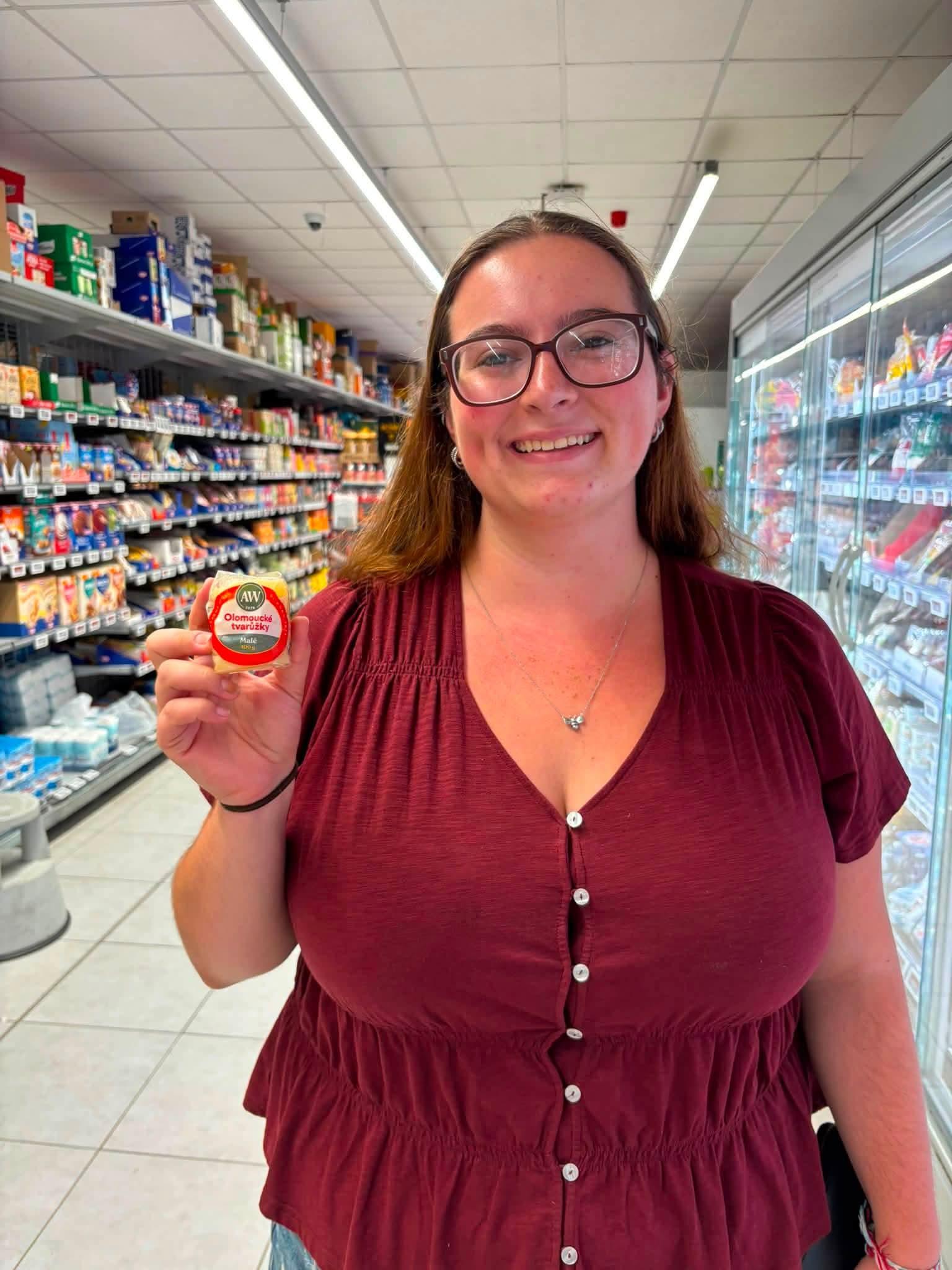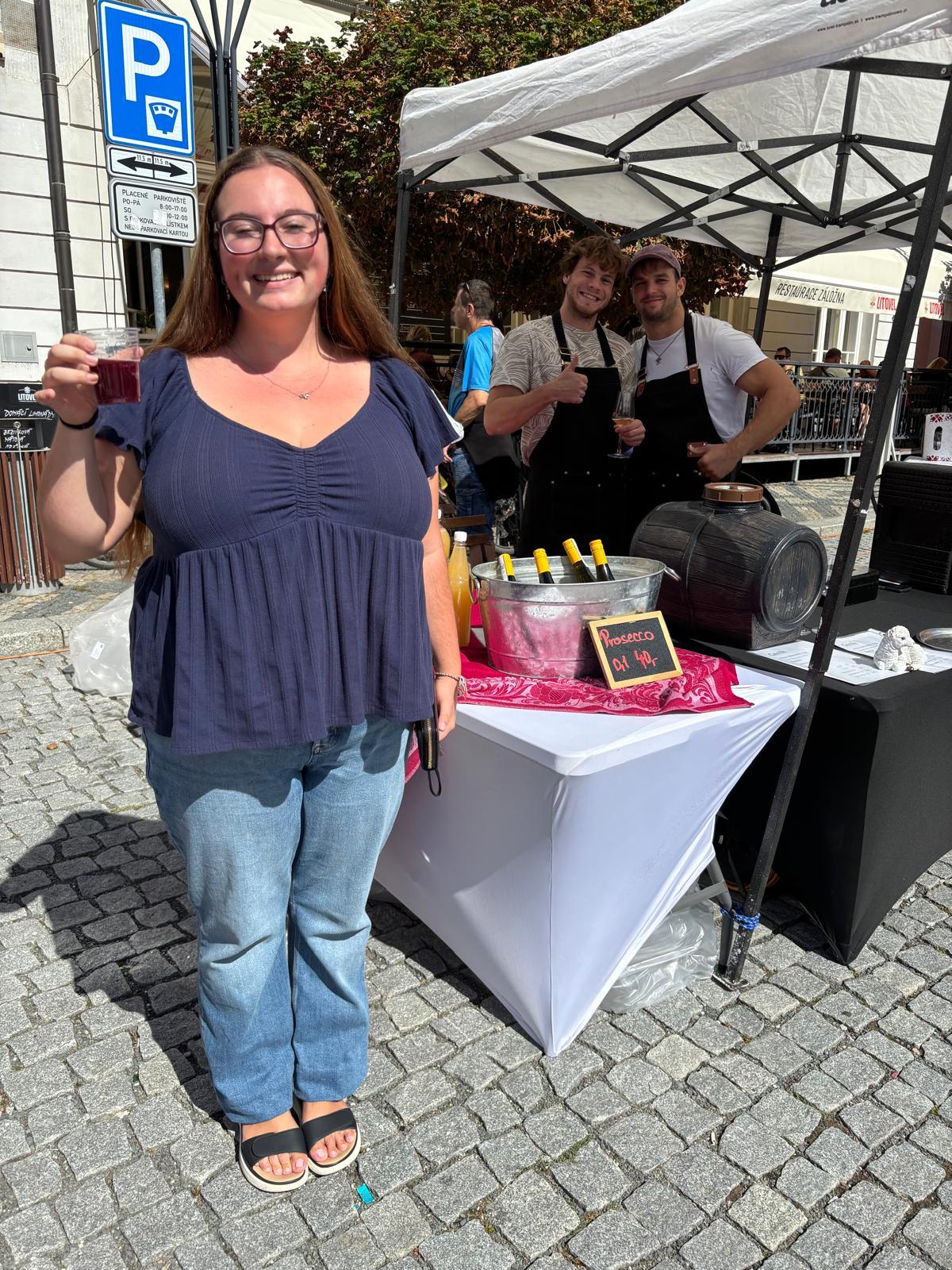
Other foods have unique preparation methods: langoš is deep-fried, Olomoucké tvarůžky can be matured and then baked or fried, and burčák is produced through the early stages of grape fermentation.
One of the most interesting things I have learned is how closely Czech food is connected to the region and the ingredients available locally. Living in the Olomouc region has introduced me to foods that are especially important to this area. The best example is Olomoucké tvarůžky, a locally produced cheese that is so important to the region that it even has its own museum! It is a source of local pride and a product that represents the area's food traditions.
Seasonal ingredients also influence what people eat. Plums are especially common in Czech baking, which I found interesting because I was not used to seeing them used so frequently growing up in Pennsylvania.
As the weather gets colder, warm soups, including pumpkin soup, become more common, too.
My town of Litovel also has a strong connection to local food production through its brewery. Litovel beer is named after the town, and the brewing process is even noticeable in the air sometimes. In addition, the surrounding region's agricultural products and traditional food production help connect everyday meals to the local landscape.
Finally, I think the school canteen is an important example of how food connects people. It serves not only students but also older members of the community, providing a shared meal service for different generations. Through these experiences, I have learned that food reflects more than personal taste.