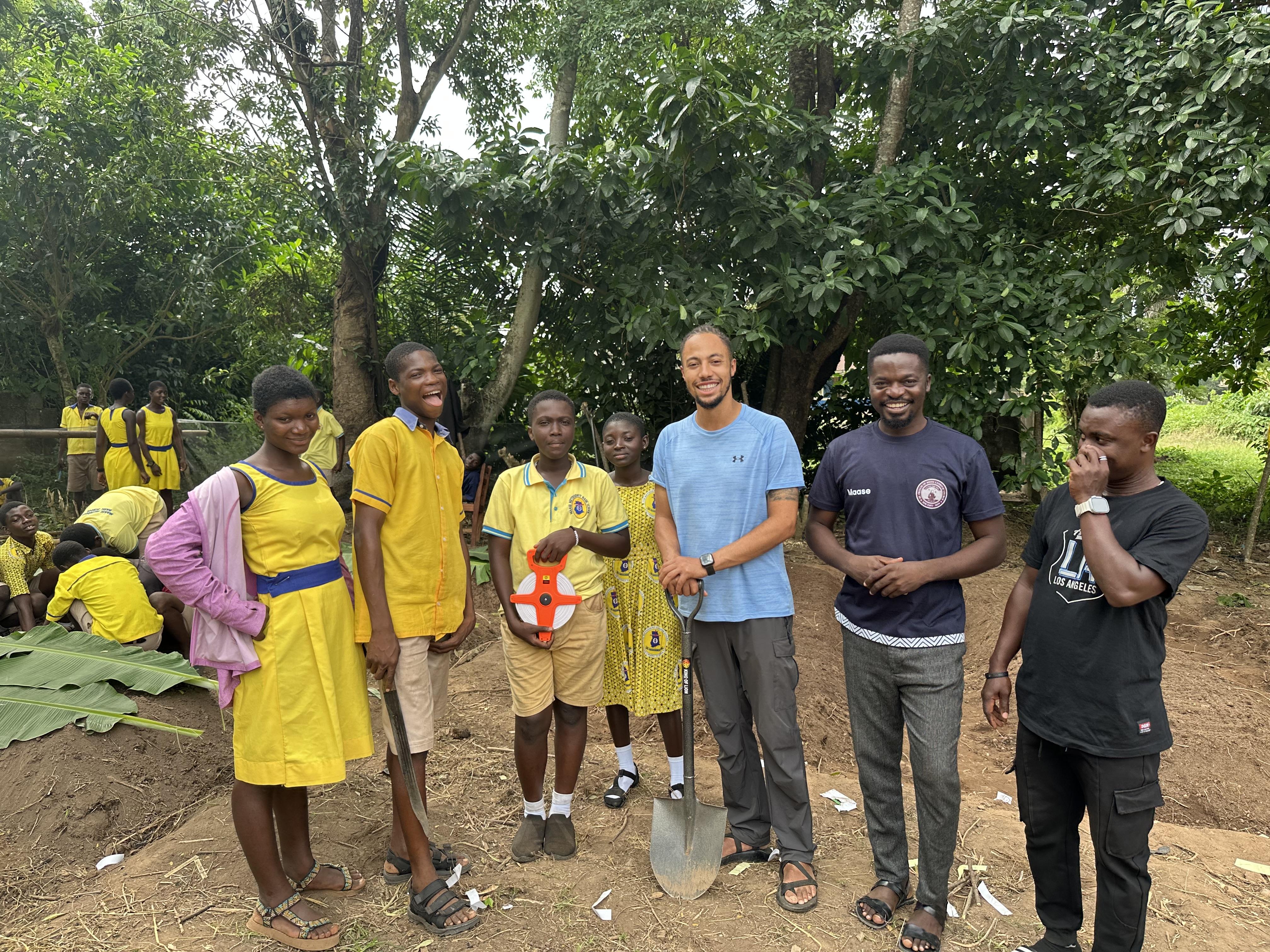
Climate resilient agriculture focuses on increasing the health of the soil, improving water efficiency and using drought resilient varieties of crops. An example of climate resilient agriculture is the practice of crop rotation, where farmers plant different crops on the same plot of land each season. For example, at my school garden we planted peppers and tomatoes last year, but this year we are going to focus on cucumbers and okra. Crop rotation helps keep the soil healthy because different plants take and leave different nutrients while they're growing -- just like how your body needs different vitamins.
As a Peace Corps Volunteer, part of my role in the community is to promote these kinds of activities for the farmers here. I work with individual farmers and students to facilitate education on the subject of climate change and how it is affecting the community. Most people see the impact of climate change in their lives, but don't realize what they can do to adjust their behavior to lessen the effects on their farming. So while small farmers can't neccessarily reverse climate change, they can adapt their approaches to be more sustainable so that they can be more successful in this complex environment.