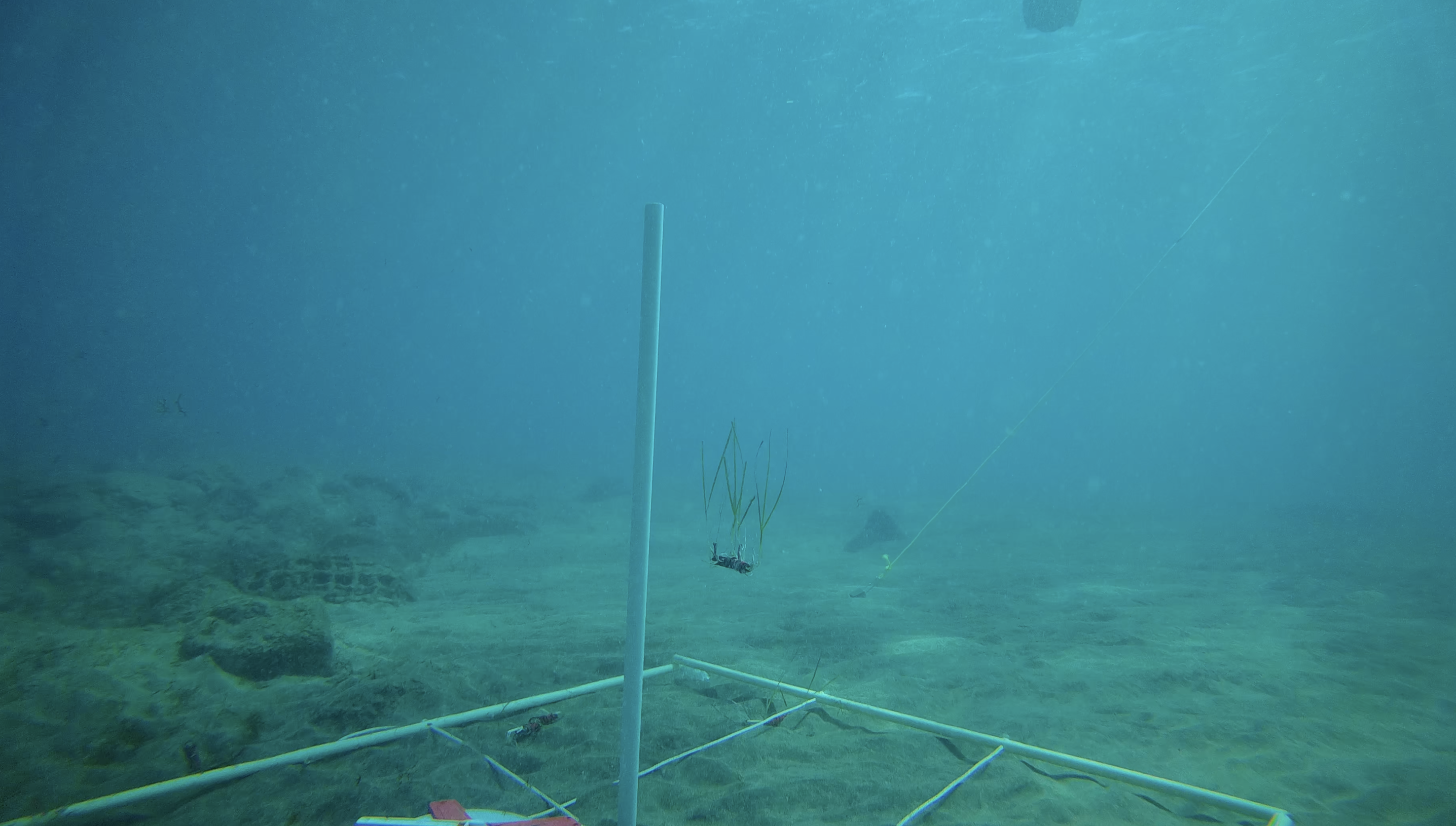
It's a plant, which means it needs ample sunlight to survive, and usually that means you can find it growing in shallow waters. However, shallow waters in the open ocean are subject to strong waves, which can push plants around and unroot them from their homes in the sand. For that reason, seagrass is most commonly found in sheltered bays, where waves are small and there is not too much energy in the water. However, in the Canary Islands, it's a different story. There are hardly any sheltered areas on the coast of Gran Canaria; everywhere you look, you are greeted by the vast Atlantic Ocean in all of its might. Winds are constant and wave action is quite strong. So how does any seagrass survive? Well, the interesting thing is that, although the waves are strong, the water is very clear. That means sunlight can penetrate quite deep. Instead of sheltering in a bay or cove, seagrass shelters by growing in deeper water.
When I was in New York, none of the sites I went to for my research were more than a foot or two deeper than my own height. But here in the Canary Islands, seagrass can grow at 60 feet deep or more! Most of the work my lab does here is conducted in water 20 - 40 feet deep, and we take advantage of whatever minimal physical shelter is offered by the jagged volcanic coastline. My first day in the field was at a site called Cabrón, and the seagrass was in about 20 feet of water. Beyond the Canary Islands and the U.S., seagrasses of different species are found around the whole world, from Sweden to Australia, usually in temperate to colder areas rather than the tropical zone.