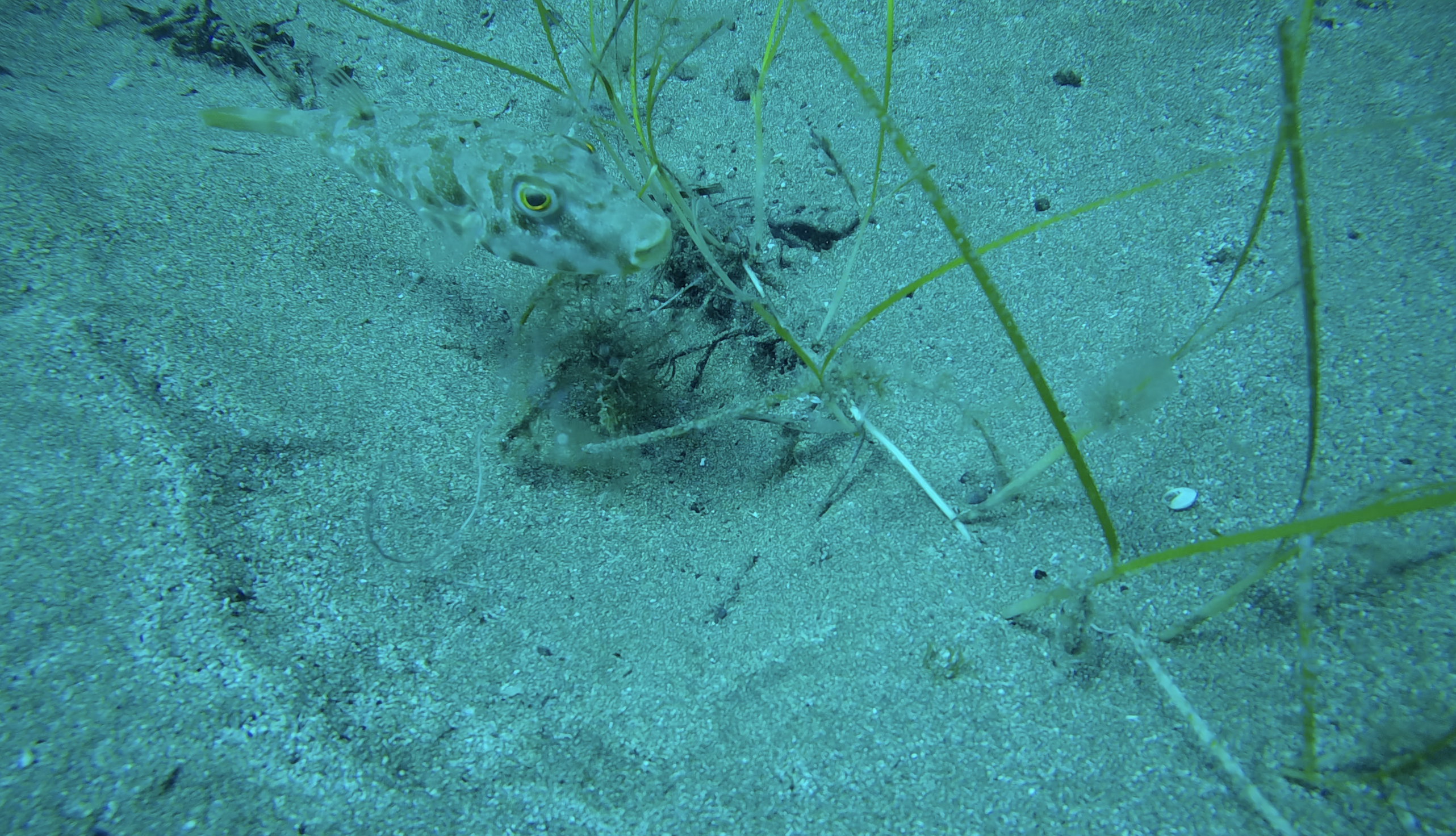
Water is not hard to come by when you live at the bottom of the sea, but the ocean is full of salt water, which can be harmful to many plants. Seagrasses have adapted to carefully control the amount of salt they take into their leaves, and are able to regulate it to stay healthy. Sunlight is found in any waters shallow enough to recieve it, and various nutrients are dispersed to the plants through the water itself. Seagrass takes in some nutrients through its roots, but a dissolved gas like carbon dioxide is simply floating around in the water and the plants are able to extract it directly from their surroundings.
Unfortunately, seagrasses across the world face a variety of stressors. These can be physical threats, such as erosion from wave action and the risk of being torn up by boat anchors that get dragged along the seafloor. Biological threats include things like disease and excess heat, which can affect certain functions within the plant. Finally, chemical stressors may be present when the balance of nutrients are not right for the plant. If tje water has too much or too little of certain chemicals, which may be naturally scarce or in overabundance due to human activities, the plants may be unable to grow or survive. Every region and every species of seagrass in the world is facing some combination of these threats, and unfortunately in many cases, the plant is succumbing to the pressures and disappearing from where it once lived. Some scientists have estimated that in the past several decades, the world has lost up to a third of its historical seagrass coverage, and this trend shows no signs of slowing down.