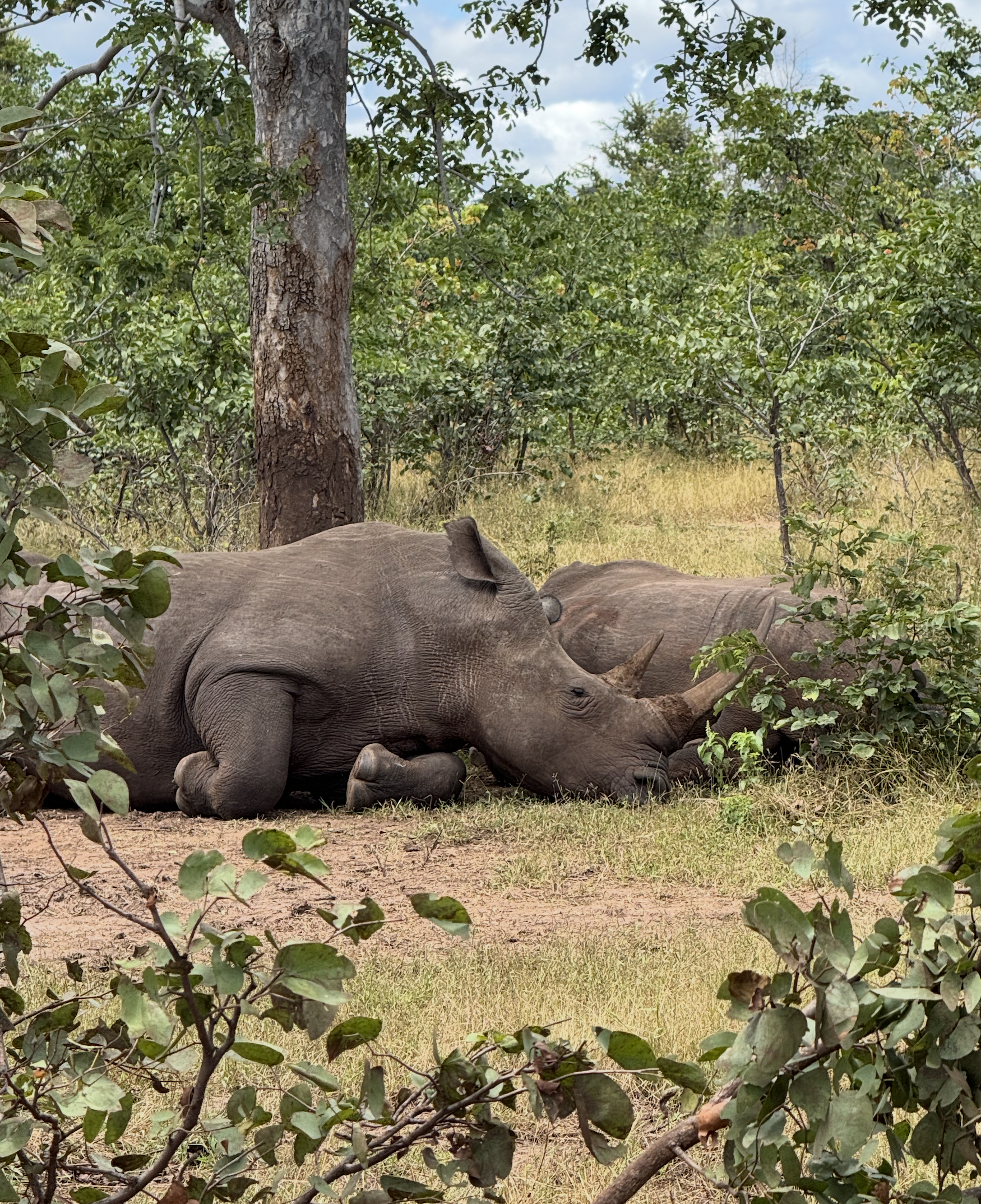
Because of intensive monitoring and protection, they are able to retain their full horn length which is increasingly rare due to poaching pressures.
One of the more underappreciated but essential parts of the ecosystem was the presence of white-backed vultures. While less charismatic than the large mammals, they play a crucial role in maintaining ecological balance. Vultures rapidly consume carcasses, preventing the spread of disease and recycling nutrients back into the environment. They are able to locate kills over long distances by detecting gases such as ethyl mercaptan released during early decomposition. Finally, visiting during the green season offered a very different perspective compared to the dry months. Instead of animals clustering tightly around limited water sources, the landscape was vibrant and had abundant vegetation. This also meant an increase in young animals (hyenas, antelope, lions, and others) that reflected a period of abundance following the rains.
Victoria Falls, Zambia & Zimbabwe
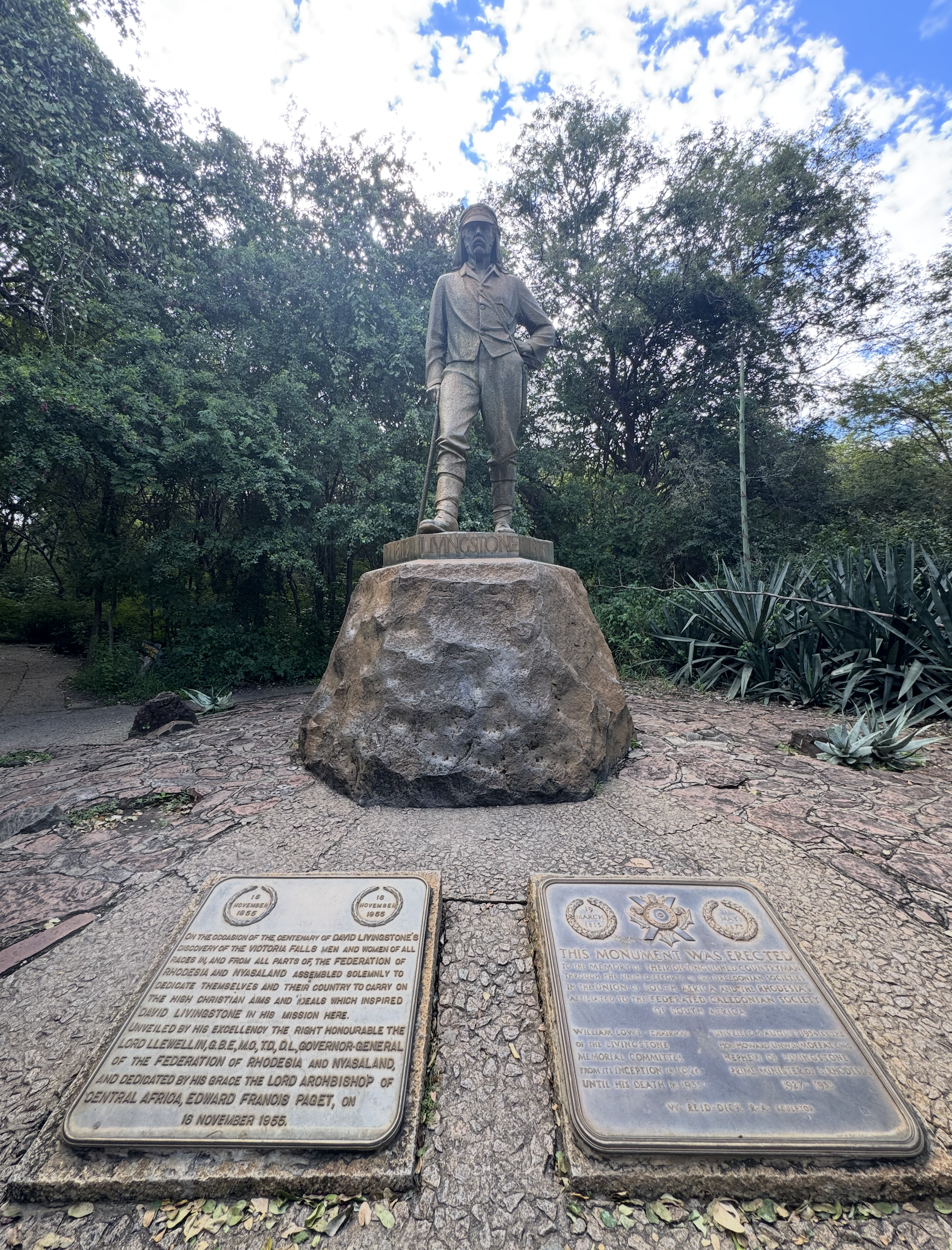
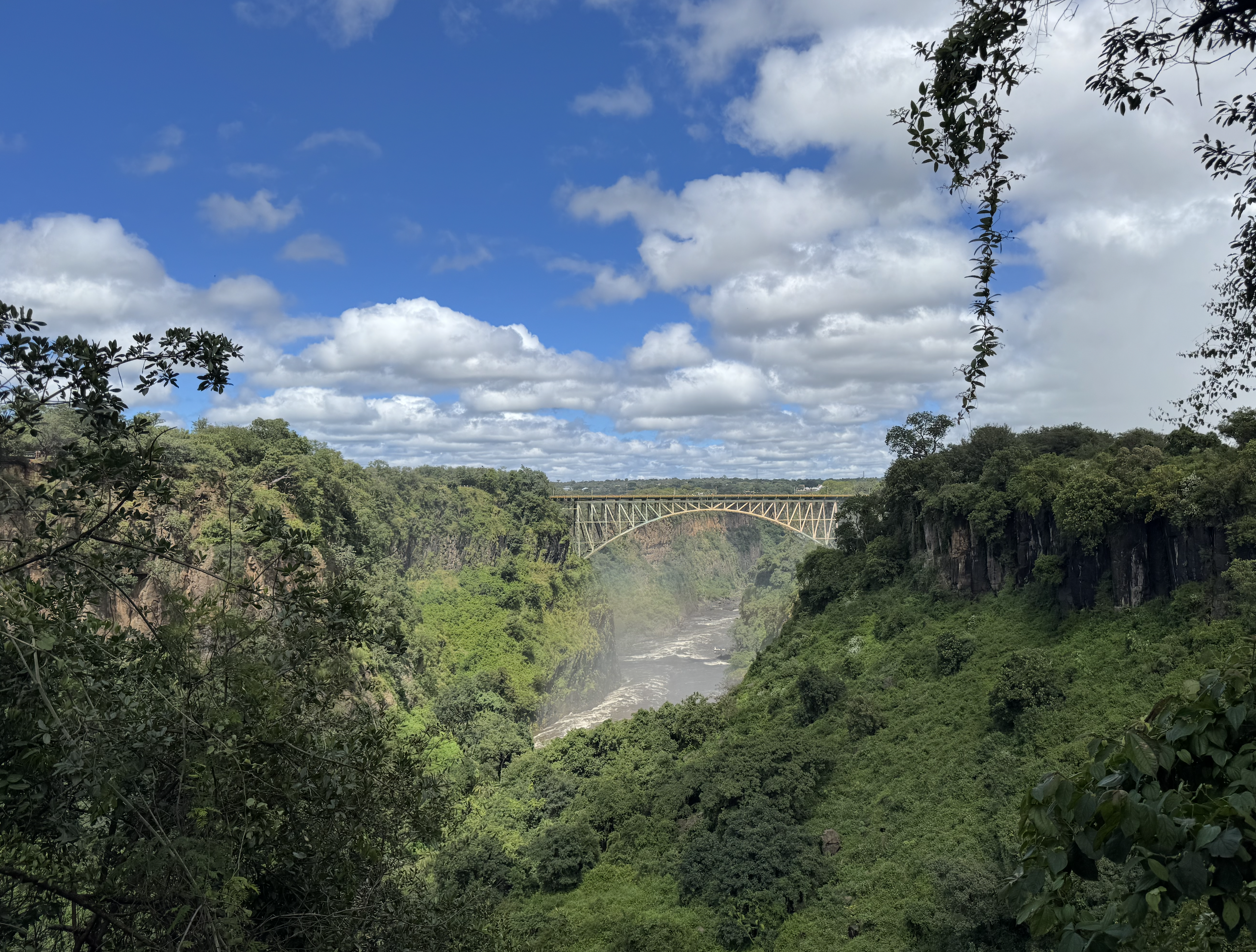
The final stretch of our trip brought us to Livingstone, Zambia, home to Victoria Falls, one of the most impressive natural landmarks in the world. The falls were first documented for a European audience by Dr. David Livingstone, a Scottish physician and explorer, in 1855, who named them after Queen Victoria. Livingstone originally came to southern Africa as a doctor and missionary with the goal of spreading Christianity. He became deeply opposed to the slave trade he witnessed and spent much of his later life advocating against it, ultimately remaining in Africa until his death from malaria. The falls are locally known as Mosi-oa-Tunya, meaning “The Smoke That Thunders.”