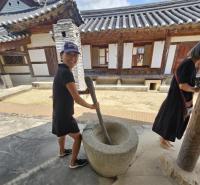
Spending time there from late summer through winter, while attending lectures, visiting the DMZ and meeting people connected to the program, allowed me to witness the farm’s phases unfolding around me. I saw red peppers still on tall green plants, then watched them sun-dry for months, carefully moving them indoors and outdoors depending on the weather. When they were nearly ready, I occasionally joined in to trim away imperfect parts before they were chopped and stored to make kimchi sauce.
In October, visiting lecturers from Canada joined us as we briefly pulled sweet potatoes from the earth — an exhausting but joyful process. In November, on one visit, I planted small green onion bulbs in plastic-covered rows to keep them warm, sitting on a tiny cushion seat strapped to my thighs between intervals. The food tasted deeply fresh, unlike anything I had experienced before. The flavor came from the plant itself, not just the seasoning. The farmers often reminded me that you cannot rush farming; you have to surrender to the seasons. That rhythm encouraged me to slow down and appreciate each bite.
After planting the onions myself, I also stopped taking more food than I could finish. Each strand felt like a quiet strand of jeong — care that should not be wasted. On one of my last regular days there in the fall, a staff member prepared one of my favorite dishes, yukgaejang (육개장). Food tastes different when it is cooked with intention and is especially good when it is prepared for you.