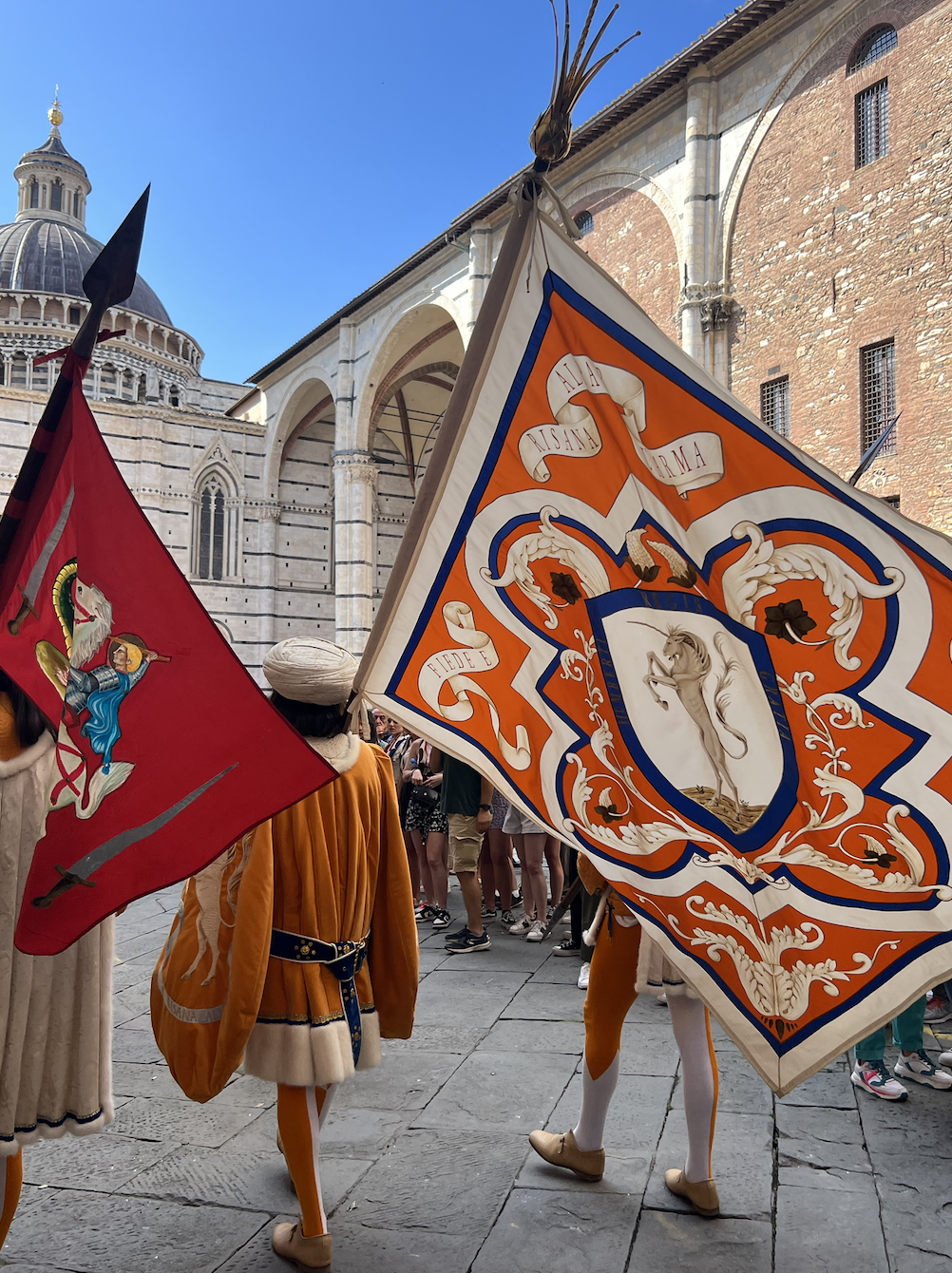
My contrada (my neighborhood) that I feel the strongest connection to, since it was where my family stayed the first few times we came here, is called leocorno (unicorn). I know that the unicorn sounds silly or childish, but this fierce-looking creature is no joke. Some of my other favorite neighborhoods are nicchio (the shell), tartuca (the tortoise), and my current neighborhood drago (dragon). Siena is always a lovely city to visit, but tension and excitement in the town gradually builds as July 2nd and August 16th approach.
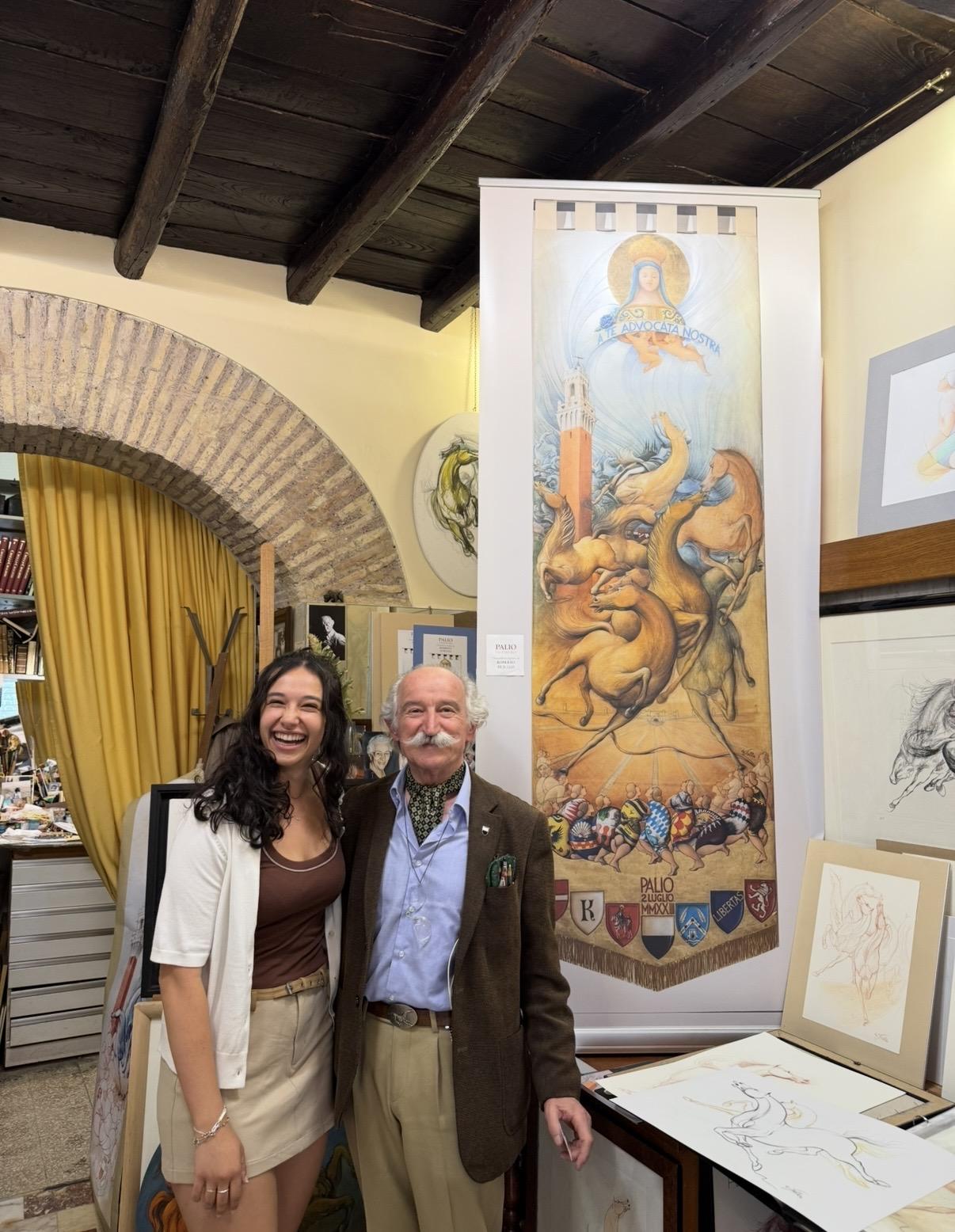
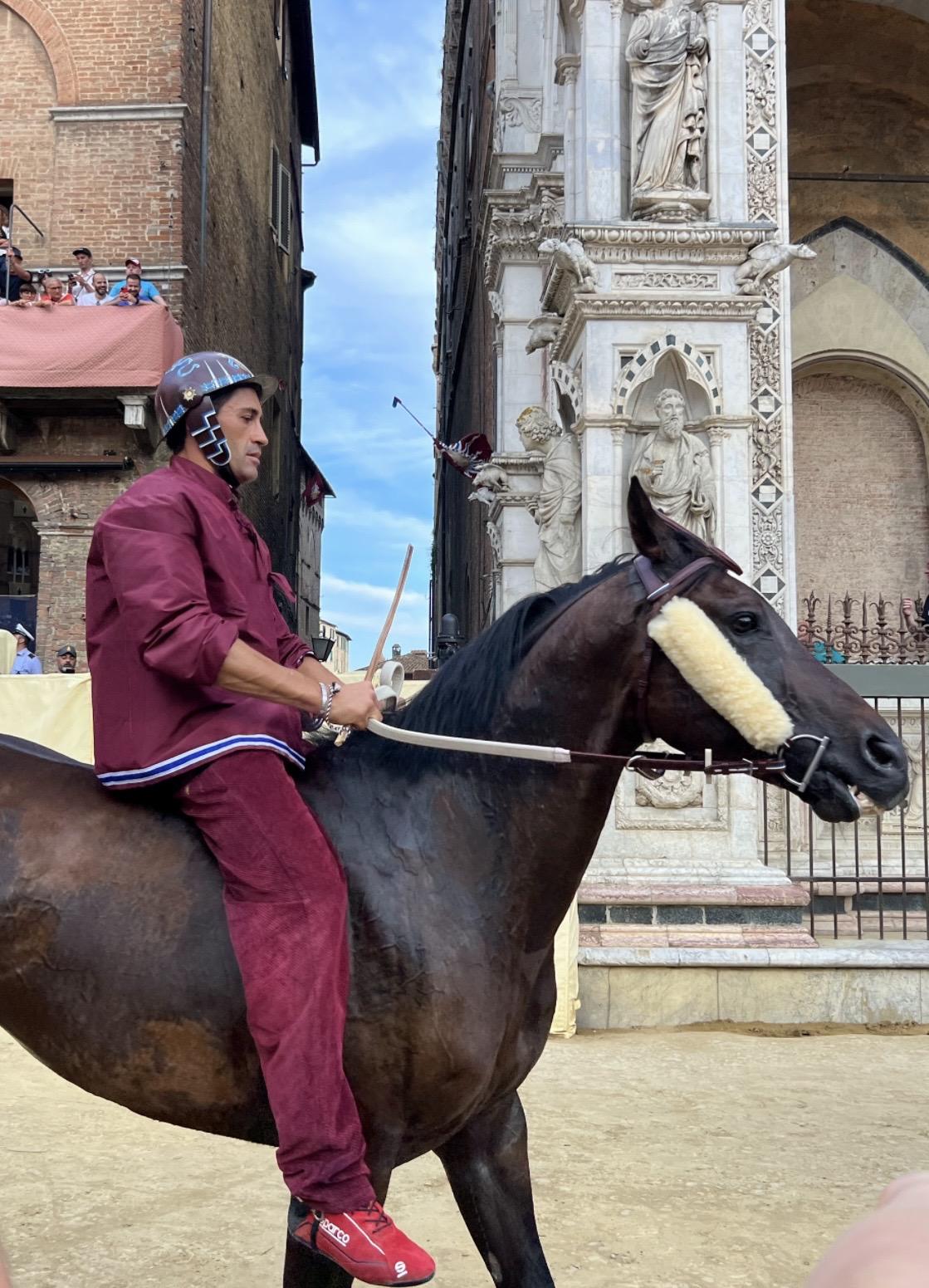
The roots of the Palio stretch back to 1232, when horse racing first appeared in Siena. The first formal Palio was held in 1482, at a time when the city was organized into as many as 40 contrade, each associated with a trade guild or rival military company. At this time, the race took place throughout the city, with horses running along with winding streets. By 1659, the race took on its current form in the Piazza del Campo. The tradition exists because it is the ultimate expression of contradaiolo identity (pride of belonging to one's neighborhood), in other words, a sense of community. Sienese residents are born into their contrada and remain loyal to it for life. The Palio is not just a sporting event; it is a religious, social and political ritual that channels centuries of inter-neighborhood rivalry into a single, explosive moment. If you want to learn more about this passionate and heart-pounding race, I really recommend watching the Palio documentary (or at the least the trailer) to learn more about how deeply-ingrained this tradition is in Sienese society.