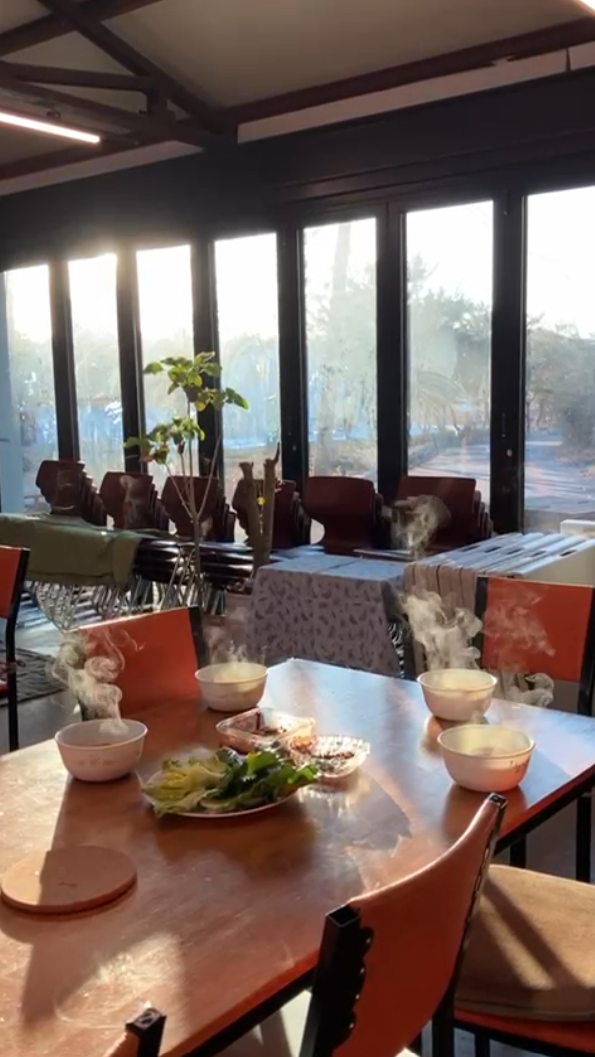
On the day of the meal, the main entrée is usually prepared fresh, along with freshly cooked rice (밥,
bap) and some kind of protein. This stage often involves fewer people, but special care is taken to source or prepare the central dish. The entire meal is typically organized around this main entrée, supported by the already-prepared
banchan.
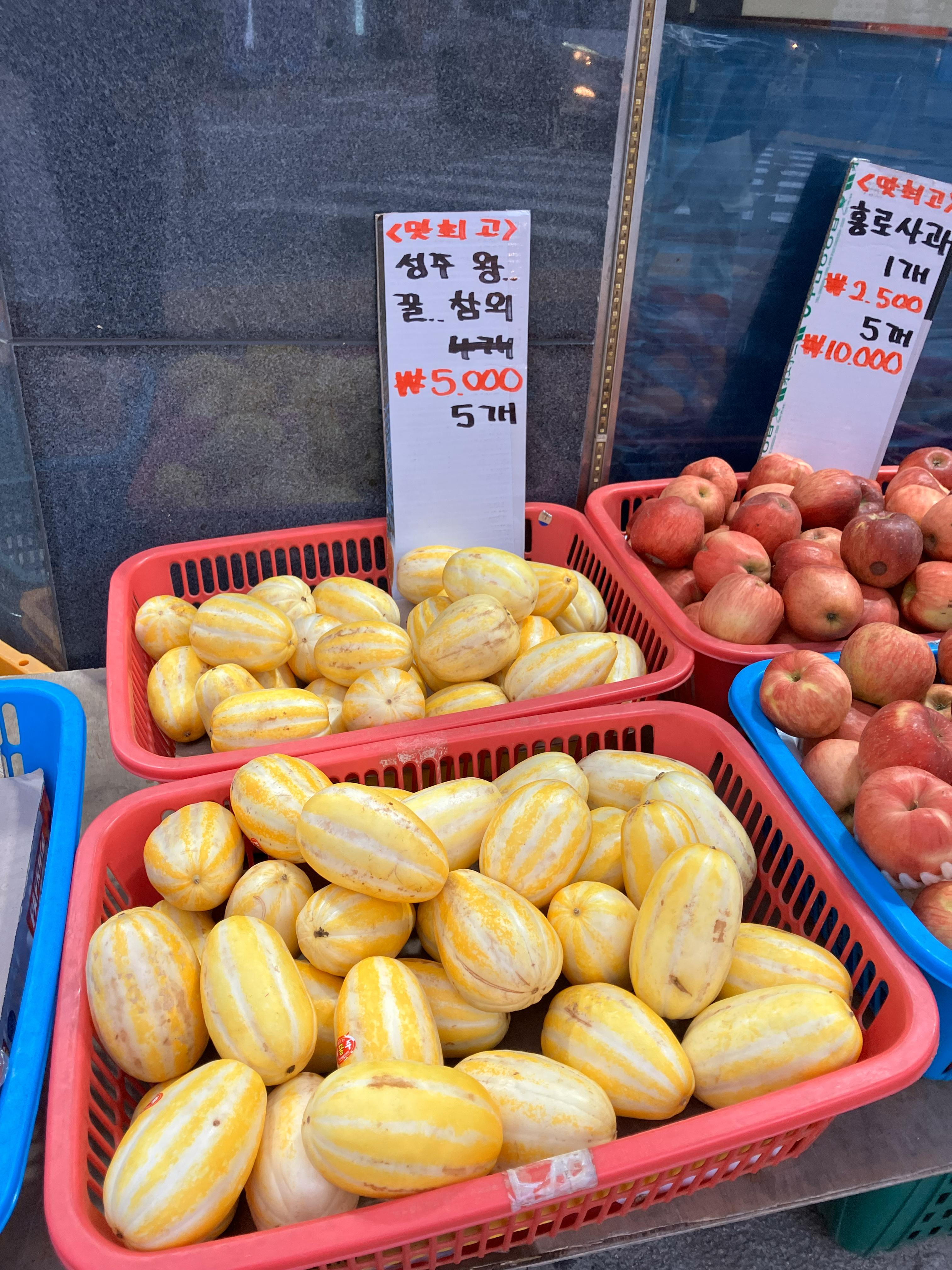
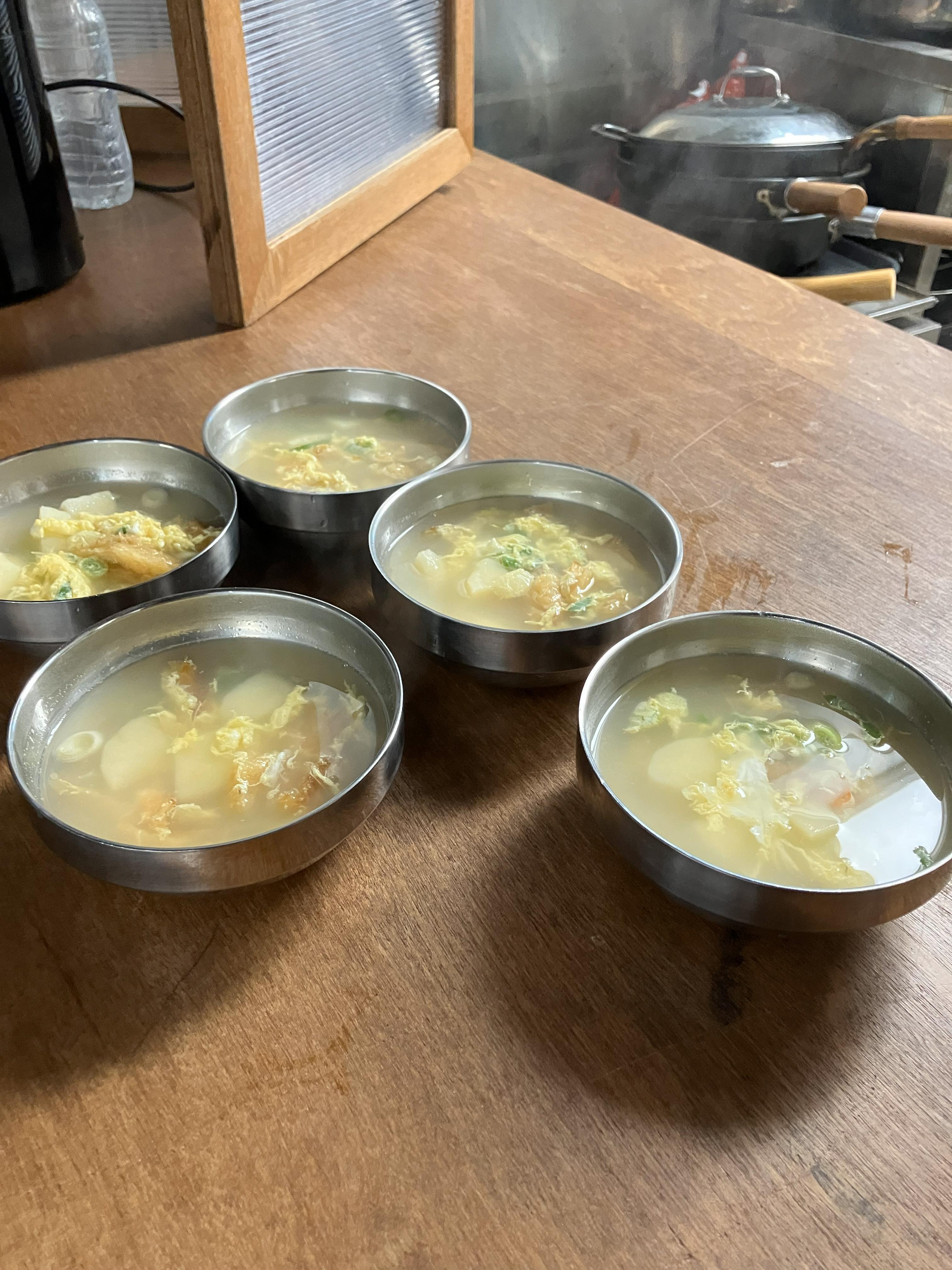
The closing phase (in some meals): soup or rice water. Instead of dessert, meals often end with something light, such as sungnyung (숭늉)—a warm rice water made from the scorched rice at the bottom of the pot. Sweet desserts are relatively minimal; if anything appears, it might be a small piece of fruit (like persimmon or melon) or a tiny cup of fruit drink.
A language note: food “before” and “after” cooking:
One thing I find fascinating about Korean is that there are different words for certain foods before and after they are cooked.
- Uncooked rice is called 쌀 (ssal),
- while cooked rice is called 밥 (bap).
Eggs work a little differently:
- An uncooked egg is 달걀 / 계란 (dalgyal / gyeran),
- and a cooked egg is still called 달걀, usually described by how it’s prepared (for example, 삶은 달걀, a boiled egg).
When I asked if there was a word for rice or eggs while they’re being cooked, my friends laughed and said there really isn’t. Instead, they joked that food is thought of as “still uncooked” in the first half of cooking, and “already cooked” once it’s almost done. What do you think?
Is this food connected to the local environment? How?: Deeply, yes.
Pages