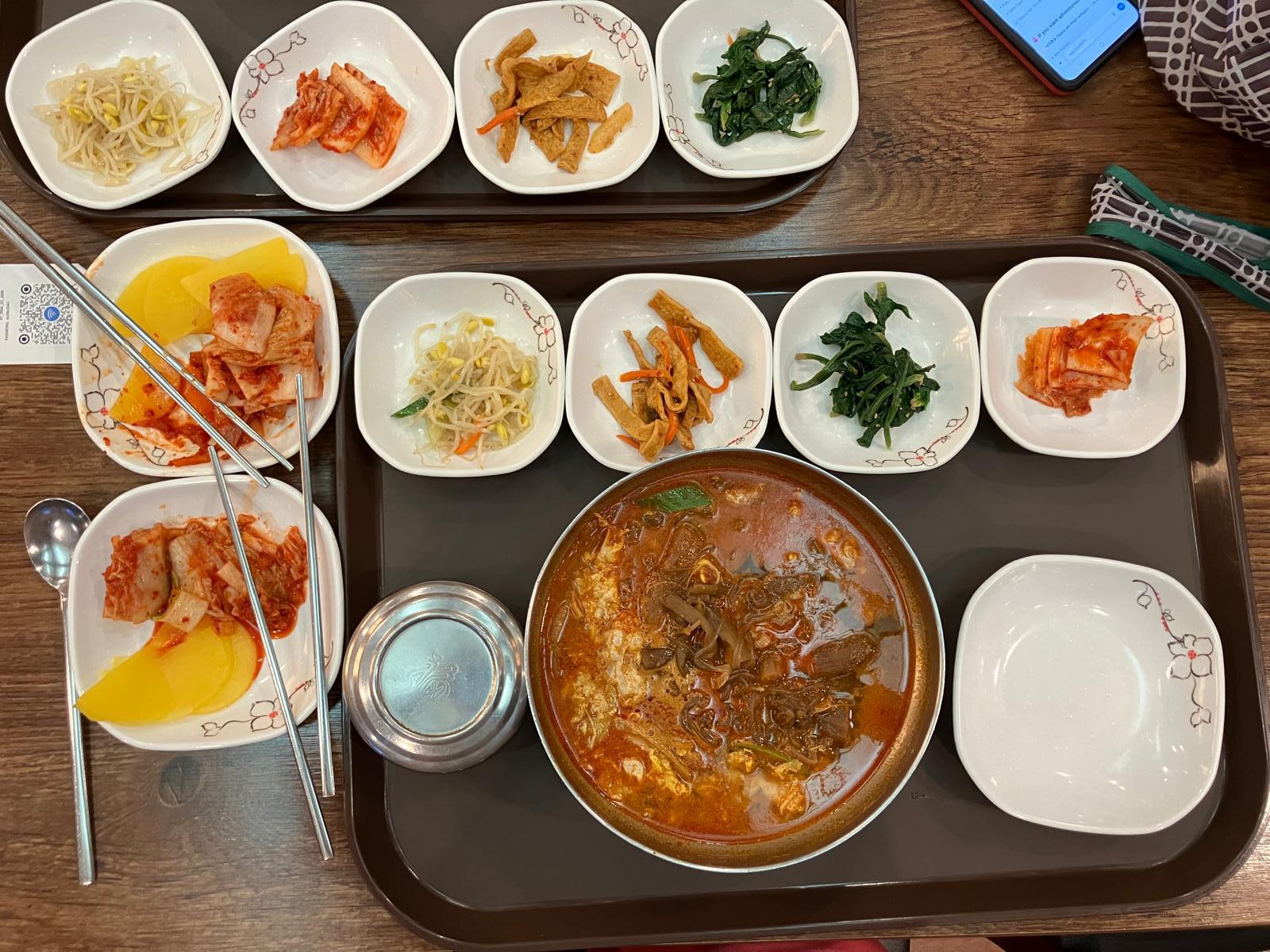
While I had always assumed kimchi was only made from cabbage, I learned that it can be made from many different ingredients, including radishes, perilla leaves, cucumbers and green onions. These foods often appear alongside other small side dishes called banchan, such as pickled radish, lotus root or seasoned soybean sprouts.
Throughout my time here, I revisited many staple Korean dishes, including bibimbap, bulgogi, kimchi jjigae, kimchi pancakes, samgyeopsal and jajangmyeon. I also tried foods that felt more adventurous to me, like collagen-rich soups, traditional chicken soups, squid, bone-in fish, yukgaejang and fresh persimmons. While Korean food has historically been meat-centered, I’ve also noticed that vegetarian options are slowly becoming more common, especially in larger cities.
One ingredient that kept reappearing across many meals was the perilla leaf. Native to Korea, perilla is often used to wrap meat, rice and vegetables into a small bundle meant to be eaten in a single bite. At first, I kept wanting to take a bite and save the rest for later, but I was gently corrected—that wasn’t how it was meant to be eaten. This often happens when eating samgyeopsal. In Korean, sam means “three,” referring to the layers of pork belly, while the leafy wrap it’s eaten in is called ssam, a different word that simply means “wrap.”