Instead of waiting to get all the way home, you can just find something to eat on the side of the road as long as you know it's safe to eat! While some fruits are bitter, some tickle your throat and some turn to goo, they're all at least a little bit sweet.
The first time I had cibwantu, I felt very refreshed. I had had a long walk in the sun, and it was just what I needed to regain some energy. I remember being a little nervous about how to hold the cup and if I should be mindful of how much I took, but it turns out the whole pitcher my host brought out was just for me.
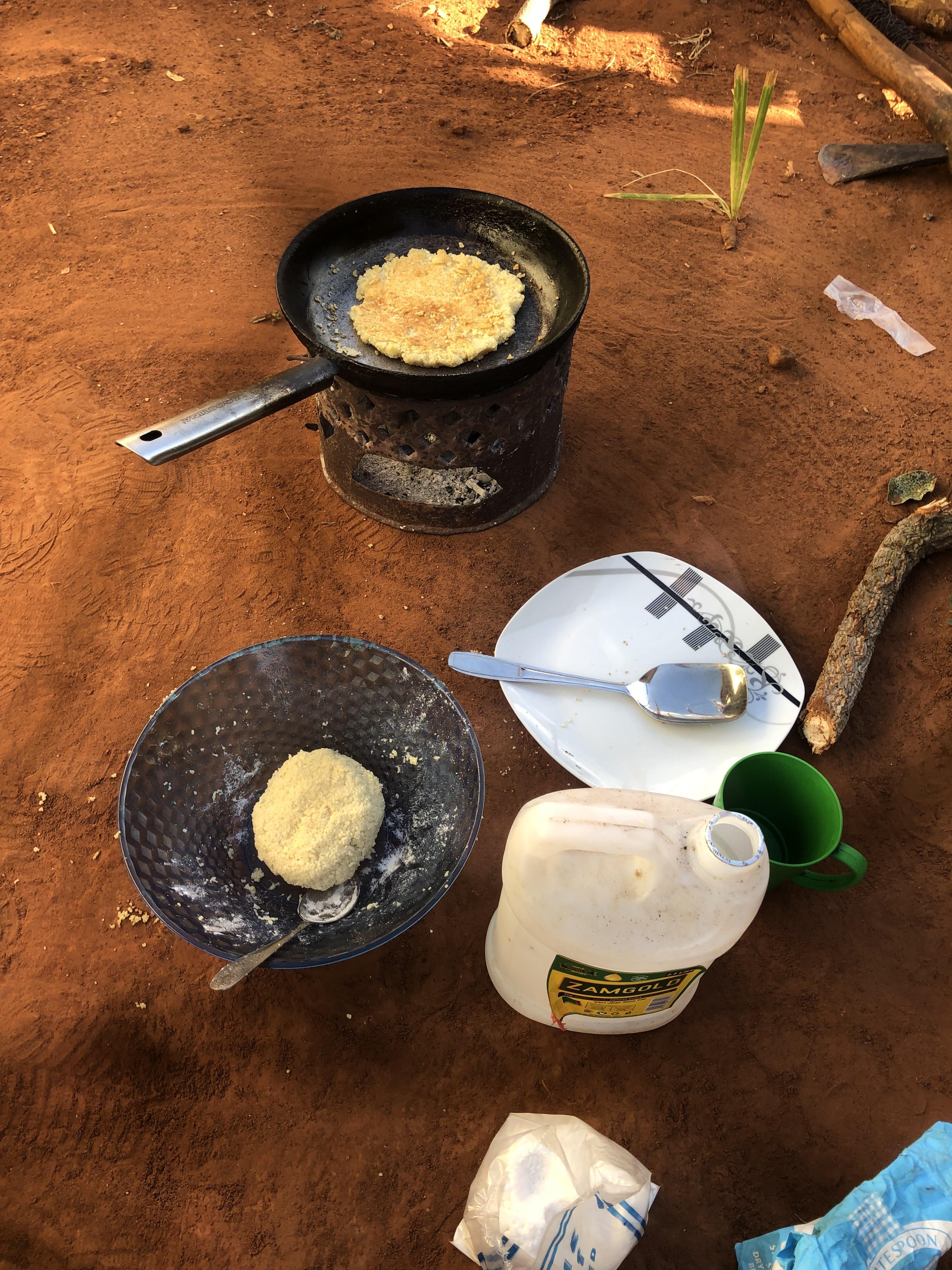
And whenever I am invited to sit and share nshima with someone, I feel humbled and honored since it's really a mark of respect to be invited like that.
Cibwantu is prepared by steeping the munkoyo root in water. Meanwhile, maize (similar to corn) meal is sifted to remove any seed coat left, then boiled in water to make a porridge. The root is taken out of the water and the resulting starchy liquid is mixed with the porridge. All done!
The life cycle of nshima (and cibwantu) begins in November, when farmers prepare and sow their maize fields. In April, the maize is harvested and dried. A family might keep twenty or so sacks of maize to make nshime and cibwantu until the next harvest, while the rest are brought to town to be sold. Dried maize needs to be ground to make corn meal, and a few families in my communities have hand-crank mills. Neighbors will often bike up to these homes with bags of maize to grind.