As mentioned by one of my tatreez instructors, stitching helps bring a state of calm upon facing distressful news about the oppression of her people. Furthermore, tatreez is a means of financial support for artisans as they are able to earn an income by selling their work through local or global initiatives. Lastly, it is a medium through which people from around the world can become more aware and educated about Palestine from artists who have generational connections to the region.
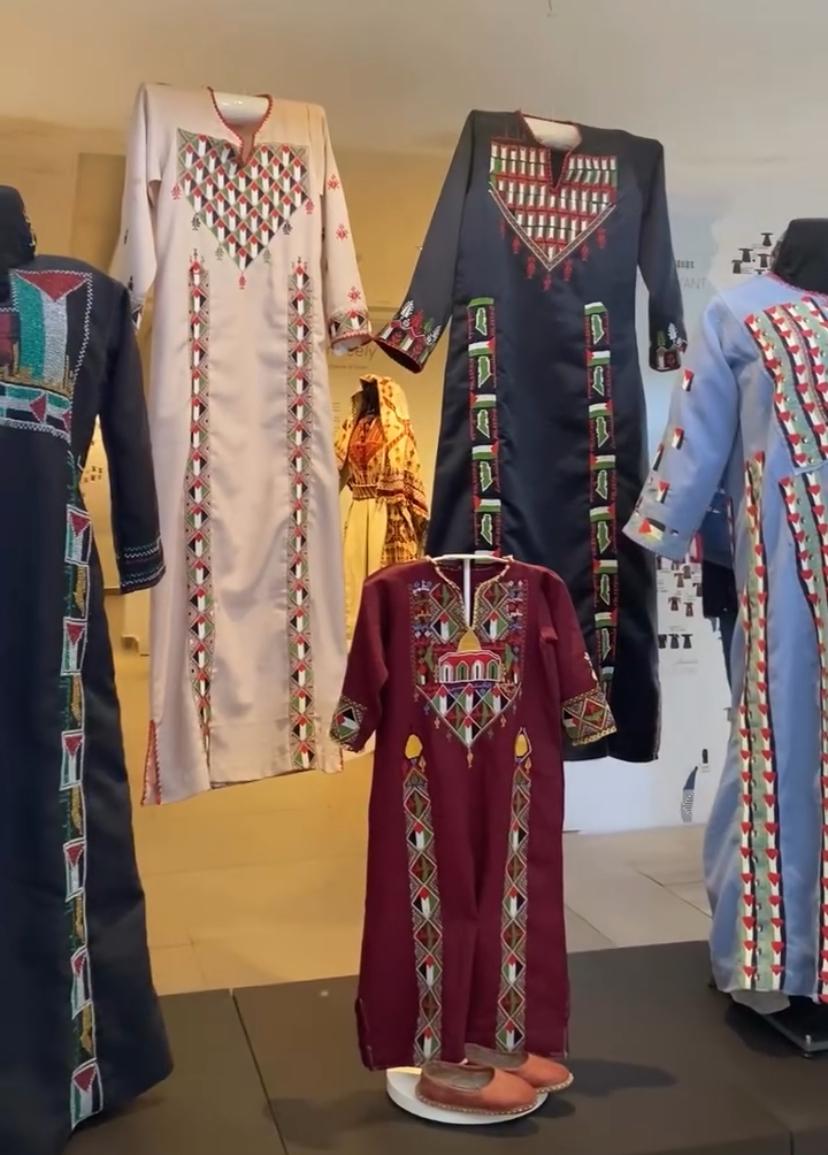
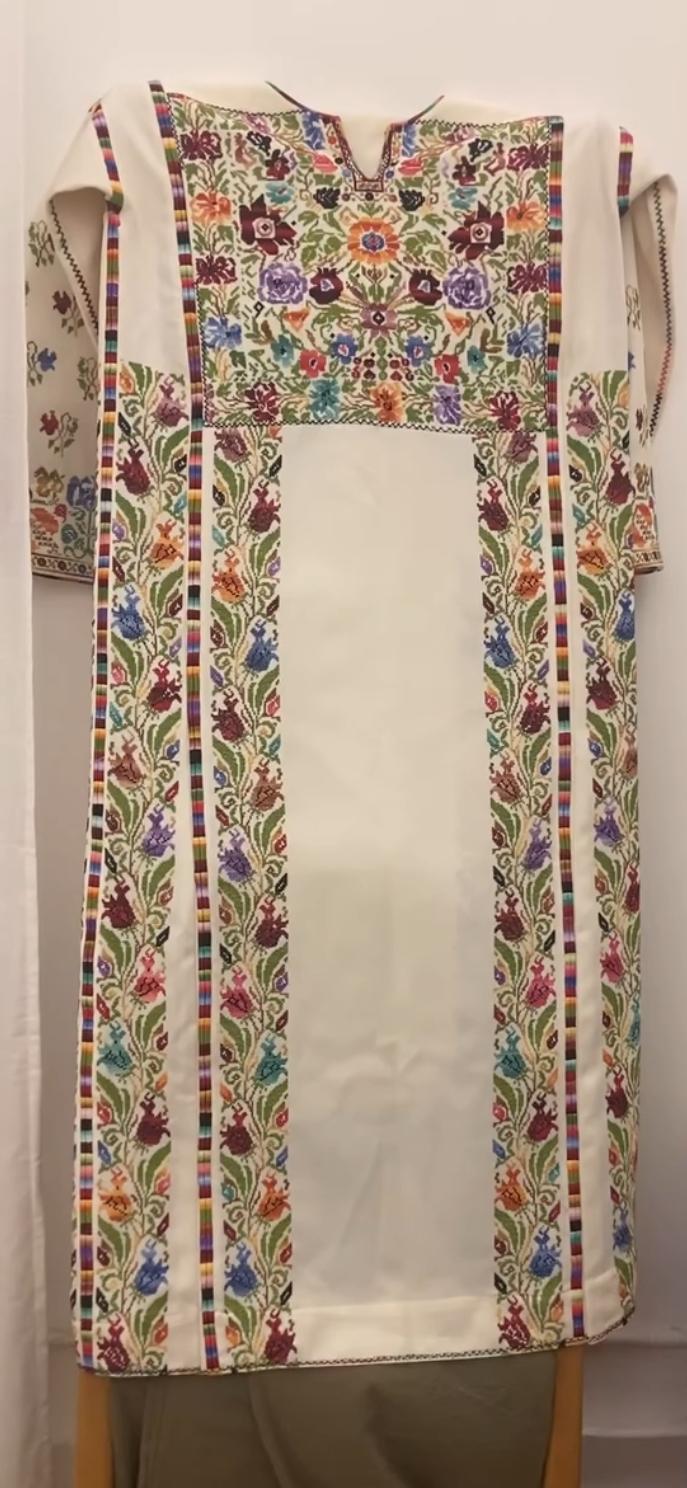
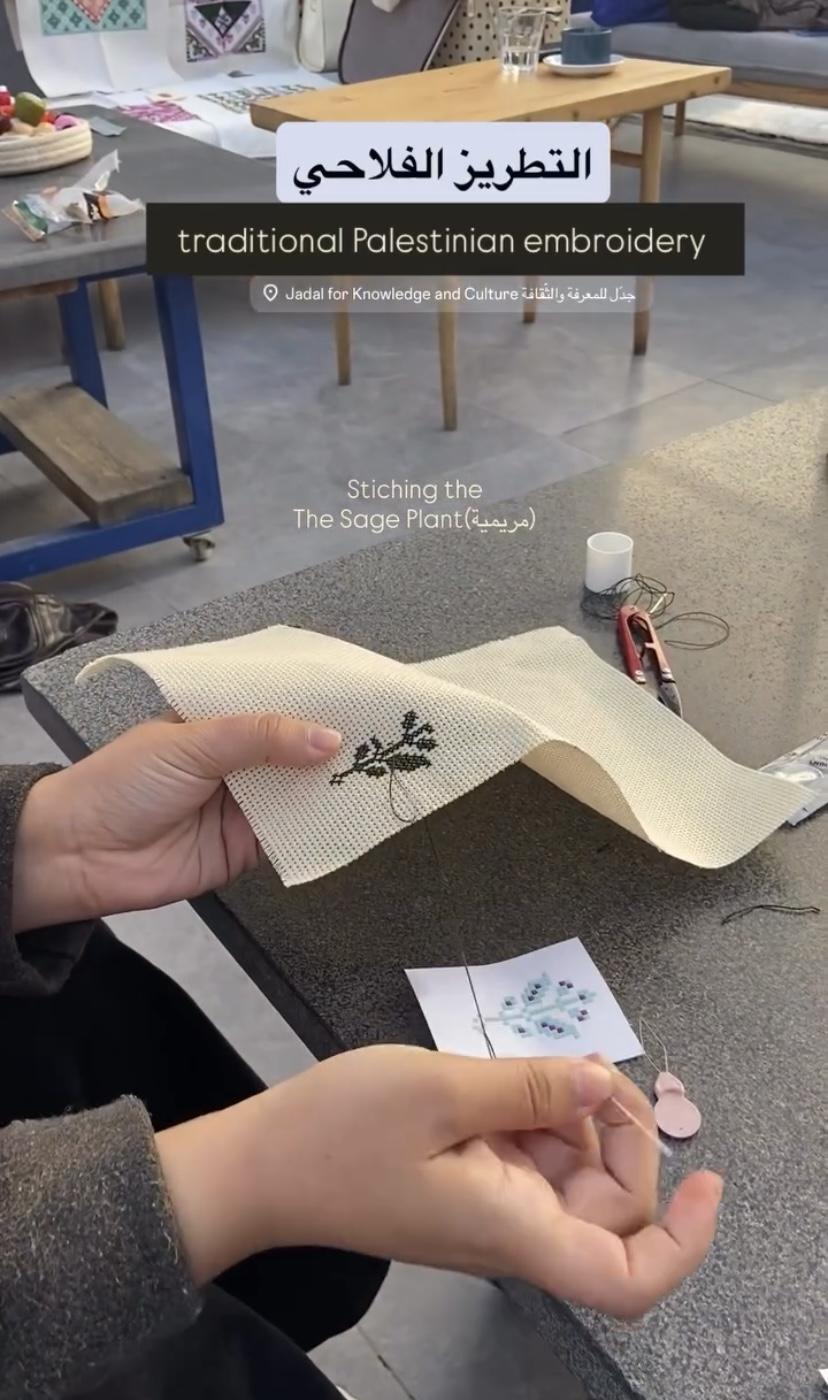
Tatreez traditionally appears on long gowns called thobes. Embroidered thobes were worn by women both as everyday attire or on special occasions. These gowns feature a number of different techniques of embroidery, from the basic cross stitch to ones that are much more complex and advanced, sometimes even requiring a different material of thread. For instance, you may notice that the seams of the thobe on the right are stitched differently than the patterns on the dress itself. This is due to the use of a fishbone stitch, which is a technique that attaches separate panels of the dress together to create tightly bound borders. Today, tatreez is sometimes done just on aida cloth, which is a thick, grided fabric that is useful for evenly spacing and aligning rows of cross stiches. More creatively, tatreez can be done on clothing, pouches, or tote bags.