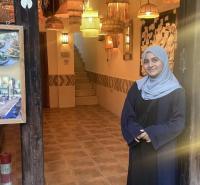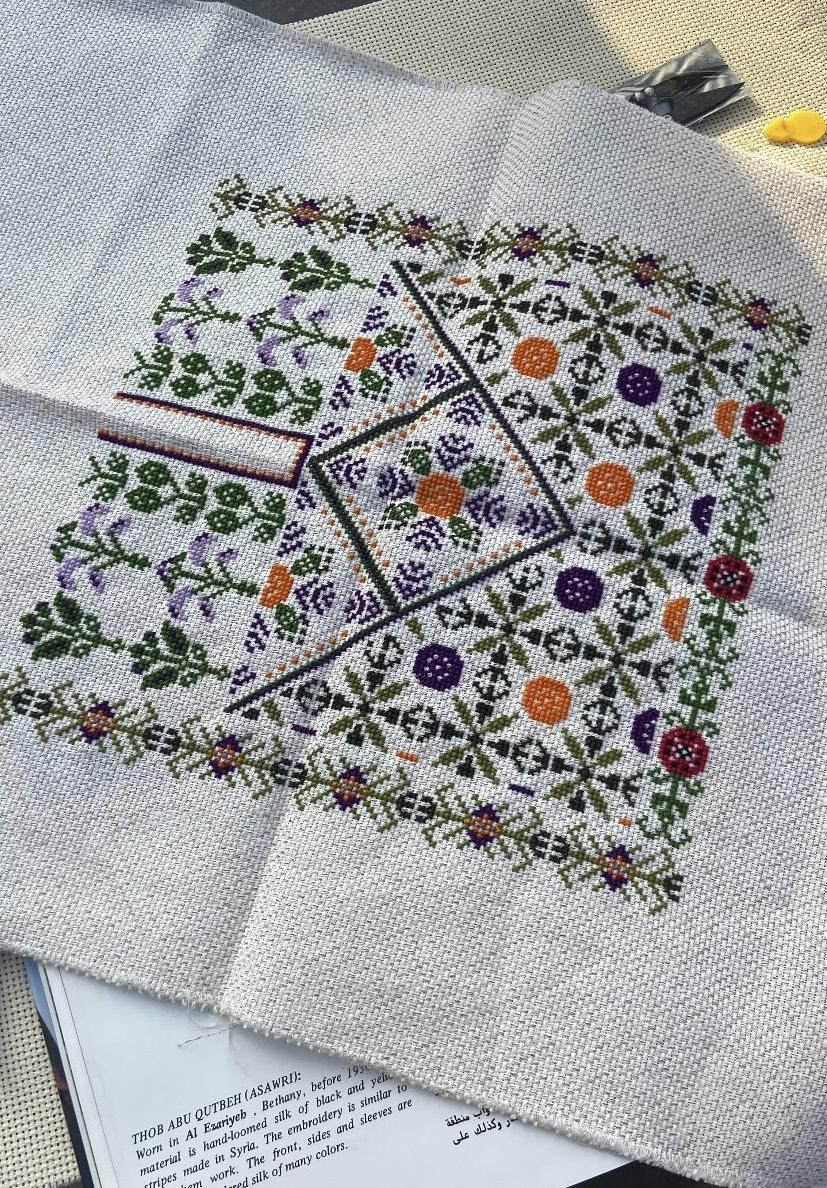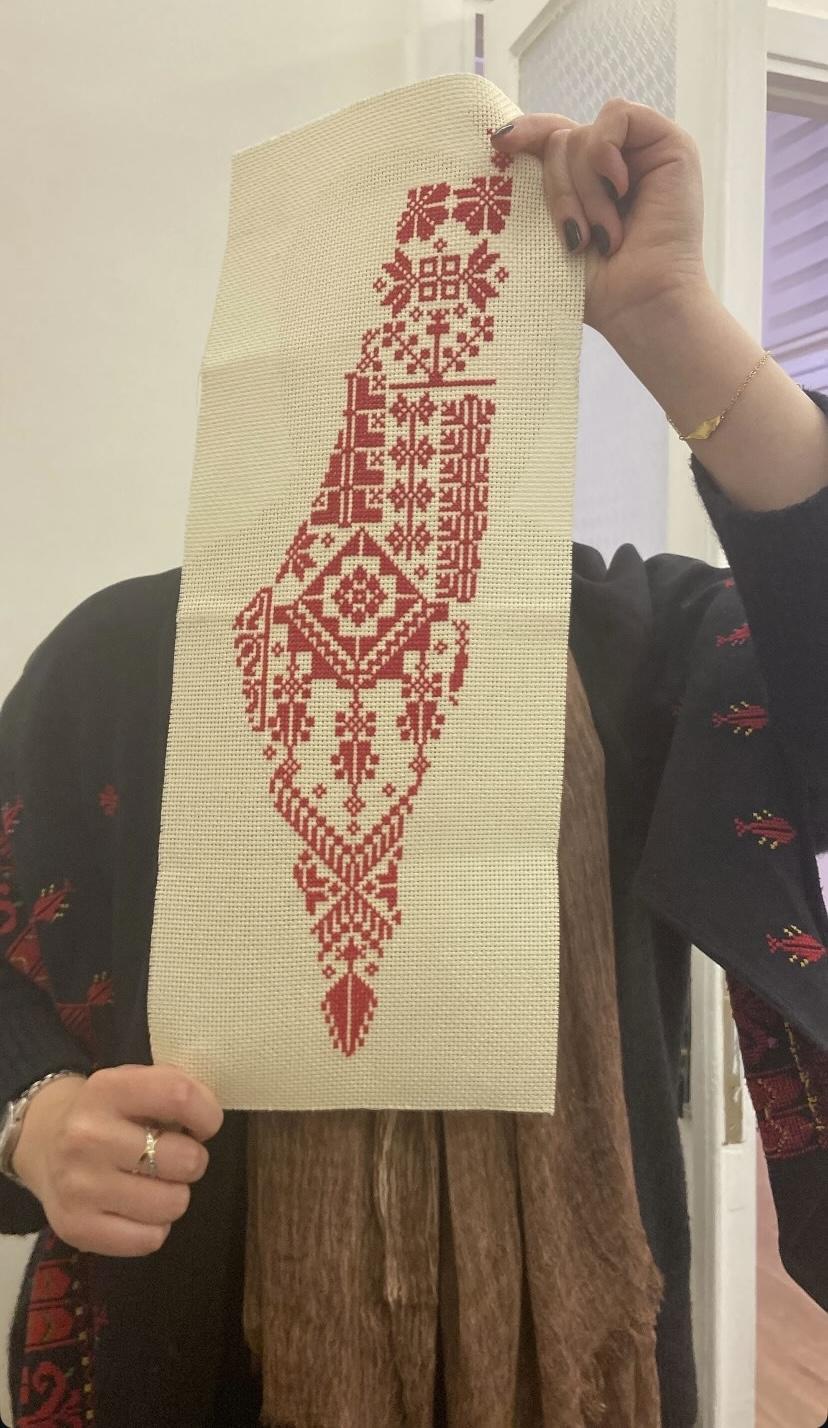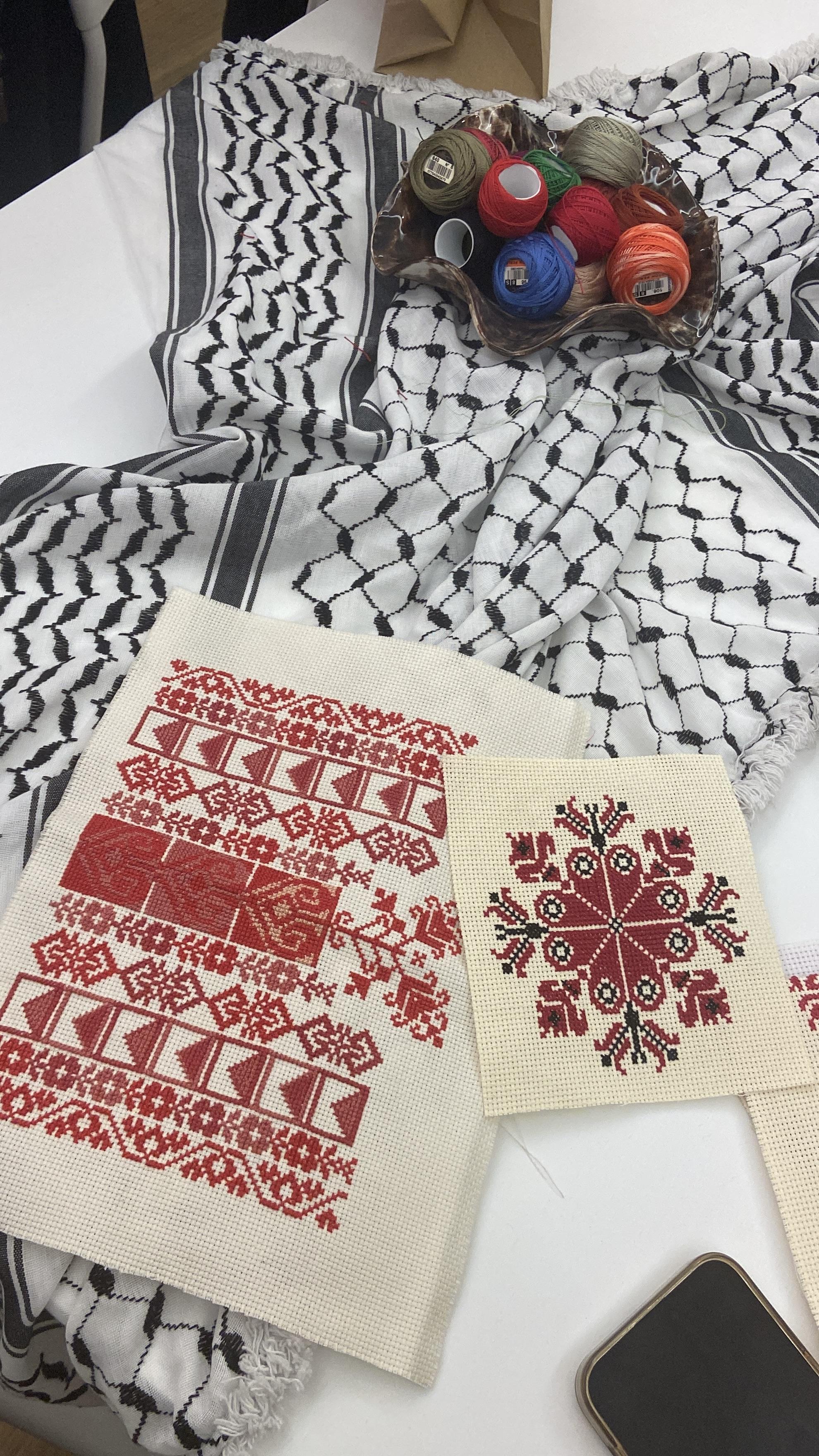
In this case, you’d stitch on a thinner fabric called a waste canvas, which can be removed after the embroidery is completed. Tatreez workshops are enjoyable spaces to learn about the art, and every experience is different depending on the artist's background. Each artist brings a unique collection of motifs to share and their work may even display distinct styles, influences and techniques. When attending a tatreez workshop, it was not only fascinating to see and feel the intricacy of the needlework, but to also learn more about the choices of certain motifs and patterns. Traditional motifs spoke to elements historically and commonly found in the land of the villagers such as the ancient Canaanite star, cypress trees, hawthorn plants, olive branches, flowers and even animals. Furthermore, different villages had certain colors or motifs that were reflective of that region’s distinct natural environment, access to embroidery materials, local traditions and stylistic choice. Following the mass displacement of Palestinian communities into neighboring regions, like Jordan, in 1948 and further throughout the diaspora, women from different villages came to know one another and subsequently, regional styles of tatreez have been exchanged and woven together. These new interwoven patterns were a living record of what was developing in the real world for Palestinians as they were forced to leave their homeland, adjust to a complete reorder of life and build new communities. Contemporary artists have also generated their own tatreez designs to continue highlighting the stories of pain, resistance and love for their homeland.