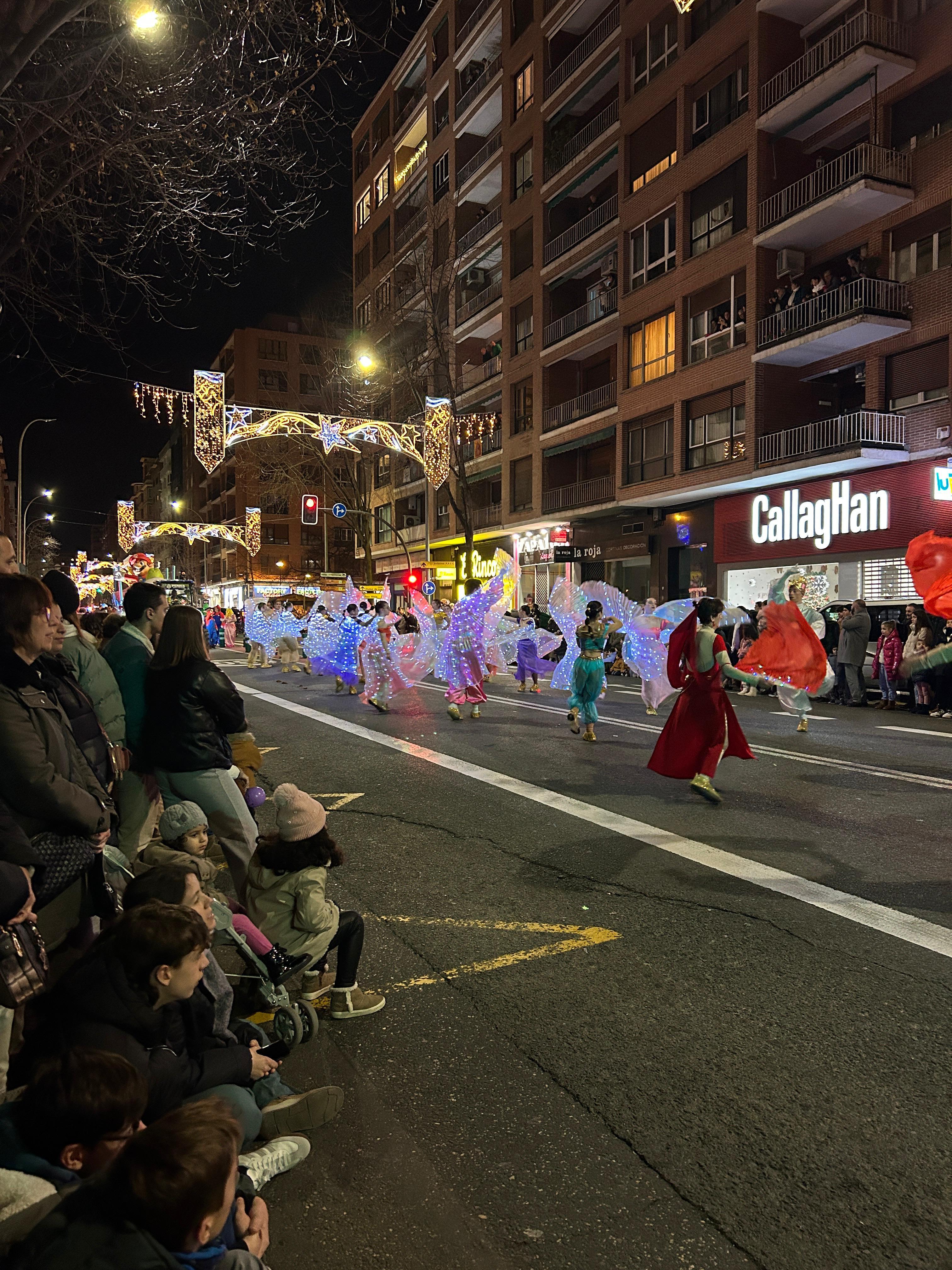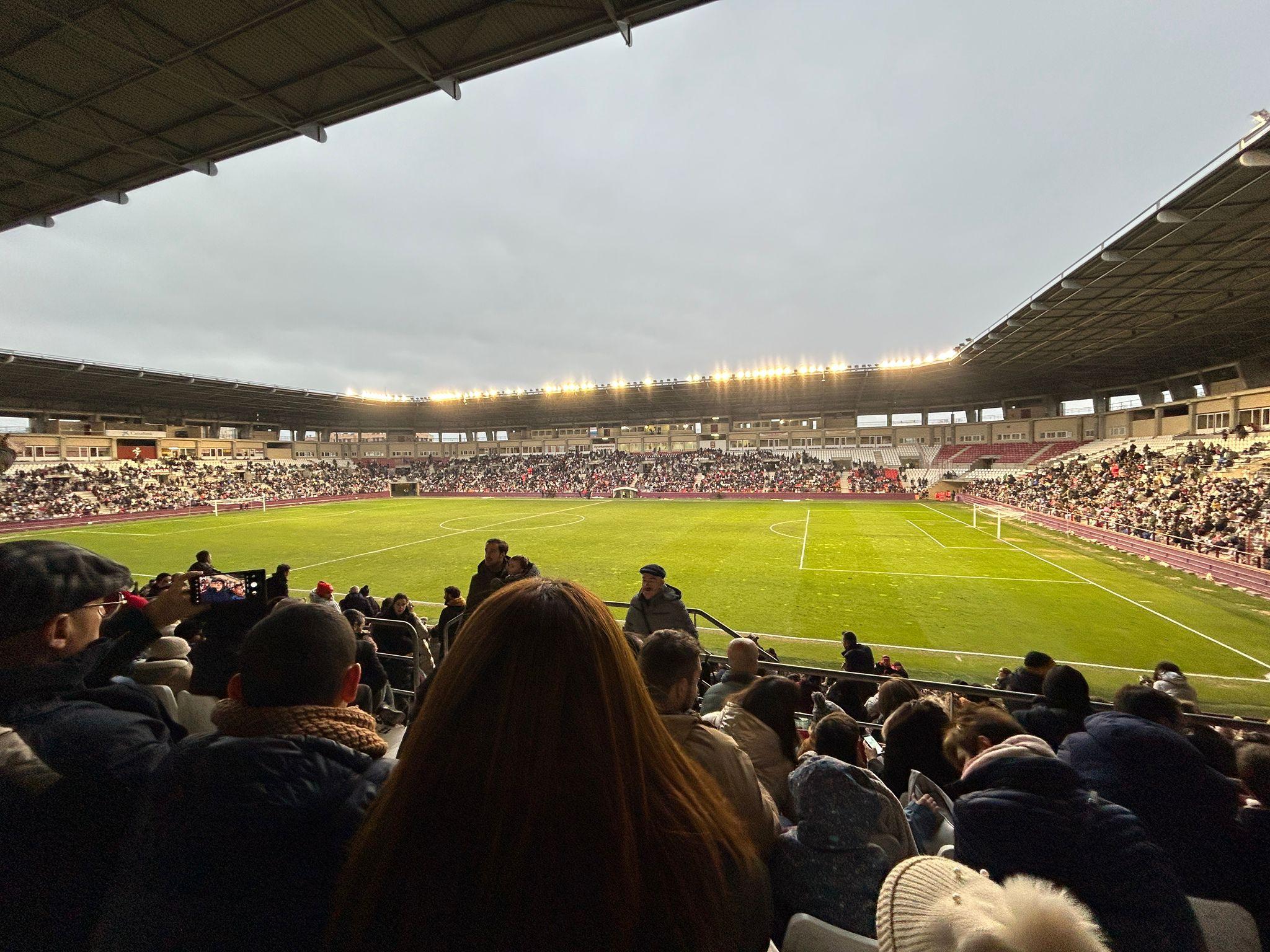
One of the most meaningful traditions I learned about in Logroño is Día de los Reyes Magos (Three Kings Day), which is celebrated on January 6. This day marks the end of Christmas celebrations in Spain. In the days leading up to the celebration, the city comes alive with the Cabalgata de Reyes, a parade in which the Three Kings travel through the streets along with other performers. In the morning, everyone gathers in the football stadium to watch the arrival of the Three Kings by helicopter. Families gather that evening, and the next day they share roscón de Reyes, a sweet cake with a small figurine hidden inside. If you find the figurine in the roscón, it means good luck and you get to wear the crown.
Esta tradición viene de la historia bíblica de los Reyes Magos trayendo regalos al niño Jesús. En España, este día ha sido históricamente un día importante para que los niños reciban regalos. Por esta razón, la tradición está profundamente conectada con la familia, la generosidad y la fe. Incluso hoy en día, la celebración se centra más en pasar tiempo juntos como comunidad que en comprar regalos. Las familias se reúnen y celebran a los niños.
This tradition comes from a story in the Bible about the Three Wise Men bringing gifts to the baby Jesus. In Spain, this day has historically been an important day for children to receive presents. Because of this, the tradition is closely connected to family, generosity, and faith. Even today, the celebration is more about spending time together as a community than about buying gifts. Families come together and celebrate children.