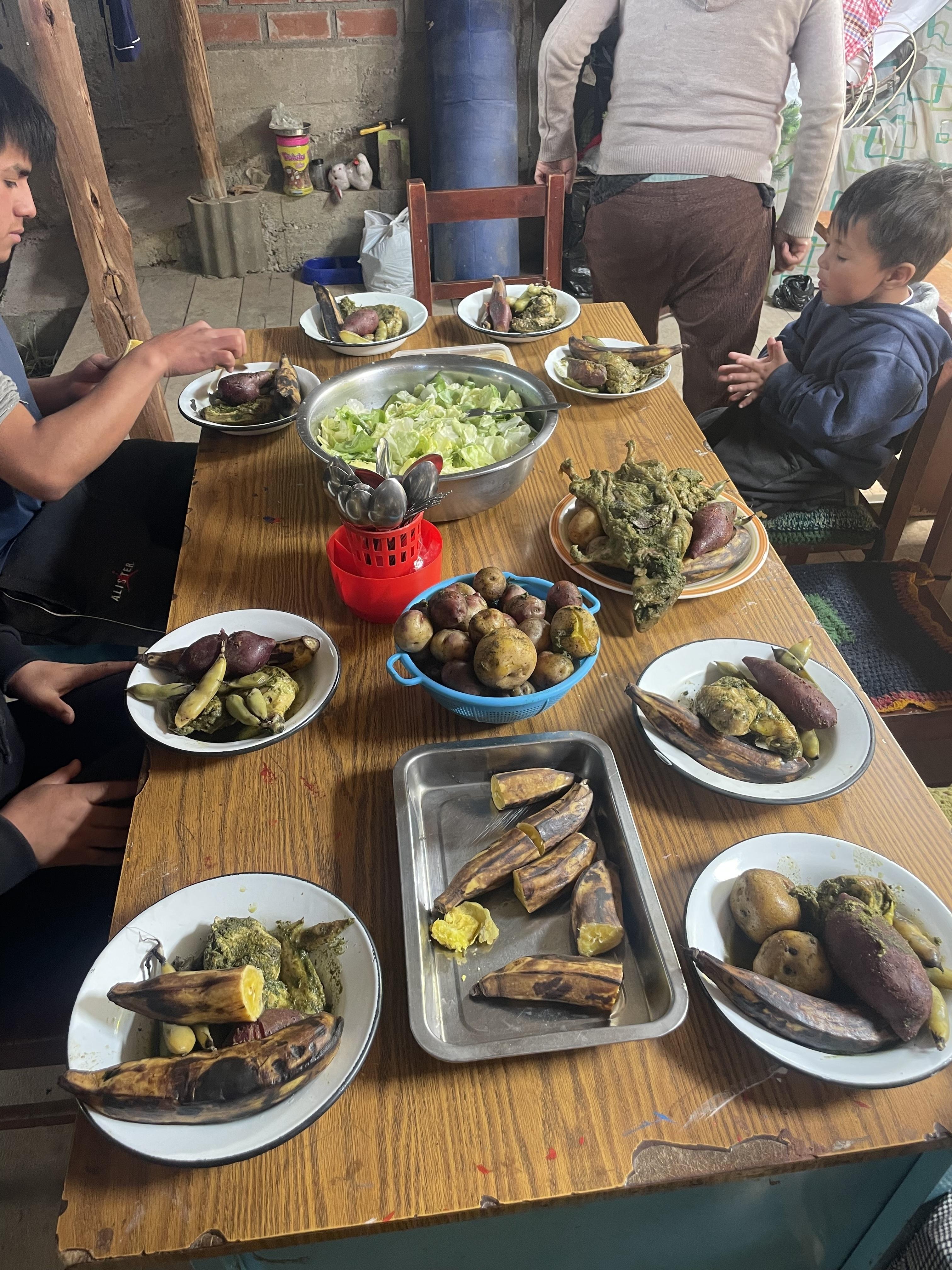
It also felt strange to me to eat what is considered to be a pet in the U.S. However, I tried to remember that, to many Peruvians, a guinea pig is not much different from a cow or a chicken. It’s meant to be eaten. I had to remind myself that eating cuy was a cultural experience that I didn’t want to miss out on. It helped that the guinea pig looked appetizing. The skin was browned and crispy and it smelled a lot like roasted chicken. The meat was savory and tender. With potatoes and rice, it tasted less strange than I expected -- very similar to chicken.
The most popular traditional cuy plates include deep-fried, oven-roasted or stewed guinea pig. When fried, it's cleaned, flattened and coated in seasoned flour before being deep-fried in oil. When baked or oven-roasted, spices like garlic, cumin and huacatay (mint) are rubbed into the meat before being slow-cooked until it turns brown and crispy. It’s typically served with potatoes, corn, rice and a spicy sauce called ají. You can also eat cuy in a soup! After a year in Peru, I’ve tried almost all the different varieties of cuy dishes.
Yes! Cuyes [koo-ees] come from the Andes mountains. They were originally raised as food by the indigenous people in South America. Guinea pigs only became pets after Europeans arrived in the Americas and brought the “exotic” Andean animals to Europe.
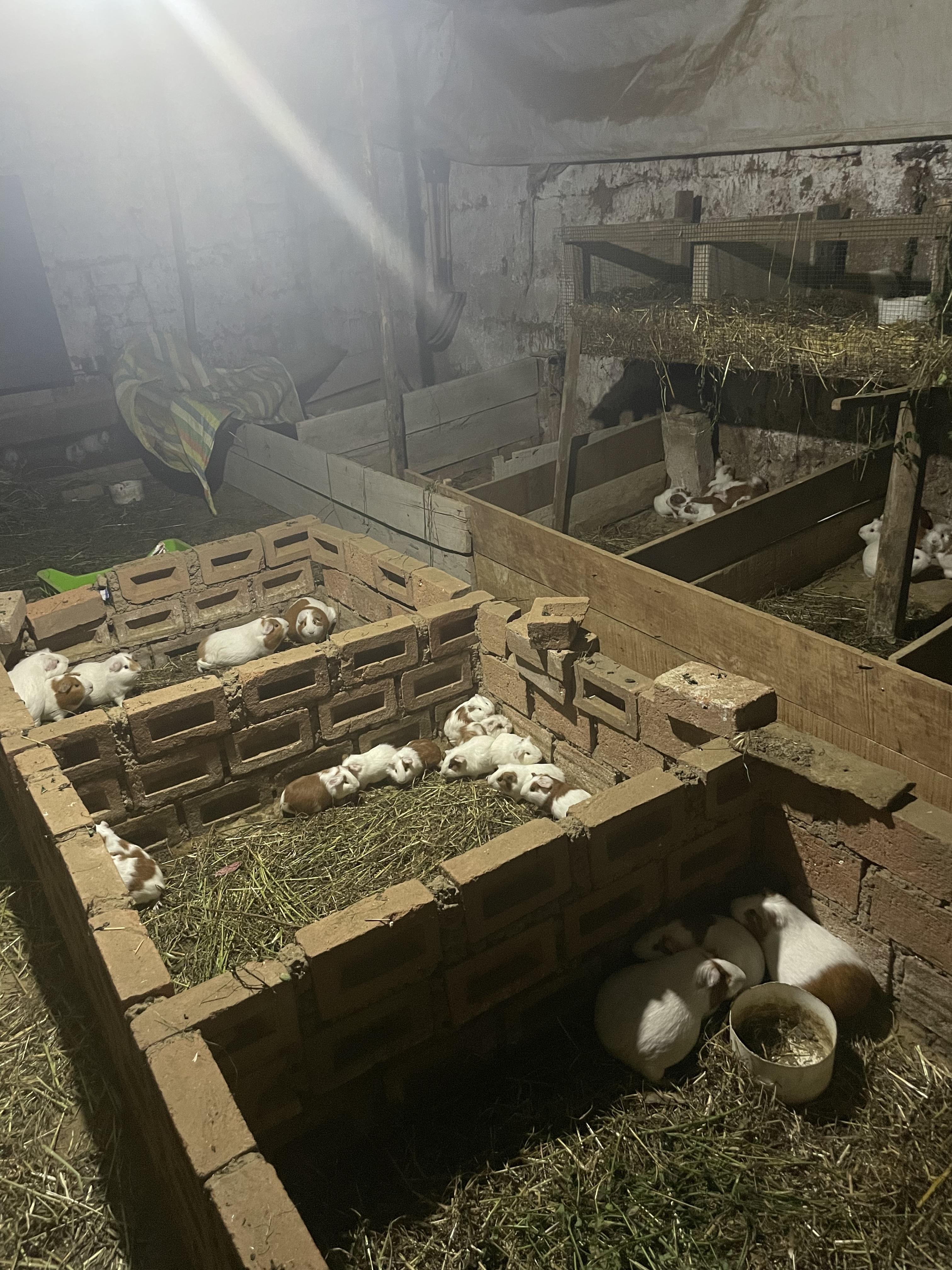
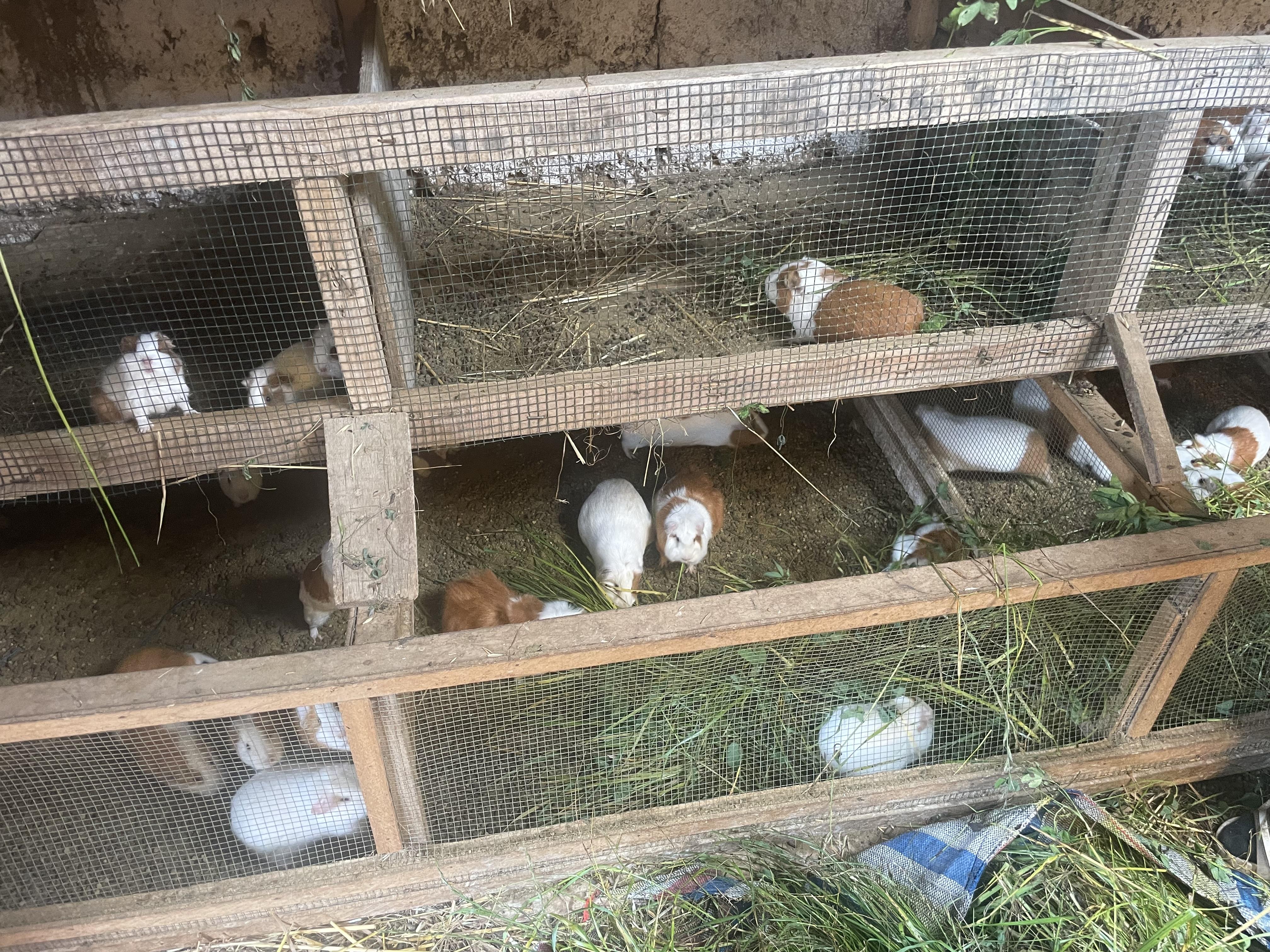
As an interesting fun fact, the family I live with (my host family) actually raises cuyes as food. They currently have about 100 guinea pigs living in a shed behind my room.