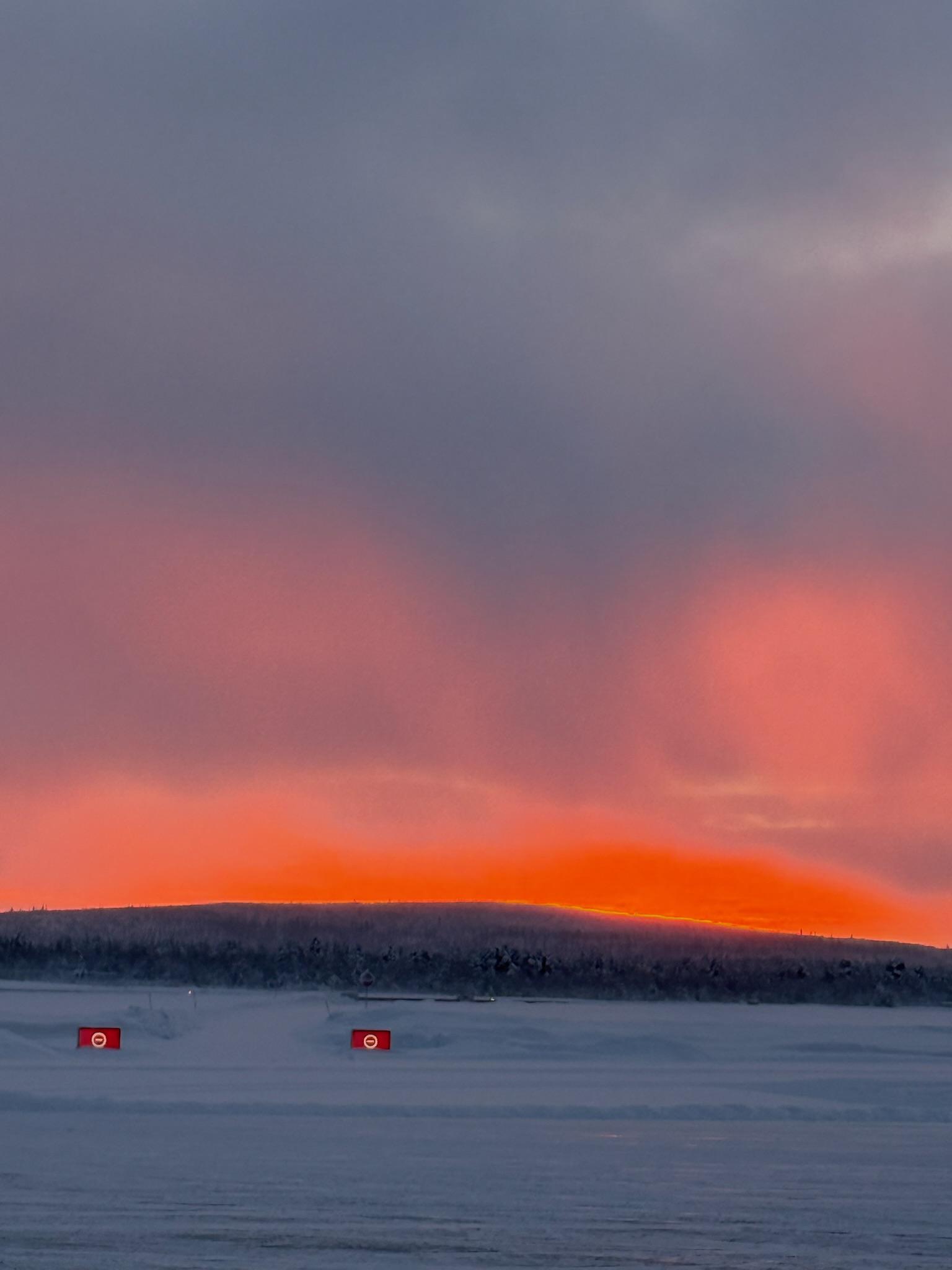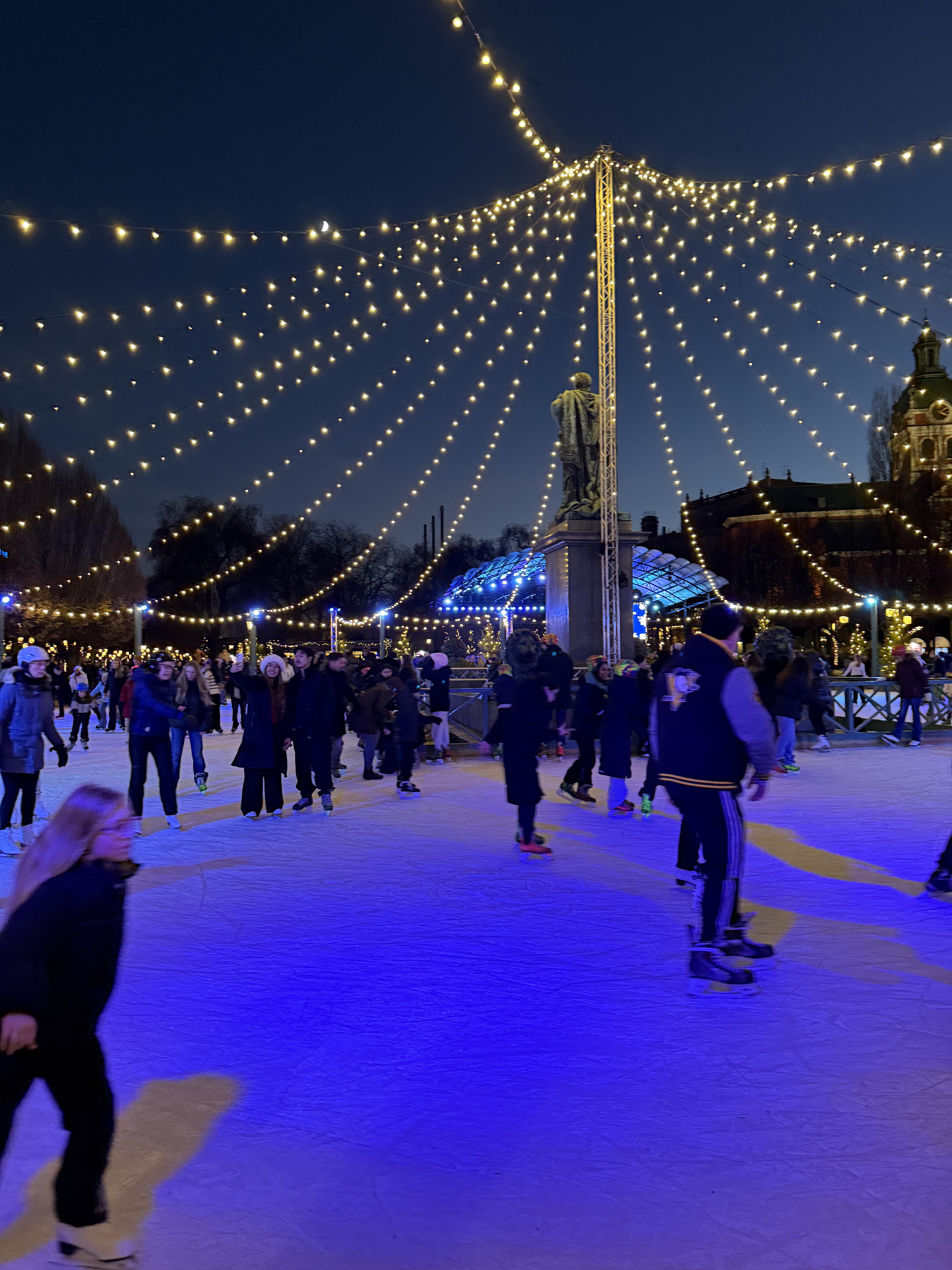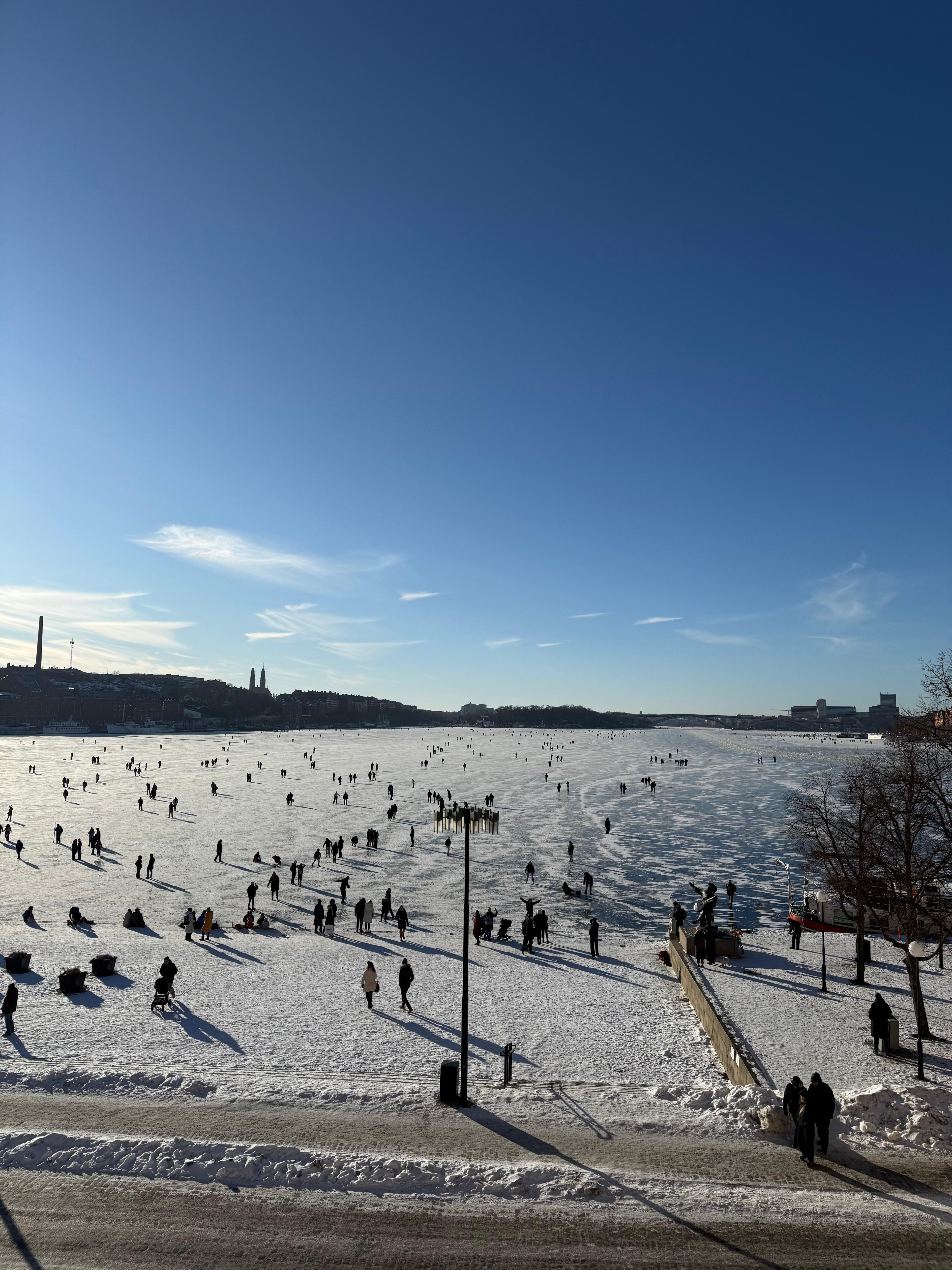
The environment around Stockholm is defined by water, forests, and dramatic seasonal shifts. The city stretches across 14 islands and sits between Lake Mälaren and the Baltic Sea, so water is never far away. It gives the city an open feeling and a constant connection to the natural world. Even in the center of town, green spaces like Kungsträdgården (meaning King’s Garden) offer a break from the bustle of the city. The seasons here feel almost like two different worlds. Winter is cold and dim, while summer is bright and exciting. Because Sweden lies so far north, the sun travels in a low arc across the sky in winter and a high, lingering path in summer. This means that there can be as little as six hours of daylight in December and nearly nineteen hours in June. This past winter, there were some days where I went into work before the sun came up and didn’t leave until after the sun had set.
These natural conditions shape daily life in visible ways. The waterways are not obstacles but connectors, linked by bridges, ferries, and trains that move easily between islands and neighborhoods. Homes are built to hold in warmth, with thick insulation and large windows designed to capture as much light as possible. In winter, people will even ski across frozen waterways to cross between islands. Saunas and cold plunges are also common, a tradition that embraces the climate and is seen as an important activity for one’s health.