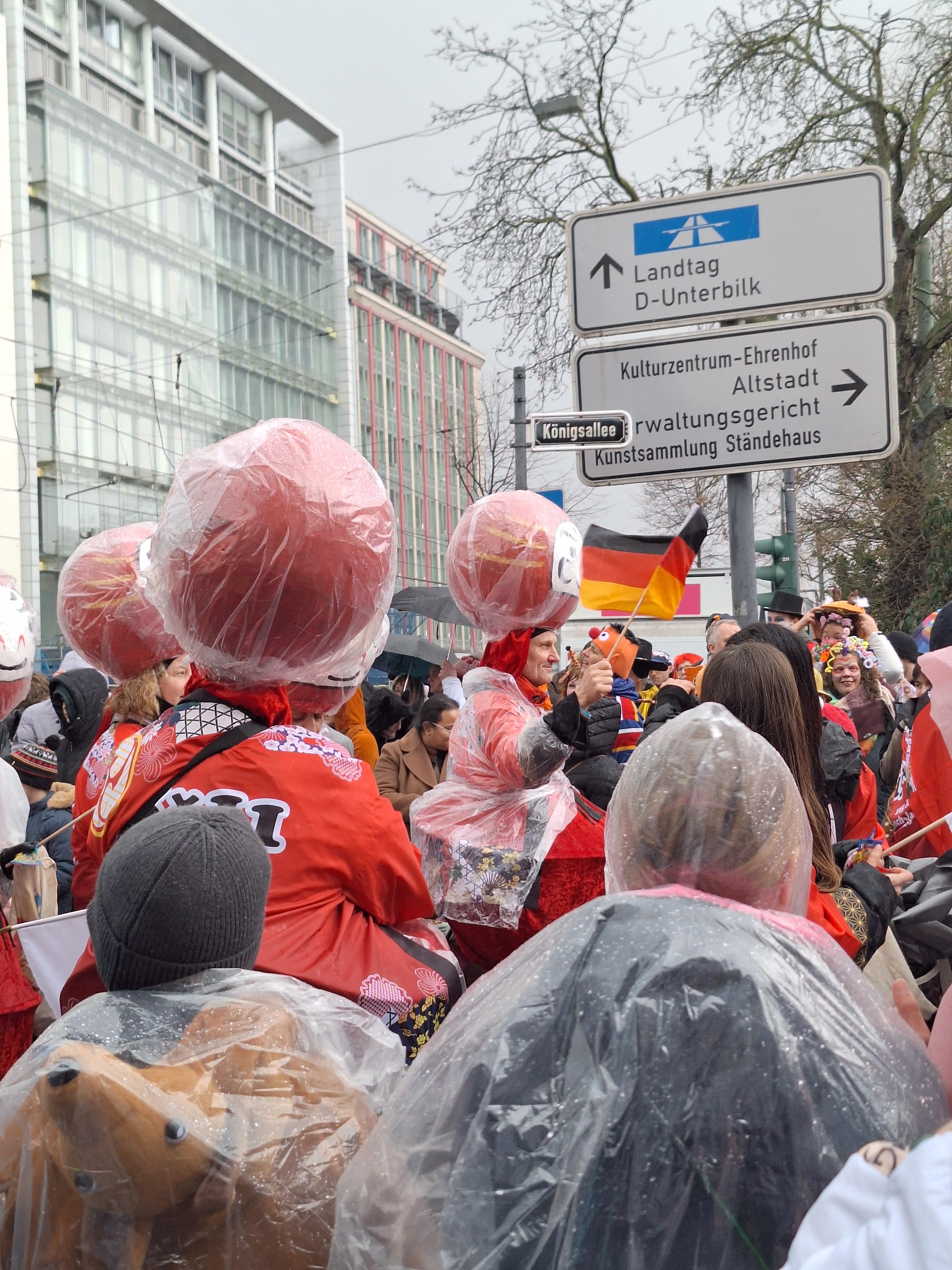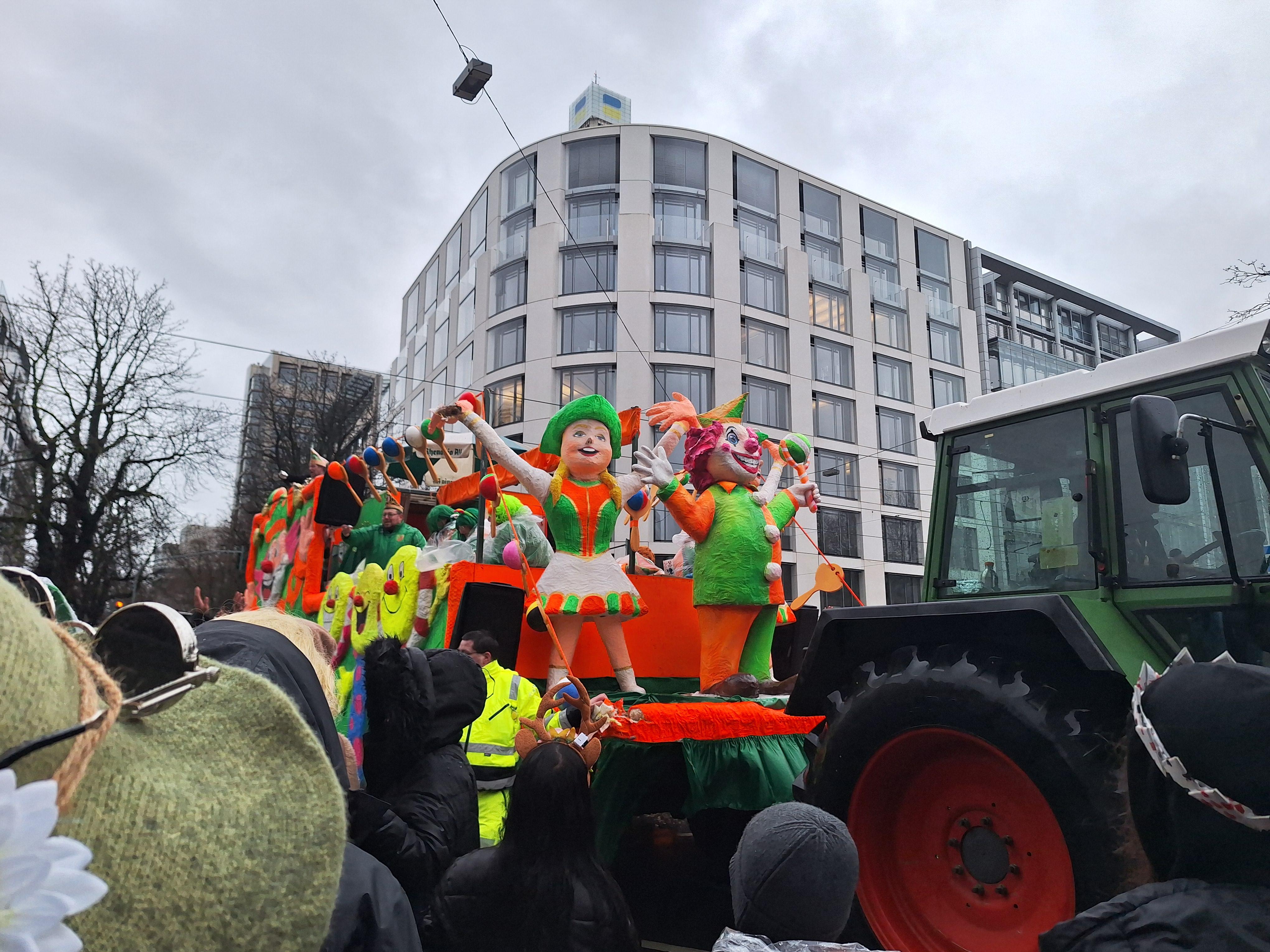
Köln, Mainz, Bonn and Düsseldorf compete with each other for crowds of visitors throughout Karneval and have a little bit of a feud. They even use different names for the holiday: Fasching or Karneval. The people that live in each city, bring their own flavor to the celebrations, basing the local Karneval traditions in environment and population. For example, Düsseldorf has a big Japanese population, so their parade has Japanese influence and style incorporated into it.
On a more concrete note, Fasching does, unfortunately, have a destructive environmental impact. Single use decorations, littered candy and wrappers along parade routes and a traditional habit of breaking empty beer bottles on the street leave the cities with quite a mess after the festivities are over. There is a lot of excess trash produced and it takes many people working long hours to fully take care of it all. There are some small practices in place to improve this issue -- like making streamers and other similar decorations out of compostable paper -- but this only improves the issue a limited amount. There is still a long way to go to make Fasching more sustainable and discussions over solutions are still a hot topic today.