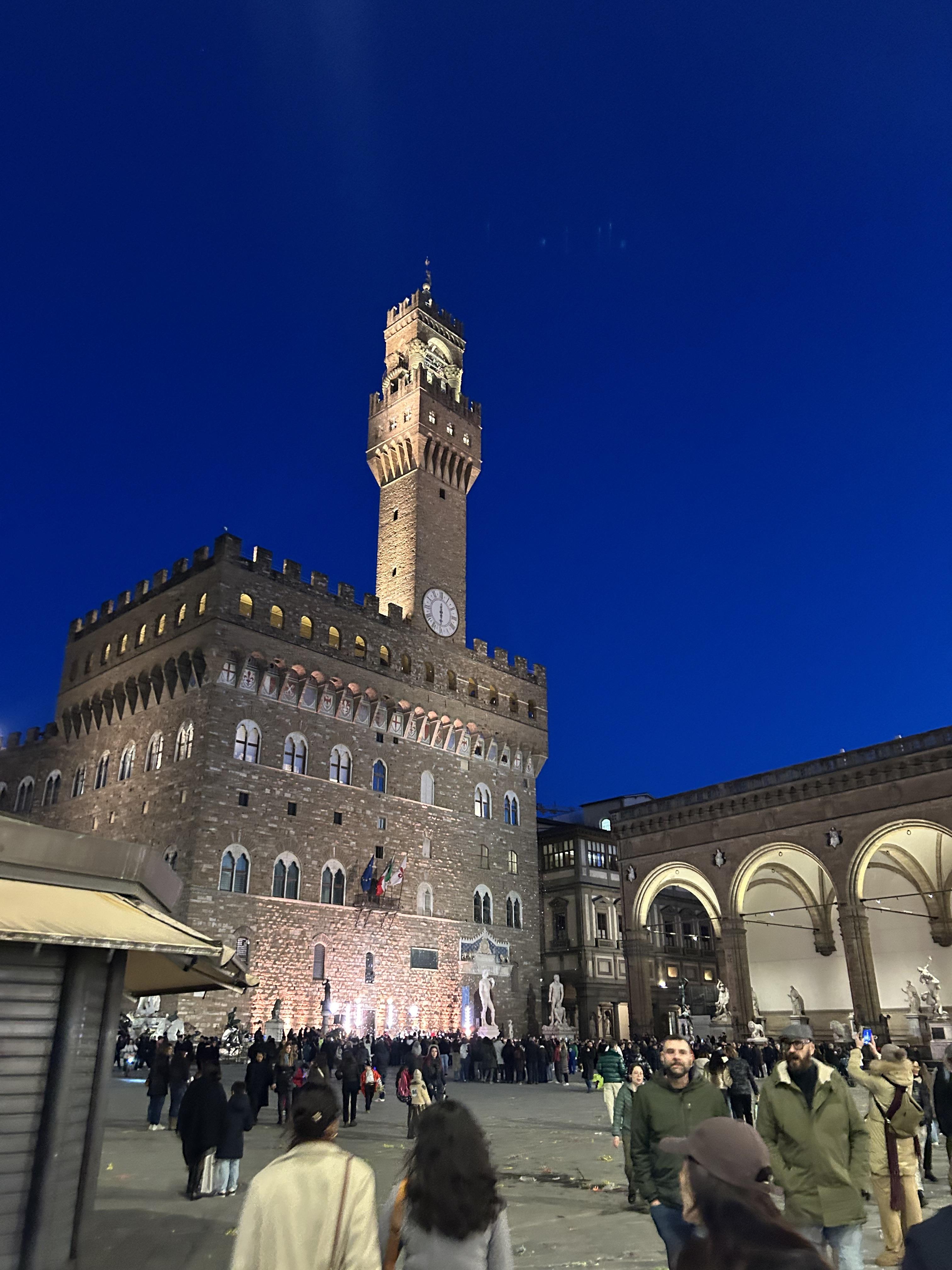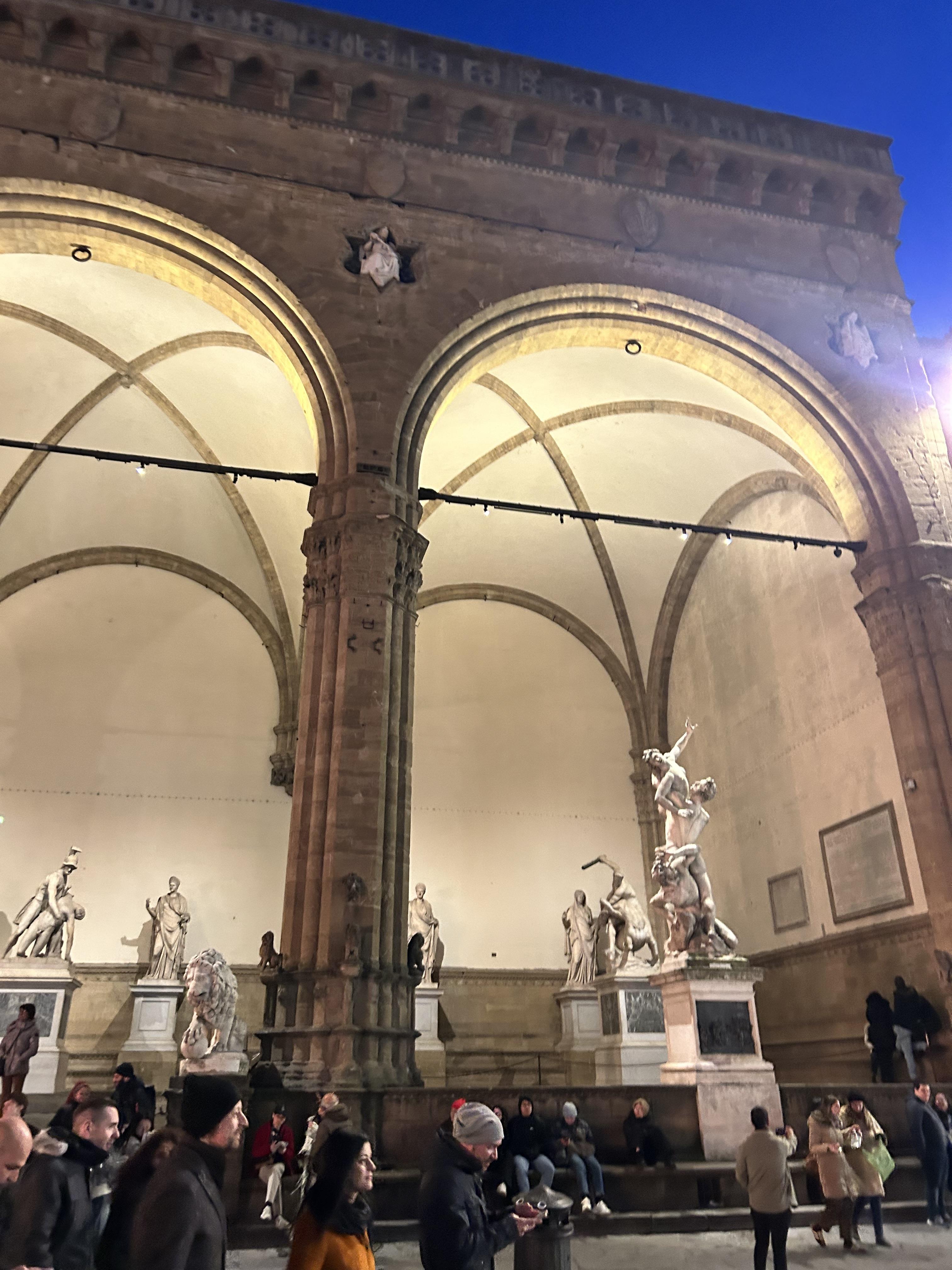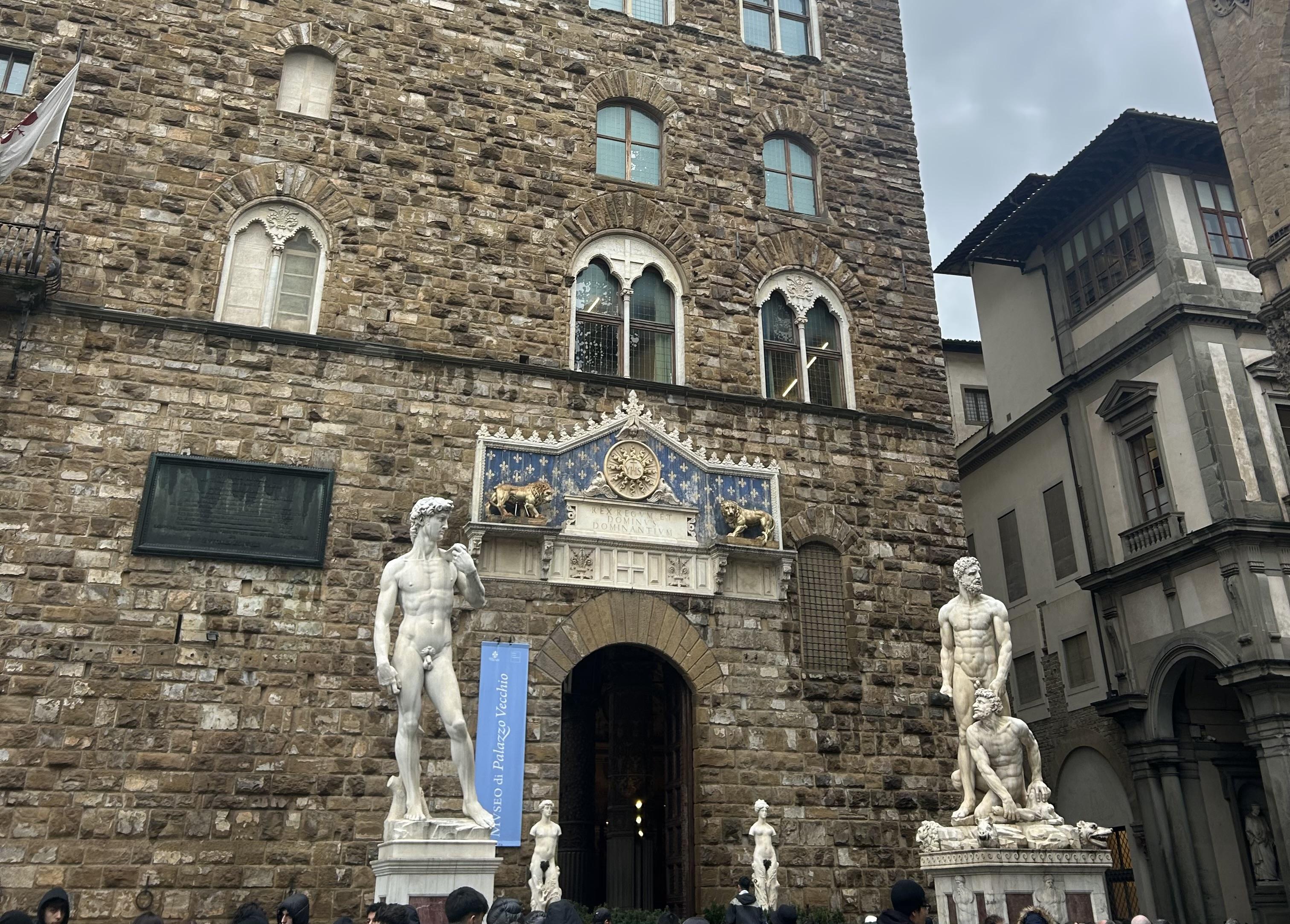
Upon telling people that I'm studying abroad in Florence, it is often stressed how impactful the culture can feel when you truly learn and immerse yourself in it. Although I have never taken an anthropology class, I understand that it is the study of humans, culture and societies—reflecting on how we communicate, evolve and coexist. Florence is a spectacular place to reflect on humans. My Palaces of Florence class has taught me how Florence once had the ‘Magnati,’ aka the major families of the aristocracy that would feud and manage politics and structures. When this method failed due to poor checks and balances, the Republic rose and power shifted to the guilds, which allowed for a more well-balanced system. The Renaissance formed a very rich expression of humanism, with an all-encompassing appreciation for our existence and the harmony of nature, symmetry and divinity. The Vitruvian Triad, which was used for architectural and artistic principles, consists of stability (firmitas), utility (utilitas) and venustas (beauty). My class took time studying buildings and paintings that depicted this idea, and in terms of societal congregation, there was a lot of symbolism in other architectural priorities as well.