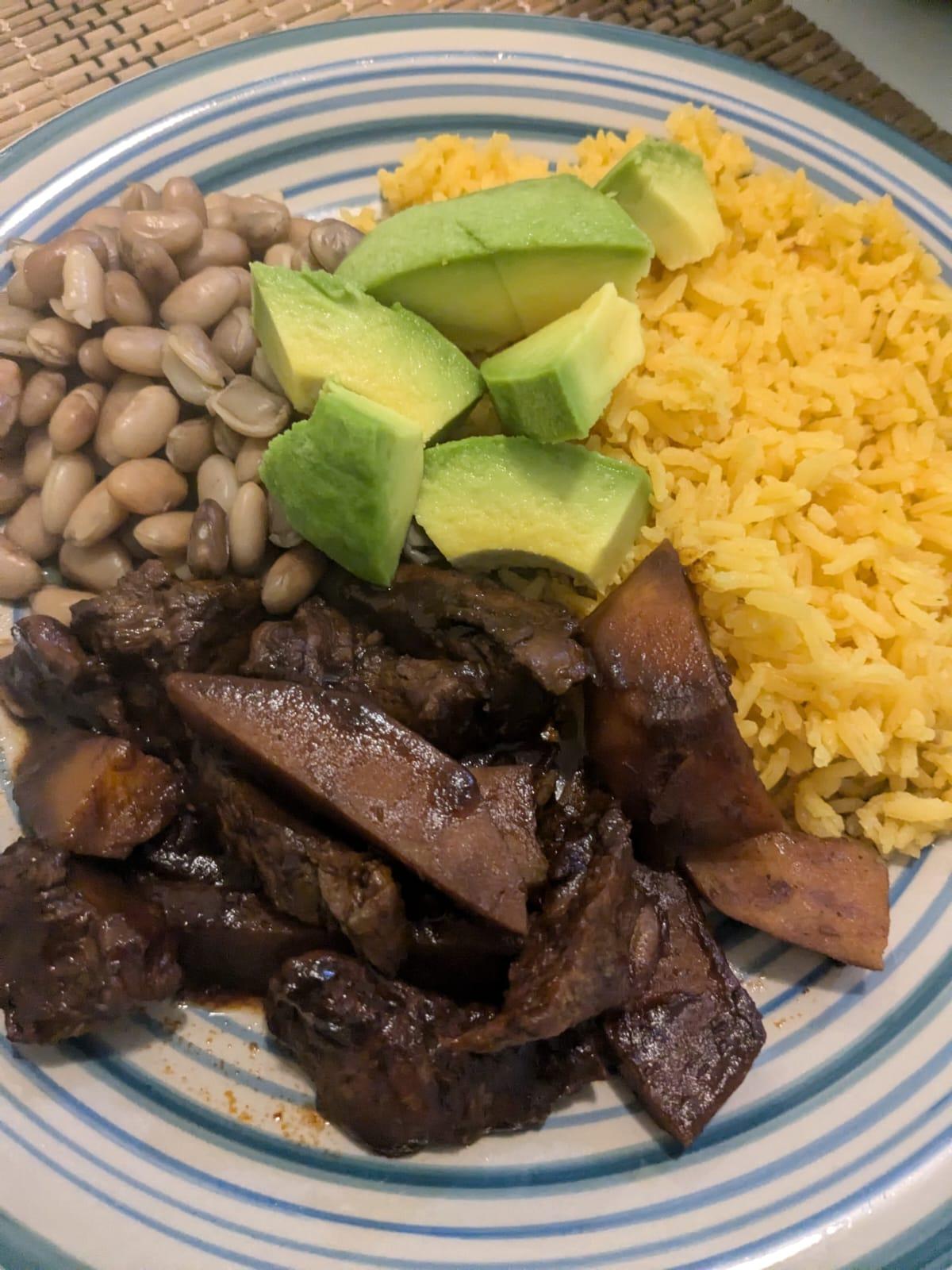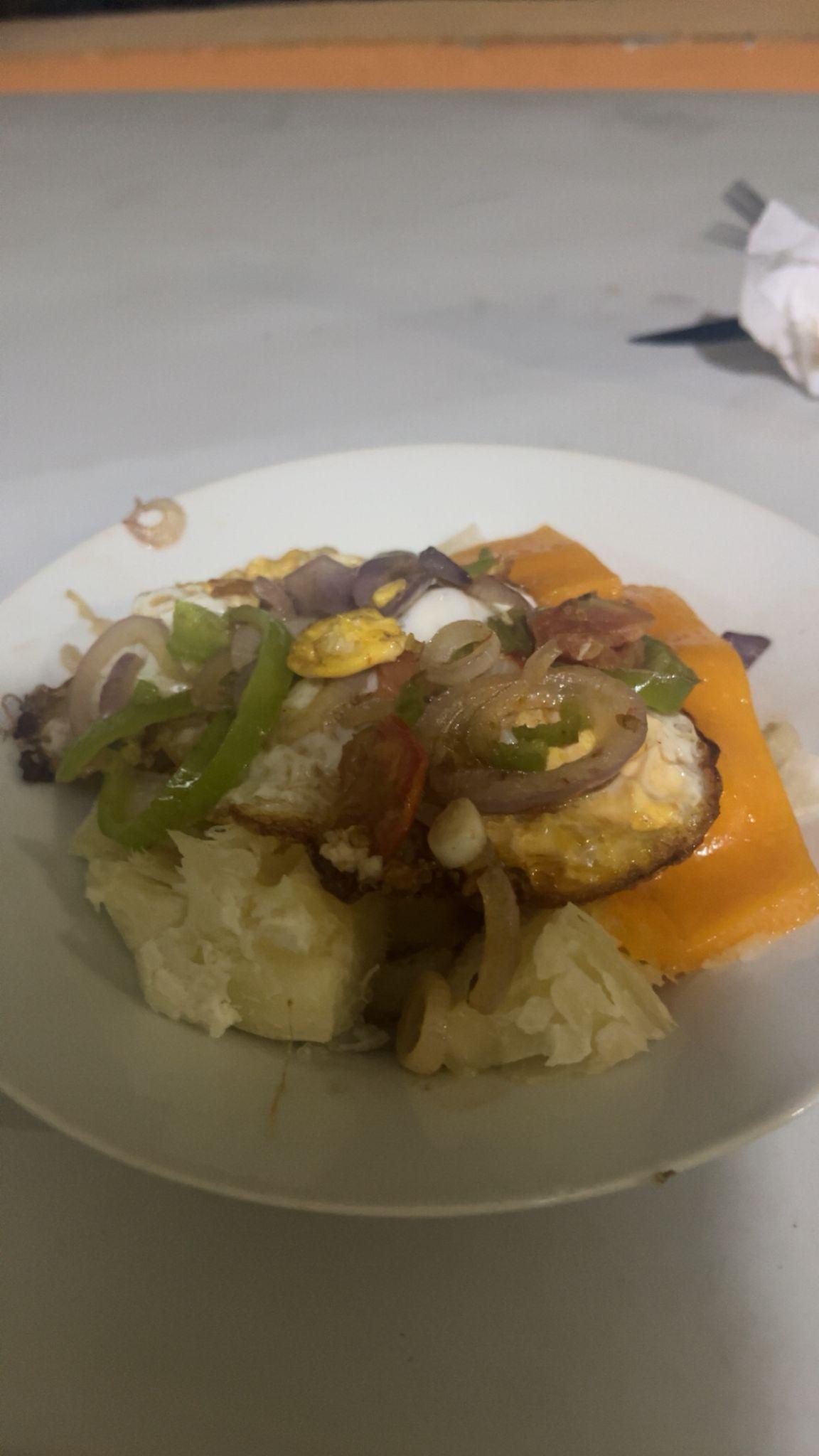
Many Dominican dishes are simple and made with fresh ingredients. La Bandera is prepared by cooking white rice and stewing beans with a seasoning. Interestingly, the beans are typically homemade. Rather than buying canned beans, they use a pressure cooker to make them from scratch. Plantains are prepared in different ways depending on the dish. For tostones, green plantains are sliced, fried, smashed flat, and then fried again until crispy. Mangú is made by boiling green plantains and mashing them until smooth, often topped with sauteed onions. Green plantains are my favorite, however they also make platano maduro (ripe plantains). Platano maduro can be cooked the same way, however it ends up tasting a lot more sweet than the green plantain.
Muchos platos dominicanos son simples y están hechos con ingredientes frescos. La Bandera se prepara cocinando arroz blanco y guisando habichuelas con sazón. Es interesante que las habichuelas normalmente son caseras. En lugar de comprar habichuelas enlatadas, usan una olla de presión para prepararlas desde cero. Los plátanos se preparan de diferentes maneras según el plato. Para los tostones, los plátanos verdes se cortan en rodajas, se fríen, se aplastan y luego se fríen otra vez hasta que queden crujientes.